Bonobo Kanzi May Have Mastered Make-Believe Like a Child
A groundbreaking study shows a bonobo named Kanzi could tell the difference between real and imaginary juice in experiments, suggesting apes might share our capacity for pretend play. The findings challenge what we thought made human creativity unique.
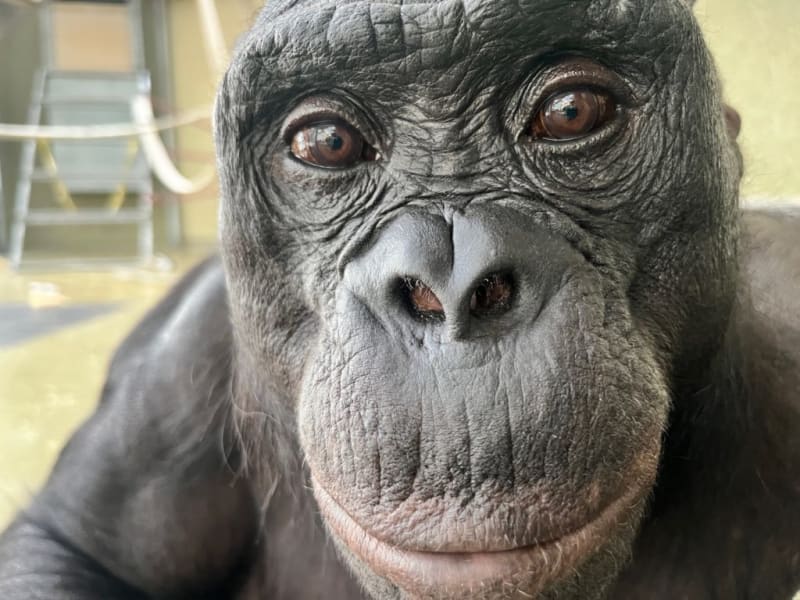
A bonobo who grew up learning to communicate with humans appears to have cracked a skill scientists thought was uniquely ours: playing pretend.
Kanzi, a bonobo raised in a lab, became famous for using graphic symbols to chat with researchers and even making simple stone tools. But his most surprising talent emerged during an imaginary juice party that could reshape our understanding of animal minds.
Researchers at Johns Hopkins University staged pretend tea parties for Kanzi, pouring fake juice from a pitcher into two cups. Then they pretended to empty just one cup and asked which he wanted.
Kanzi chose the cup with pretend juice still in it 68% of the time. That might not sound impressive until you consider what it means: Kanzi had to imagine something that wasn't there and track it through multiple steps.
To rule out confusion, scientists ran another test with real juice. Kanzi picked the actual juice over imaginary juice almost 80% of the time, proving he knew the difference between reality and make-believe.
"What's really exciting about this work is that it suggests that the roots of this capacity for imagination are not unique to our species," said study co-author Christopher Krupenye. The research appears in the journal Science.
Kanzi wasn't just mimicking humans or getting lucky. Similar experiments with fake grapes in jars produced the same results, suggesting genuine understanding of pretend play.
Why This Inspires
This discovery opens a window into how creativity and imagination evolved. If apes can grasp pretend play, the building blocks of human art, music, and storytelling might stretch back millions of years to our shared ancestors.
Researchers had observed hints before: wild chimpanzees cradling sticks like babies, captive chimps dragging invisible blocks. But Kanzi's experiments provide the first solid evidence that apes can truly understand the concept of "let's pretend."
Not everyone is convinced yet. Duke University's Michael Tomasello notes there's a difference between following along with pretend play and initiating it yourself. He'd want to see Kanzi actually pouring imaginary juice on his own.
Still, the implications matter beyond one remarkable bonobo. Many great ape species face critical endangerment in the wild, and understanding their mental capabilities could transform conservation efforts.
Kanzi passed away last year at 44, but his legacy lives on. Co-author Amalia Bastos from the University of St. Andrews says simply: "Kanzi opened this path for a lot of future studies."
The next time a child pours you invisible tea, remember: that simple act of imagination connects us not just to each other, but to our closest cousins in the animal kingdom.
More Images




Based on reporting by Google News - Researchers Find
This story was written by BrightWire based on verified news reports.
Spread the positivity!
Share this good news with someone who needs it