Boston AI Company Speeds Up Parkinson's Cell Therapy
A Boston biotech firm is using artificial intelligence to fast-track stem cell treatments for Parkinson's disease, potentially cutting years off development time. The breakthrough could bring hope to millions living with the condition.
Imagine if scientists could predict exactly how cells would behave before even stepping into a lab. That future is arriving now, and it could transform treatment for Parkinson's disease and other devastating conditions.
Cellular Intelligence, a Boston-based company co-founded by Israeli entrepreneur Dr. Micha Breakstone, is using AI to revolutionize how stem cell therapies are created. The company recently acquired global rights to a clinical-stage cell therapy program for Parkinson's from pharmaceutical giant Novo Nordisk.
The approach differs from traditional drug development, which can take decades and cost billions. Instead of relying on slow trial-and-error experiments, Cellular Intelligence's AI platform analyzes millions of cellular conditions to predict how cells will respond to different treatments.
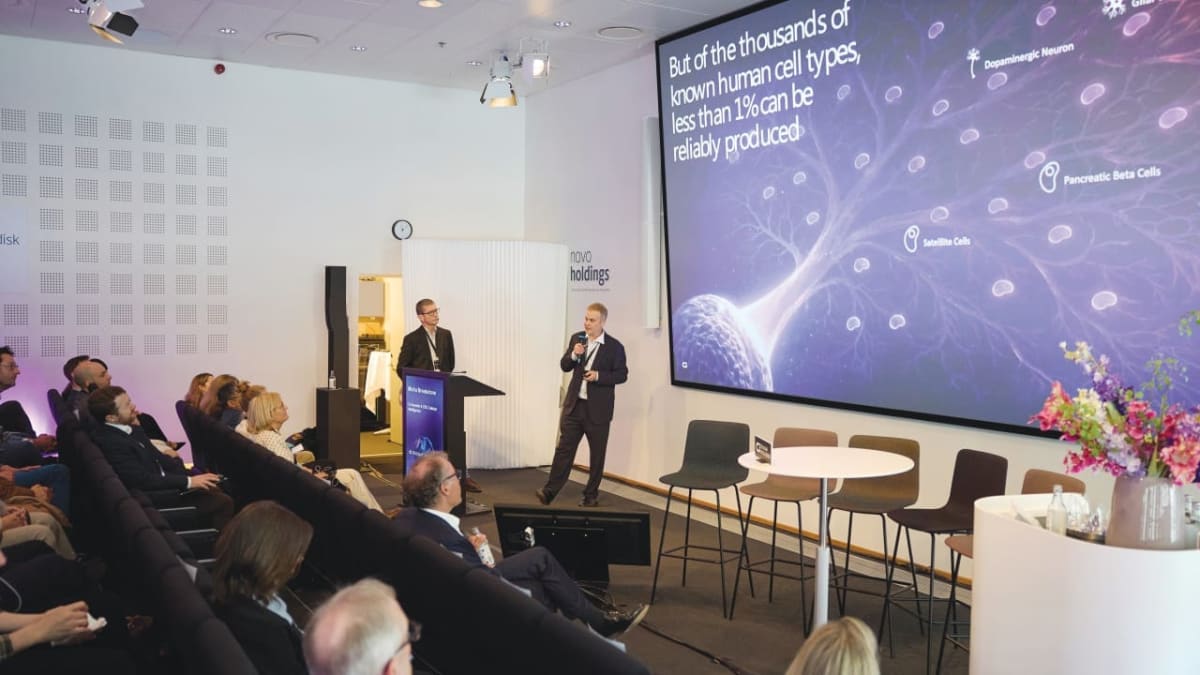
"We are using AI to understand how cells communicate and to make new tissue," Breakstone explained at a recent expert symposium in Copenhagen. The technology trains on vast amounts of cellular data, learning the patterns that determine how cells develop and function.
Parkinson's disease affects millions of people worldwide, destroying the brain cells that produce dopamine. Current treatments only manage symptoms rather than replacing lost neurons. The STEM-PD therapy aims to introduce new dopamine-producing cells, offering genuine regeneration instead of symptom management.
The company's platform creates a feedback loop, incorporating data from clinical trials and manufacturing to improve its predictions over time. This approach addresses one of the biggest barriers in regenerative medicine: producing consistent, scalable treatments that actually work.
The Ripple Effect
The potential reaches far beyond Parkinson's. Breakstone pointed to Type 1 diabetes, epilepsy, and macular degeneration as other diseases that could benefit from the technology. By turning biology from observation into predictive engineering, the platform could accelerate cures that previously seemed decades away.
Jens Nielsen, CEO of Copenhagen's BioInnovation Institute, confirmed the technology can speed up preparations, analysis, development time, and costs. Denmark's capital, with its long history in therapeutics, has become home base for the company's European operations.
The team includes collaboration with Harvard Medical School professor Allon Klein, developmental biologist Olivier Pourquie, and Dr. Nuno Mendonca, who leads clinical advancement of the Parkinson's program. Together, they're creating what Breakstone calls "the next AlphaFold moment for biology," referencing the AI breakthrough that revolutionized protein structure prediction.
The challenge now isn't convincing scientists that AI can transform biology, it's executing on that promise. "Much of the technology was already there," Breakstone said. "The issue isn't convincing people, it's executing."
As the program advances toward commercialization, it will test whether AI-supported development can truly deliver faster, cheaper, and more effective treatments for diseases that have resisted cures for generations.
More Images


Based on reporting by Google News - Disease Cure
This story was written by BrightWire based on verified news reports.
Spread the positivity!
Share this good news with someone who needs it