Boston Discovers 1729 Gravestone of Freed Black Man
A conservationist in Boston just uncovered one of America's oldest gravestones honoring a freed Black man who died in 1729. Sebastian, who chose the name Boston after gaining his freedom, was respected enough in colonial America to receive both a tombstone and a published obituary.
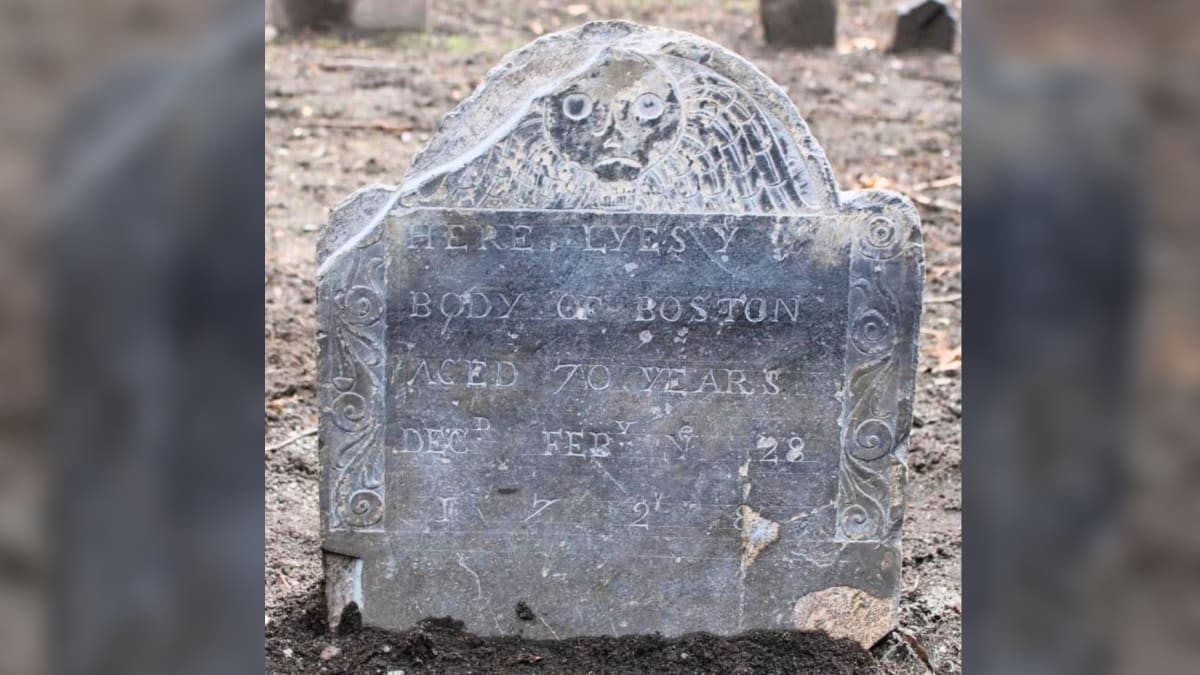
Kelly Thomas was reviewing photos during a restoration project at Boston's Granary Burying Ground when one weathered stone caught her eye. The marker bore only a single name: Boston.
That discovery led Thomas, director of the Historic Burying Grounds Initiative, to uncover the remarkable story of Sebastian, an enslaved man who gained his freedom in the early 1700s. His gravestone, dated February 28, 1728 (1729 in our modern calendar), is likely one of the oldest markers for a free Black person in America.
Sebastian's life tells a story of resilience that was rarely documented in colonial America. He was enslaved until around 1702, when his enslaver John Waite died. By 1708, Sebastian had earned his freedom and built a reputation as a hardworking handyman in Boston.
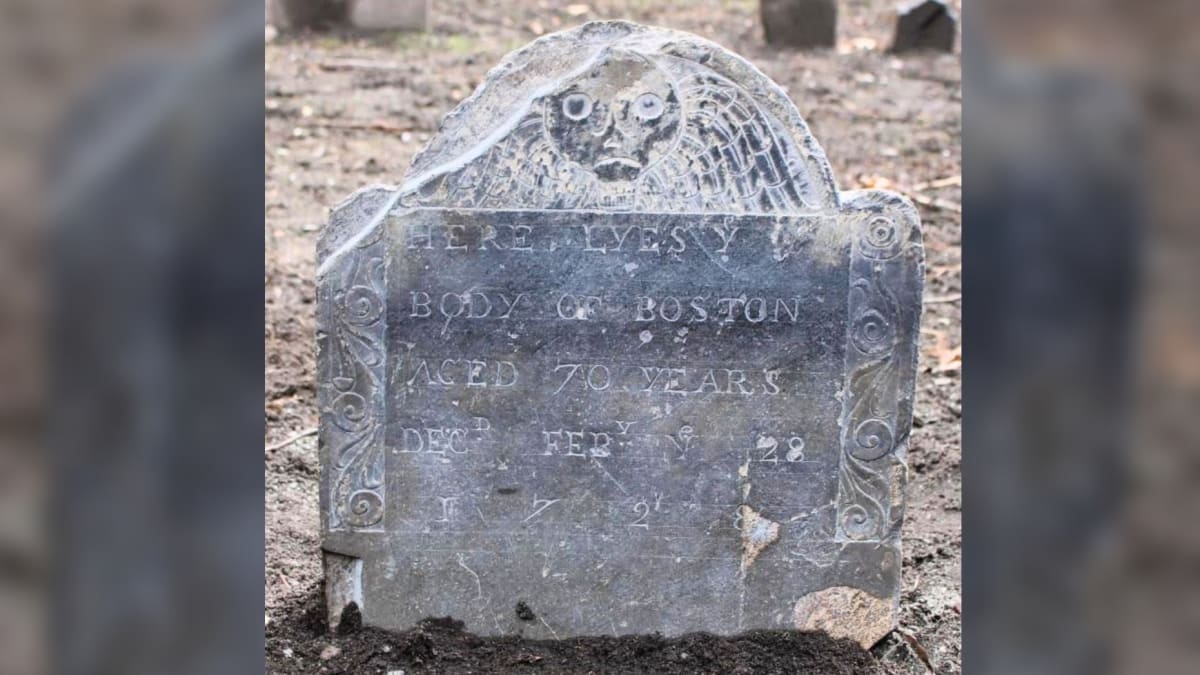
The gravestone features a death's head symbol, a stylized skull with wings common on New England tombstones of that era, possibly representing spiritual resurrection. The simple inscription reads "Here Lies The Body of Boston, Aged 70 Years."
Historical records reveal even more about Sebastian's life. He married Jane Lake, and though they were enslaved in different households, they raised children together and regularly attended First Church in Boston. In 1701, they had their daughter Jane baptized at the church.
Sebastian lived as a free man for roughly 30 years before his death in 1729. He became well-known enough that the New-England Weekly Journal published an obituary for him, an extraordinary honor for any freed Black person in colonial America.
Why This Inspires
This discovery does more than add a name to history books. It reminds us that even in America's darkest chapters, individuals like Sebastian built lives of dignity and earned respect in their communities. His story survived centuries not through grand monuments but through simple acts: a baptism record, a church registry, a handwritten list of free Black residents.
Mayor Michelle Wu announced the discovery during a July 4 speech, noting the stone "has been there all along." Sometimes the most powerful stories are waiting to be noticed, preserved in plain sight among the over 5,000 graves at Granary Burying Ground, the final resting place of Samuel Adams, John Hancock, and Paul Revere.
Sebastian's restored gravestone now stands as a testament to a life that mattered then and matters now.
More Images

Based on reporting by Live Science
This story was written by BrightWire based on verified news reports.
Spread the positivity!
Share this good news with someone who needs it