Brain Cap Could Help Paralyzed Patients Walk Again
Researchers are testing a noninvasive brain-reading cap that could help people with spinal cord injuries control their paralyzed limbs. The technology skips risky brain surgery by using existing EEG monitors to decode movement signals.
Imagine your brain sending a message to walk, but your legs never getting the memo because of a spinal cord injury.
Researchers from Italy and Switzerland just took a major step toward solving that heartbreaking disconnect. They're testing whether simple brain-scanning caps could replace risky surgical implants in helping paralyzed patients move again.
Here's the beautiful part: the brain and limbs of most spinal cord injury patients still work perfectly fine. The injury just blocks the signals between them. Scientists have known for years that when someone tries to move a paralyzed limb, their brain still generates all the right electrical patterns.
Previous approaches used surgically implanted electrodes to read those brain signals and relay them to spinal cord stimulators. It worked, but it required drilling into someone's skull or spine. That means more surgery, more recovery time, and higher infection risks.
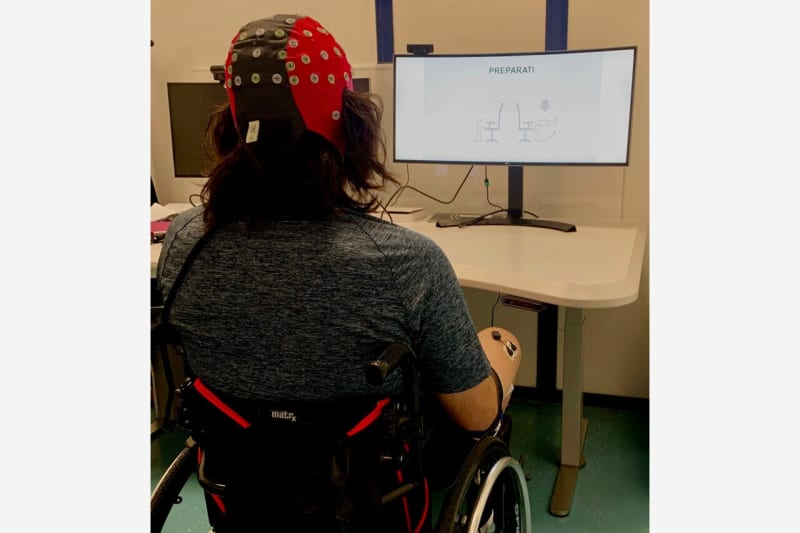
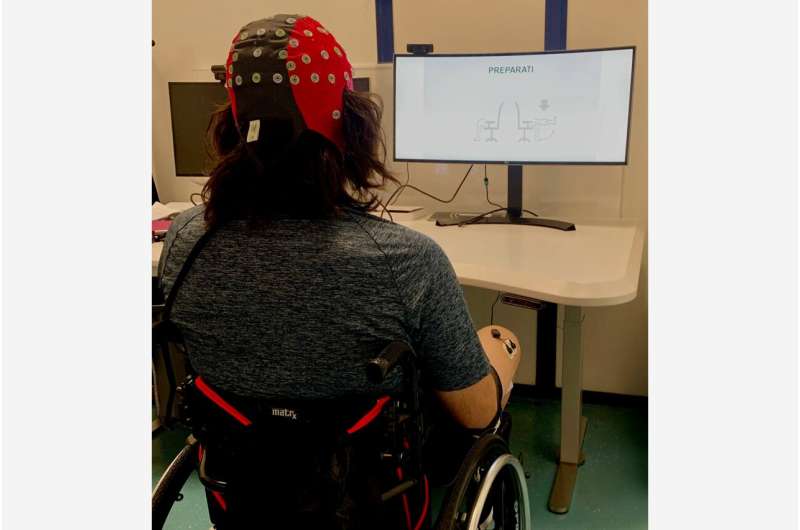
Laura Toni and her team wanted a gentler solution. They turned to EEG technology, those electrode caps you might recognize from sleep studies or brain research. The caps sit on the outside of your head, making them completely noninvasive.
The challenge? Reading brain signals through the skull is like trying to hear a whisper through a wall. The deeper brain regions that control leg and foot movements are especially hard to detect from the surface.
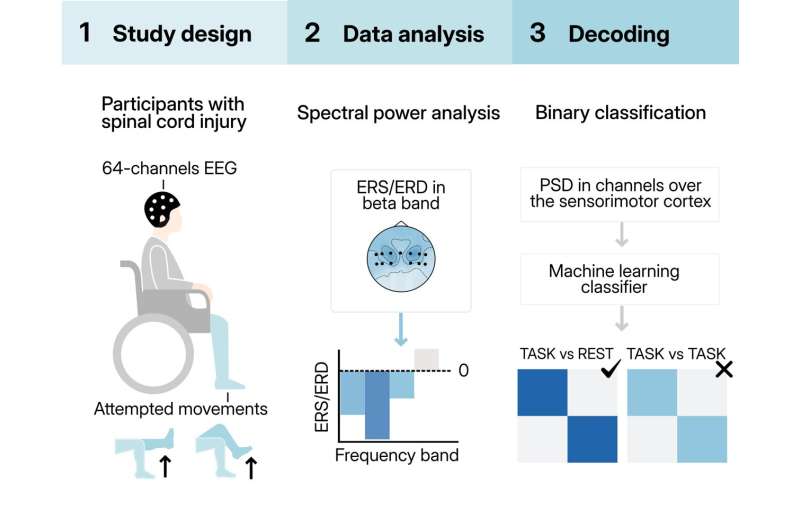
So the researchers got creative with machine learning. They equipped patients with EEG monitors and asked them to attempt simple movements. Their algorithm learned to sift through the fuzzy signals and identify patterns.
The Bright Side
The team successfully detected the difference between attempted movement and rest. That's huge progress for a completely noninvasive approach. While they couldn't yet distinguish between specific movements like standing versus walking, they've already mapped out their next steps.
They're working to refine their algorithm to recognize different movement types. Once perfected, the system could read a patient's intention to stand or climb stairs, then trigger the appropriate response in a spinal cord stimulator.
The beauty of this research goes beyond the technology itself. By avoiding surgery, this approach could make movement restoration accessible to far more patients. Lower risk means more people can try it. Simpler equipment means lower costs and easier maintenance.
For the millions of people worldwide living with spinal cord injuries, this research offers something precious: hope that restoring movement might not require going under the knife. The path from brain to limb might soon be as simple as putting on a cap.
More Images

Based on reporting by Medical Xpress
This story was written by BrightWire based on verified news reports.
Spread the positivity!
Share this good news with someone who needs it