Brain Drain: Philly Doctors Test Tiny Thread vs Surgery
A South Jersey man became the first patient to try a groundbreaking brain procedure that works through the groin instead of the skull. The tiny thread device could replace invasive brain surgery for thousands living with a commonly misdiagnosed disorder.
John Sackett expected surgeons to cut open his skull when he walked into Jefferson Health in Philadelphia. Instead, doctors threaded a device no thicker than a strand of hair through his groin, and he went home the next day.
Sackett had been struggling with memory problems and difficulty walking. His wife noticed the changes first. After extensive testing, doctors diagnosed him with normal pressure hydrocephalus, a condition where fluid builds up in the brain for unknown reasons.
The disorder affects thousands of Americans but often gets confused with Alzheimer's or Parkinson's disease. Getting the right diagnosis matters because this condition can actually be treated.
Traditional treatment requires invasive brain surgery to install a shunt that drains excess fluid. Surgeons cut through the skull and insert tubes directly into brain tissue. Recovery takes weeks, and patients face risks of infection, bleeding, and stroke.
Dr. Pascal Jabbour, chair of neurological surgery at Jefferson Health, is testing a completely different approach. The endovascular cerebrospinal fluid shunt, called an E-shunt, does the same job as traditional brain surgery without any incisions in the head.
Doctors insert a catheter through a small puncture in the groin and thread the tiny device up through blood vessels into the brain. The hair-thin thread acts as a drain for excess fluid. The whole procedure takes about an hour.
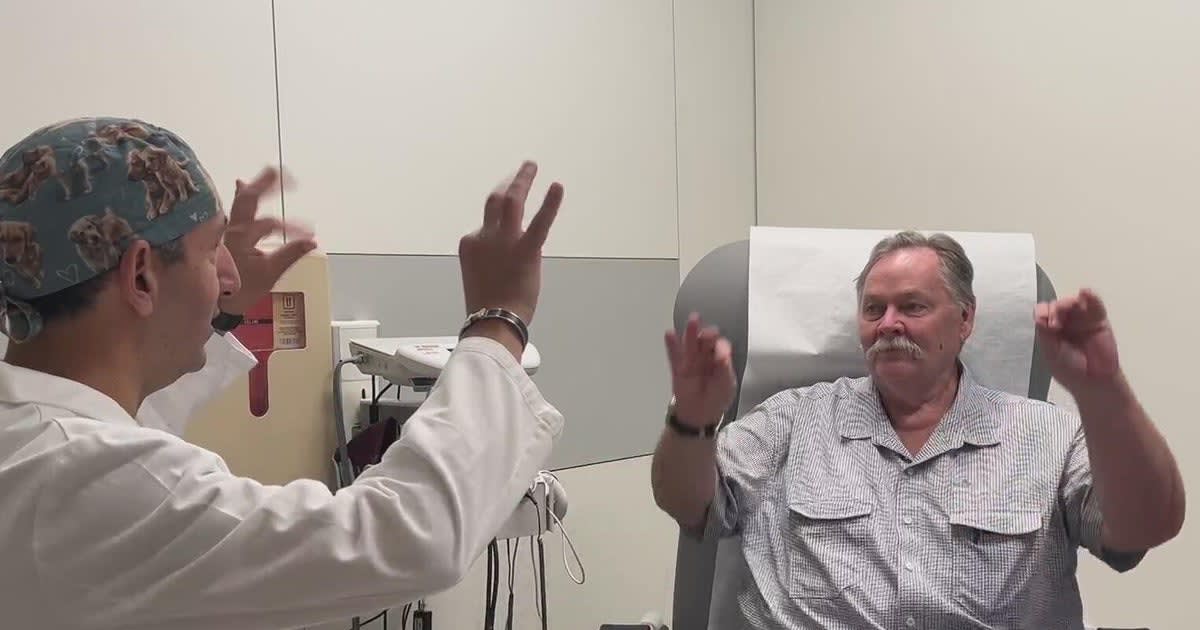
Sackett became the first patient at Jefferson to receive the E-shunt as part of a clinical trial. He remembers joking with doctors about his expectations. "I expected them to cut the top of your head off, pull it all apart, and velcro everything back together," he said.
The reality shocked him. No incisions on his head. No pain. He walked out of the hospital the next day feeling fine.
Why This Inspires
Sackett himself doesn't notice much difference in his daily life. But his wife sees remarkable changes in the man she's known for decades. She tells him his walk looks steadier and his memory has sharpened.
For Sackett, the most amazing part is the technology itself. Something so small, barely visible to the naked eye, restored abilities he thought he'd lost forever. "It's amazing," he said, holding up his fingers to show just how tiny the device is.
If the clinical trial succeeds, thousands of people facing brain surgery each year could have a gentler option. Less risk. Less pain. Less time away from the life they want to live.
Sackett got his life back through a procedure he barely felt.
Based on reporting by Google News - New Treatment
This story was written by BrightWire based on verified news reports.
Spread the positivity!
Share this good news with someone who needs it