Brain Enters New Phase Between Ages 50 and 75
Scientists discovered the aging brain doesn't just decline—it actively remodels itself between ages 50 and 75. This breakthrough reveals why age is the biggest risk factor for Alzheimer's and opens doors to new treatments.
Your brain doesn't simply fade with age. Between 50 and 75, it transforms in ways scientists are only beginning to understand.
Researchers at Columbia University and UC Irvine analyzed individual cells from the human hippocampus, the brain region crucial for learning and memory. What they found challenged decades of assumptions about how our brains age.
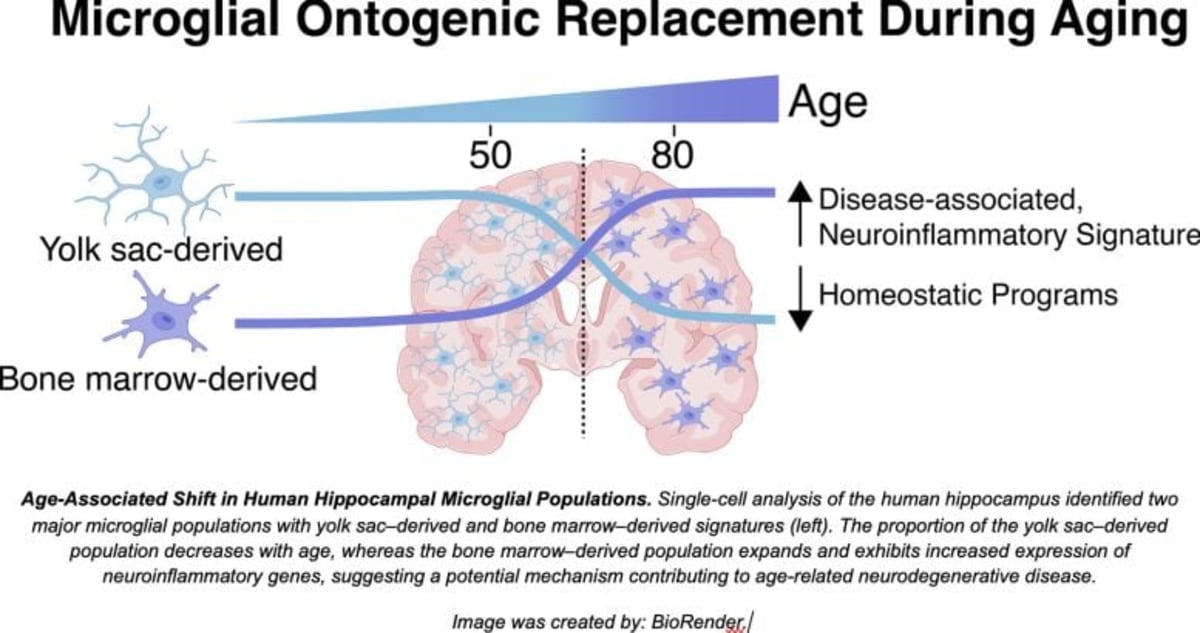
The most dramatic change happens to microglia, the immune cells that protect and maintain brain health. These cells, which formed before we were born and were thought to last our entire lives, actually get replaced during midlife. The new cells carry stronger inflammatory signatures, potentially explaining the persistent inflammation linked to brain aging.
But the cellular shake-up doesn't stop there. The protective blood-brain barrier, which keeps harmful substances out of brain tissue, also weakens substantially during this period. At the same time, the three-dimensional structure that organizes our DNA inside cells becomes progressively less organized across multiple brain cell types.
"When these cells fail to perform their housekeeping duties, toxic materials accumulate that can trigger inflammatory processes," said Dr. Bing Ren, Scientific Director and CEO of the New York Genome Center. The accumulation may contribute to neurodegenerative diseases like Alzheimer's.
Why This Inspires
This discovery flips the script on brain aging. For years, scientists viewed aging as simple deterioration, a slow march toward decline. Instead, this research reveals coordinated biological remodeling, an active process the body undertakes as we grow older.
Understanding that aging involves intentional changes rather than random breakdown gives researchers specific targets for intervention. If scientists can identify what triggers these midlife transitions, they might be able to preserve brain function longer or even prevent some age-related diseases.
The study is part of a decade-long National Institutes of Health initiative that mapped how genome architecture changes across time and space. Six related studies published together establish a comprehensive resource for investigating how failures in genome organization relate to development, aging, and disease.
"These findings open the door to identifying new therapeutic targets aimed at preserving circuit integrity and brain function across the lifespan," said Dr. Xiangmin Xu, who co-led the research.
The work represents one of the most detailed accounts yet of cellular changes in the aging human brain, offering hope that what we once thought was inevitable might actually be manageable.
More Images
Based on reporting by Google News - Scientists Discover
This story was written by BrightWire based on verified news reports.
Spread the positivity!
Share this good news with someone who needs it