Brain Models That Compete Work More Like Real Brains
Scientists discovered that digital brain models work better when brain regions compete for resources, just like in real life. This breakthrough could revolutionize personalized medicine and help more treatments succeed in human trials.
Your brain can't do everything at once, and now scientists know why that's actually a good thing.
Researchers just solved a major puzzle in creating digital twins of human brains. For 20 years, computer models of brains have been forcing different regions to cooperate all the time. But a new study in Nature Neuroscience shows that's not how real brains work.
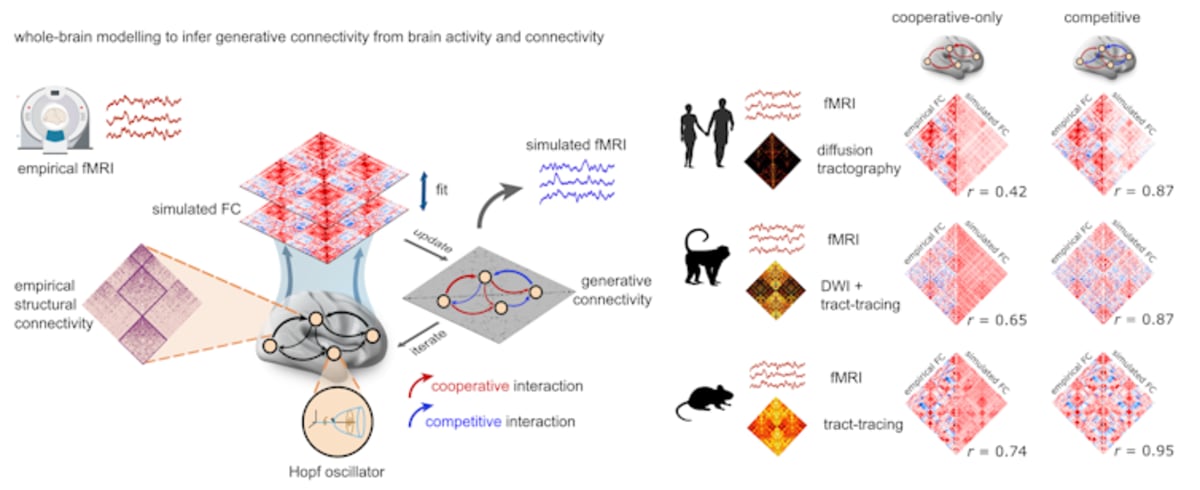
The team tested brain models on humans, monkeys, and mice. They compared two approaches: one where all brain regions cooperated, and another where regions could both excite and suppress each other. The competitive models won every time.
This matters because your brain has a unique "fingerprint" of neural connections. Most digital brain twins today barely work better than using a random stranger's wiring diagram. That's a problem when doctors want to use these models to test treatments before applying them to real patients.
The competitive models captured something crucial. When you focus attention or switch between tasks, different brain systems are actually fighting for limited resources. Not everything can be active at once.
The researchers analyzed over 14,000 neuroimaging studies to confirm their findings. Brain models with competition generated activity patterns that closely matched real cognitive processes like attention and memory. They also captured each person's unique brain fingerprint far better than cooperative-only models.
Why This Inspires
This discovery could transform how we develop treatments for brain disorders. Right now, about 90 percent of treatments that work in animal trials fail when tested in humans. That's a heartbreaking "lost in translation" problem that costs time, money, and hope.
A framework that works across species changes everything. Doctors could combine brain imaging from human patients with these improved models to predict which treatments will actually work. That means fewer failed trials and faster paths to help for people suffering from neuropsychiatric disorders.
The competitive approach also helps explain why mammalian brains are thousands of times more energy-efficient than modern AI systems. By taking turns rather than running everything simultaneously, brains avoid wasting precious resources.
Scientists can now build digital twins that truly reflect what makes each brain unique. When regions compete in the model just like they do in your head, the simulation becomes genuinely personal rather than generic.
This breakthrough brings us closer to a future where your doctor can test treatments on a digital version of your brain first, finding the right approach without trial and error on you.
More Images




Based on reporting by Singularity Hub
This story was written by BrightWire based on verified news reports.
Spread the positivity!
Share this good news with someone who needs it