Brain Signal Explains Autism Communication Challenges
University of Virginia researchers discovered a brain signal pattern that explains why some autistic children communicate more easily than others. The breakthrough could help objectively measure communication challenges and test new therapies.
Scientists may have found a biological explanation for why communication comes easier to some autistic children than others.
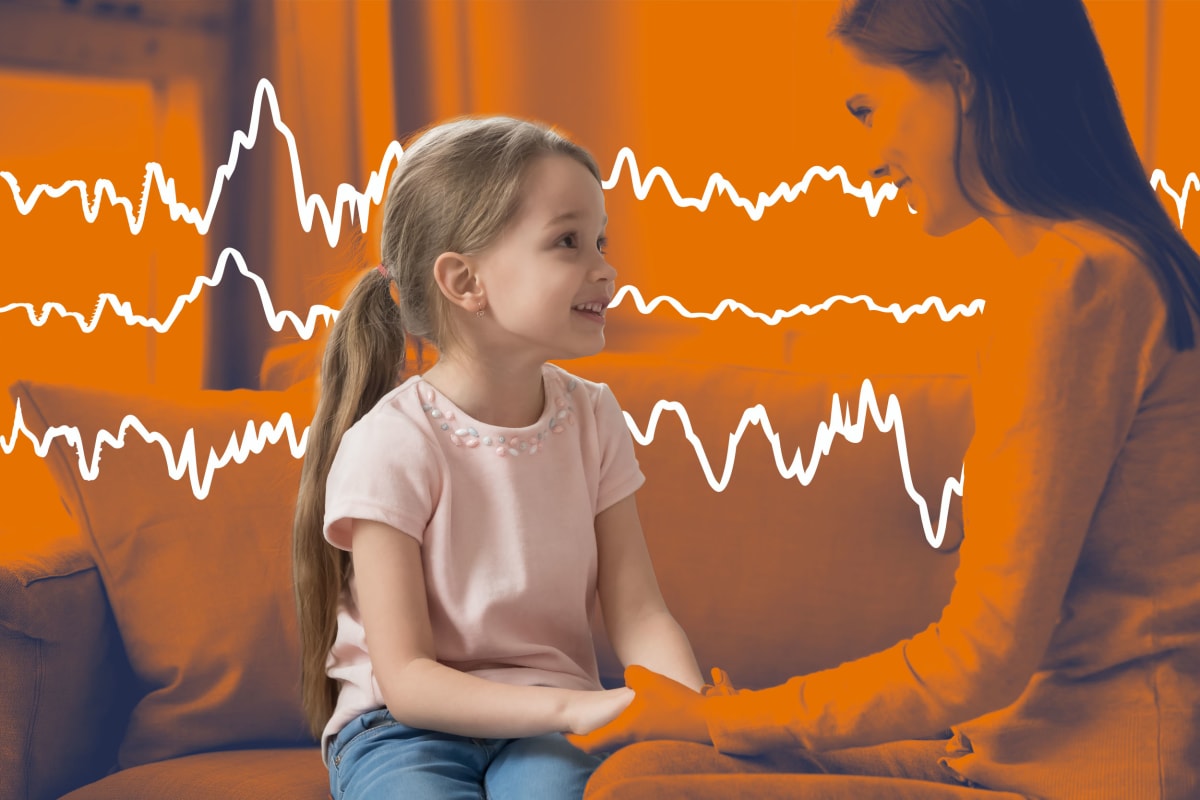
Researchers at the University of Virginia studied brain activity in more than 300 children and teens while they listened to speech. They discovered that subtle electrical patterns in the brain were linked to how well autistic young people communicate in everyday life.
The study analyzed 162 youths with autism and 144 typically developing peers, all aged 7 to 18. Participants wore special caps with 128 sensors that recorded their brain activity while listening to nonsense words designed to test how the brain processes speech.
Instead of looking at traditional brain waves, the team examined something called the brain's "aperiodic" signal. This signal shows the balance between excitation and inhibition, two processes that help the brain separate meaningful information from background noise.
Autistic participants showed different patterns in these signals, suggesting increased neural "noise" that might make processing speech less efficient. The children whose brain activity appeared noisier also scored lower on everyday verbal communication tests.
Importantly, these brain signals weren't connected to traditional language skills like vocabulary or grammar. They specifically related to real-world communication abilities.
"This is an important step toward understanding the neural mechanisms underlying communication in autism," said neuroscientist Kevin Pelphrey, a study coauthor. "If we can identify reliable biological markers, they could eventually help researchers evaluate interventions more objectively."
The Ripple Effect
The findings could transform autism research by providing an objective way to measure communication challenges beyond behavioral observations. Currently, most clinical assessments rely on watching and documenting behaviors rather than measuring biological indicators.
This breakthrough could eventually help doctors and therapists monitor whether treatments are actually changing brain function. It might also explain why communication abilities differ so widely across the autism spectrum.
The research team notes this isn't a diagnostic test for autism. Additional studies are needed, particularly with minimally verbal individuals, before the findings could influence clinical care.
Professor Jack Van Horn from UVA's School of Data Science explained that advances in computational analysis now let researchers separate meaningful signals from background activity in ways that weren't possible just a few years ago. The human brain generates massive amounts of data every second, and new techniques are finally making that data understandable.
The study represents one of the largest EEG datasets of its kind and moves scientists closer to combining biological measures with behavioral evaluations for a fuller picture of autism.
Based on reporting by Google News - Researchers Find
This story was written by BrightWire based on verified news reports.
Spread the positivity!
Share this good news with someone who needs it