New CRISPR Tool Kills Cancer Cells, Spares Healthy Ones
Scientists have transformed a CRISPR enzyme into a precision weapon that hunts down cancer cells while leaving healthy tissue untouched. The breakthrough could tackle "undruggable" cancers that have frustrated doctors for decades. #
Scientists just found a way to make cancer cells self-destruct while leaving your healthy cells completely alone.
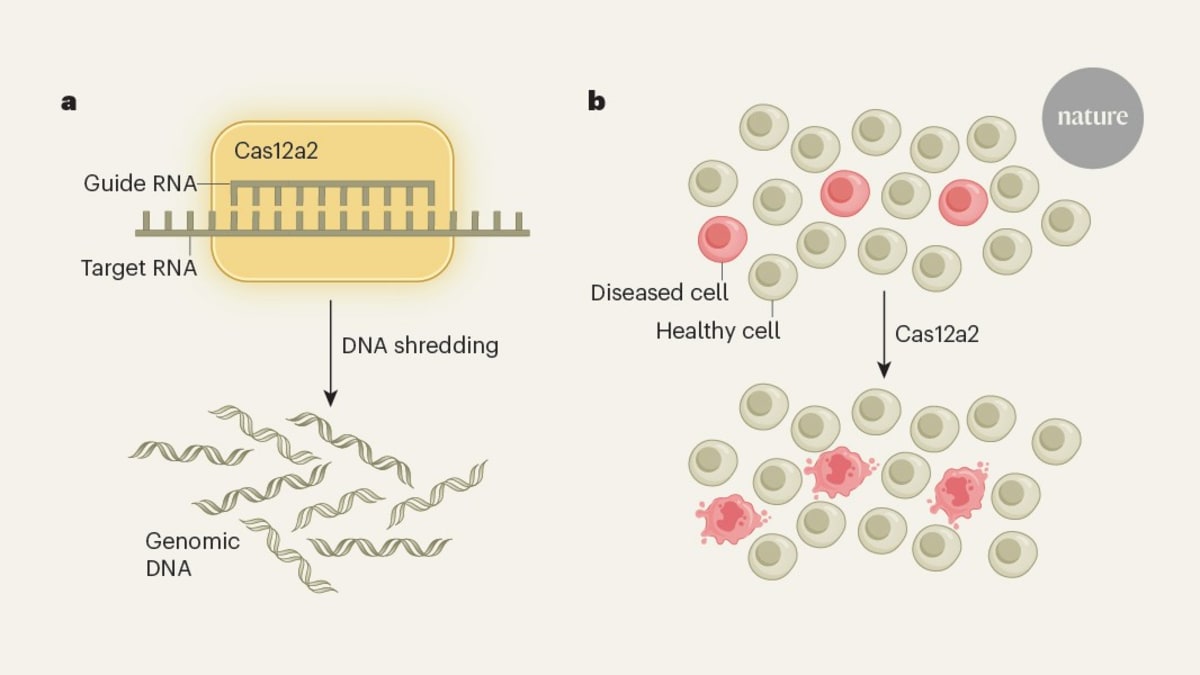
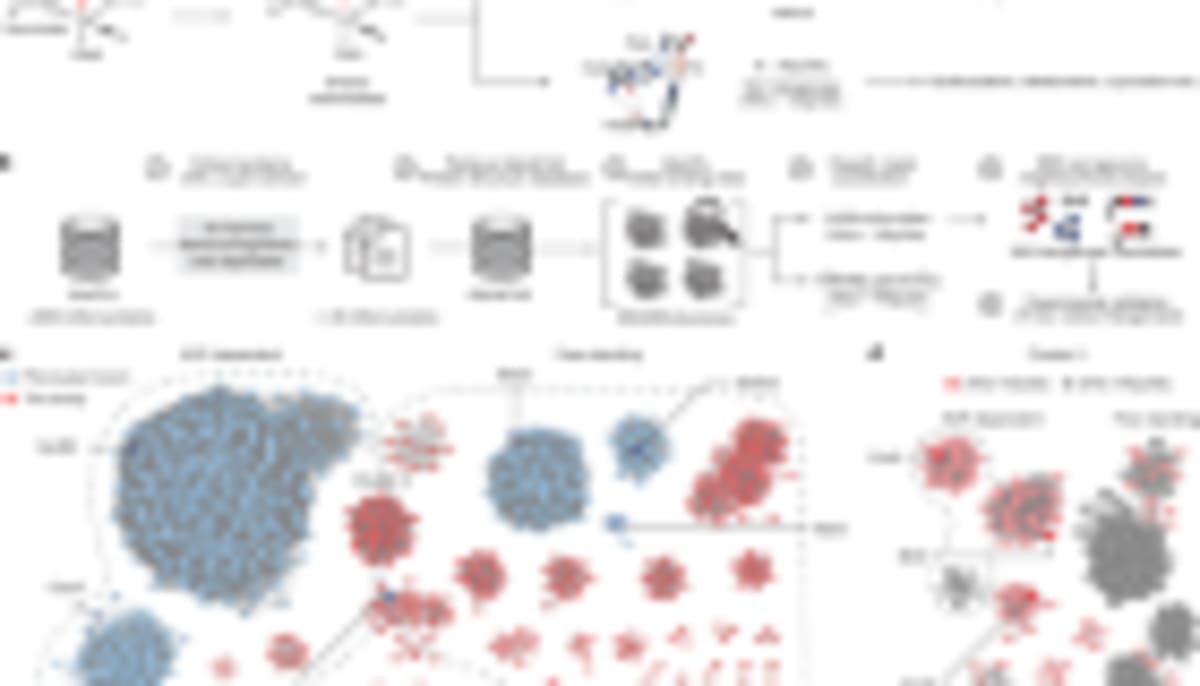
Two research teams publishing in Nature have discovered that a CRISPR enzyme called Cas12a2 can be programmed to detect cancer mutations and shred DNA only in diseased cells. Think of it as a microscopic smart bomb that knows exactly which cells to target.
The breakthrough tackles a problem that's plagued cancer treatment for years. Many cancer mutations, including those in the notorious TP53 gene, have been considered "undruggable" because traditional therapies can't target them without harming healthy tissue. TP53 mutations appear in over half of all cancers.
Here's how it works. The Cas12a2 enzyme acts like a molecular detective, searching for specific cancer-associated RNA inside cells. When it finds a match, it triggers the destruction of that cell's DNA. Healthy cells without the mutation? The enzyme leaves them completely untouched.
This approach flips cancer treatment on its head. Instead of trying to fix broken genes, the new method simply eliminates the cells carrying them. It's precision medicine taken to a whole new level.
The Ripple Effect
The discovery opens doors beyond cancer treatment. Researchers believe this technology could tackle any disease caused by specific genetic mutations, from rare inherited disorders to viral infections.
The timing matters too. CRISPR gene editing has already shown promise in treating sickle cell disease and inherited blindness. This new application expands the toolkit dramatically, offering hope for conditions that seemed impossible to treat just a few years ago.
What makes this especially exciting is the selectivity. Traditional chemotherapy and radiation damage healthy cells along with cancerous ones, causing brutal side effects. This new approach could make cancer treatment far gentler on patients.
The technology builds on years of CRISPR research but uses the system in an unexpected way. Scientists originally developed CRISPR to edit genes, but Cas12a2 doesn't fix anything. It just identifies and destroys problem cells with surgical precision.
Both research teams demonstrated the concept works in laboratory settings. The next steps involve rigorous safety testing and clinical trials to prove the approach works in human patients.
The researchers emphasize this represents a completely new class of precision therapies. Instead of one-size-fits-all treatments, doctors could program the enzyme to target specific mutations in individual patients.
Why This Inspires
Cancer researchers have dreamed of this kind of precision for decades. The fact that it's now possible shows how far molecular biology has advanced in just a few years.
The approach also democratizes cancer treatment potential. Once proven safe, it could be adapted quickly for different cancer types without starting from scratch each time. That means faster paths from lab discovery to patient bedside.
Scientists believe the first human trials could begin within the next few years, bringing hope to patients facing cancers with currently untreatable mutations.
#
More Images
Based on reporting by Nature News
This story was written by BrightWire based on verified news reports.
Spread the positivity!
Share this good news with someone who needs it