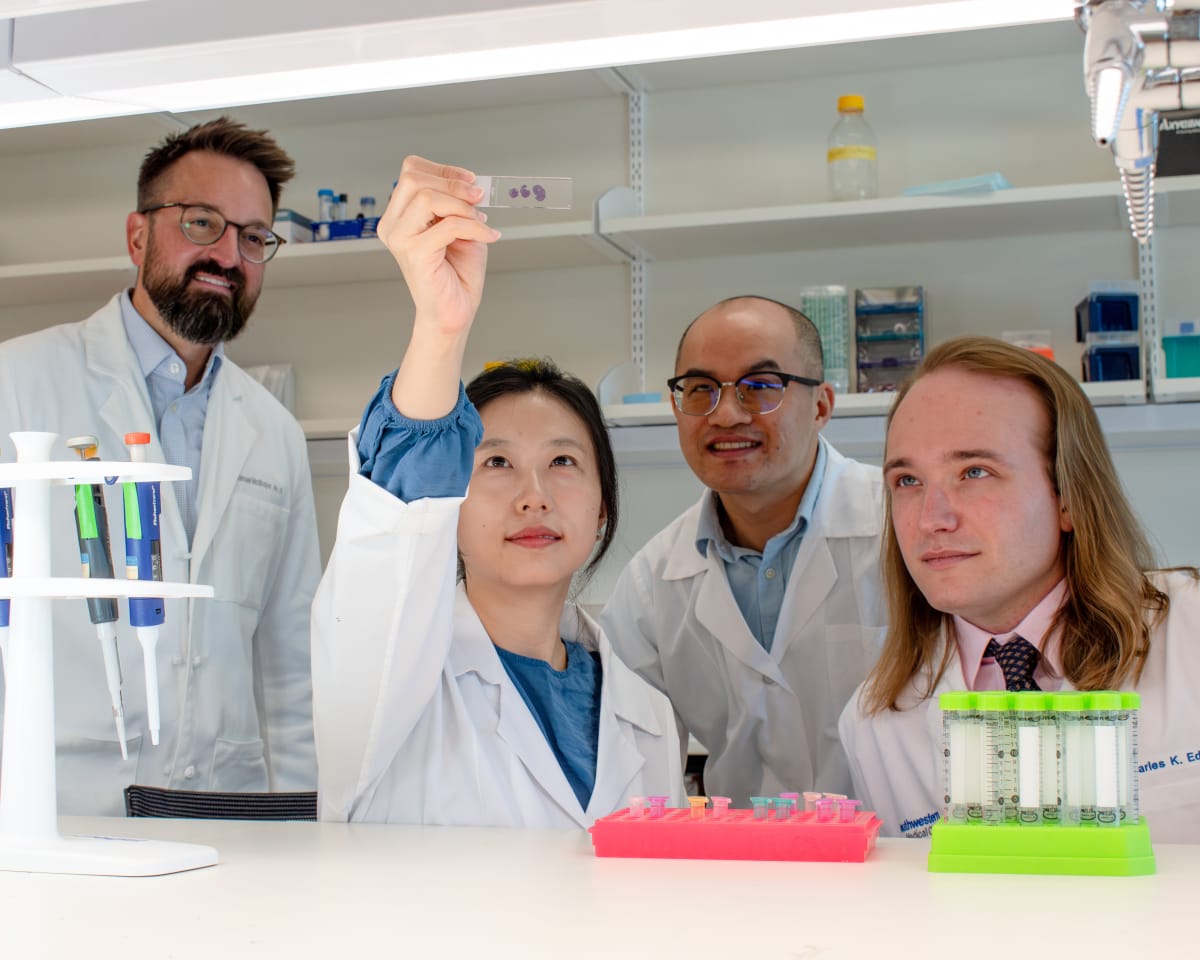
Brain Tumor Discovery Opens Path to Dietary Treatment
Scientists discovered why aggressive brain tumors grow so fast and are testing whether a simple dietary change could help stop them. The breakthrough connects brain cancer to a rare metabolic disorder that doctors already know how to treat.
Scientists at UT Southwestern just solved a puzzle that's stumped brain cancer researchers for years, and the answer might be sitting in your kitchen.
Researchers discovered that virtually all aggressive adult brain tumors accumulate massive amounts of a metabolite called guanidinoacetate, or GAA. This substance leaks out of cancer cells and hijacks nearby healthy neurons, forcing them to send signals that help tumors grow faster.
The team found GAA levels in these tumors spike to 100 times normal amounts. Cancer cells produce so much GAA that their systems can't convert it to creatine fast enough, so the excess spills into surrounding brain tissue.
Here's where it gets interesting. The GAA buildup in brain tumors looks identical to a known genetic condition called GAMT deficiency. Doctors already treat that disorder with dietary changes.
"We knew there is increased activity of neurons in brain tumors, but we had an incomplete understanding of how brain tumors cause that increase in activity," said study leader Dr. Samuel McBrayer. His team published their findings in the journal Cell.
The researchers proved the connection through multiple experiments. When they blocked the enzyme making GAA in tumor cells, GAA levels dropped, neuron activity decreased, and tumor growth slowed down.
The Bright Side
Doctors aren't waiting years to help patients. They're launching a clinical trial right now to test whether the same dietary therapy used for GAMT deficiency can reduce GAA in brain tumor patients.
The trial will modify patients' diets before brain surgery. Then surgeons will analyze the removed tumor tissue to see if the dietary changes reduced GAA levels.
"We are going to take these laboratory findings and immediately see how to benefit patients," said Dr. Kalil Abdullah, the study's first author and System Director for Central Nervous System Cancer at Northwell Health.
If the dietary approach successfully lowers GAA in tumors, the next studies will test whether it improves treatment response and survival rates. The beauty of this approach is its simplicity compared to developing new drugs from scratch.
Dr. McBrayer credits his team's unique position at the Children's Medical Center Research Institute. Being part of the Genetic and Metabolic Disease Program let them spot connections between rare disorders and cancer that other researchers might miss.
The research represents a major shift in understanding how brain tumors manipulate their environment to grow. Instead of just attacking cancer cells directly, doctors might soon help patients by changing what those cells have available to work with.
For patients facing aggressive gliomas, this discovery transforms a devastating diagnosis into a problem with a potential solution already sitting on the shelf.
Based on reporting by Google News - Scientists Discover
This story was written by BrightWire based on verified news reports.
Spread the positivity!
Share this good news with someone who needs it