Brain's "Focus Switch" Could Transform ADHD Treatment
Scientists at Johns Hopkins discovered ancient brain cells that act like a built-in distraction filter, offering new hope for millions with ADHD. When these neurons were switched off in mice, attention problems appeared instantly but reversed just as quickly when reactivated.
A tiny cluster of neurons hidden deep in the brain might finally explain why some people struggle to focus while others can tune out the noisiest distractions.
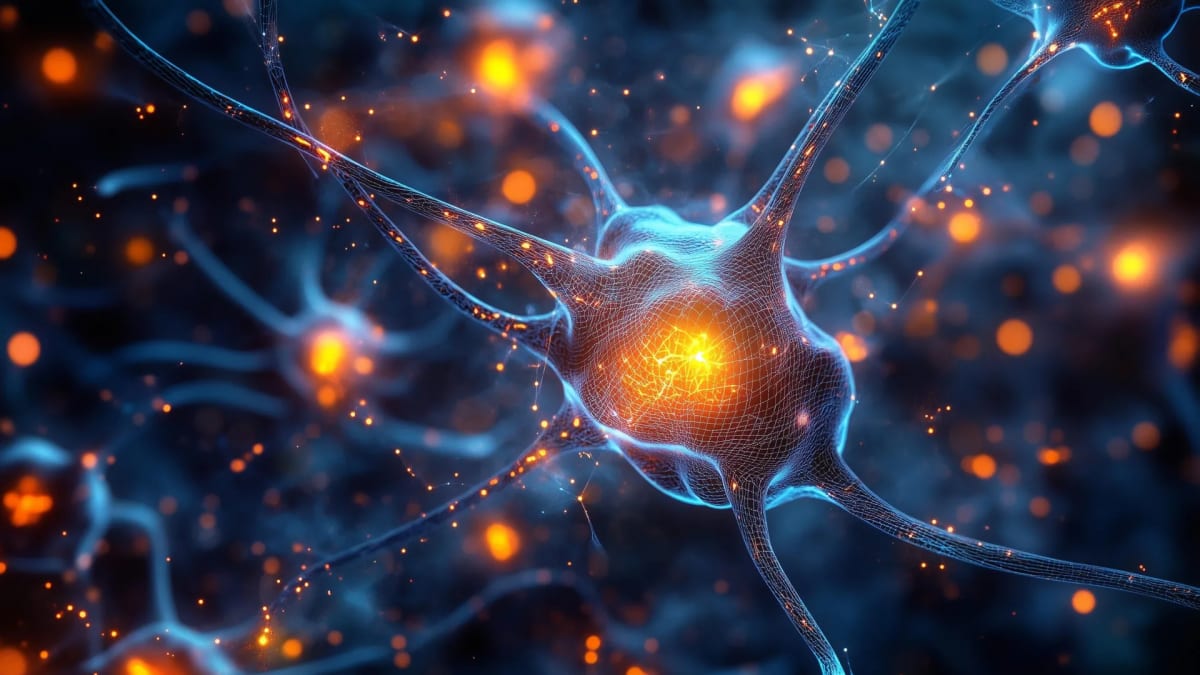
Researchers at Johns Hopkins University have identified a group of brain cells in the brainstem that work like a focus engine, filtering out unimportant information so we can zero in on what matters. These neurons exist in an ancient part of the brain shared by all animals with backbones, from fish to birds to humans.
The discovery happened when neuroscientist Shreesh Mysore and his team trained mice to focus on visual cues while ignoring distractions on a screen. The mice aced the task until researchers temporarily disabled these brainstem neurons.
"When we inactivate these neurons, the mice become hyper distractible," said lead author Ninad Kothari. But here's the remarkable part: the very next day, when the neurons were switched back on, the same mice could ignore even strong distractions again.
The finding challenges decades of assumptions. Scientists long believed our prefrontal cortex, the brain's executive control center, managed all attention tasks. But that theory couldn't explain how birds and fish focus just fine without a developed prefrontal cortex.
The answer lay in evolution. For hundreds of millions of years, animals have relied on these brainstem neurons to solve a critical survival problem: deciding what deserves attention right now.
The team ruled out vision or movement problems in the distracted mice. The animals could see and move perfectly fine. They simply lost the ability to compare competing information and choose the most important signal, exactly like what happens in ADHD.
The Bright Side
All evidence suggests these same neurons exist in humans too. If they function the same way in our brains, researchers may have found a new target for ADHD treatments that work differently than current medications.
Future studies will examine whether these neurons behave differently in people with ADHD and autism. If scientists can map exactly how these cells work, they might develop therapies that help millions of people strengthen their natural focus filter instead of just managing symptoms.
The study, published in Nature Communications and selected as an editorial highlight, opens a door that's been closed for too long. Sometimes the answers we need aren't in the newest, most complex parts of our brain but in the ancient systems we've carried for millions of years.
Based on reporting by Science Daily
This story was written by BrightWire based on verified news reports.
Spread the positivity!
Share this good news with someone who needs it