Brain's Hidden Wiring May Protect Memory as We Age
Scientists discovered that healthy connections just beneath the brain's surface may help shield older adults from cognitive decline, even as gray matter naturally shrinks. The finding could explain why some people stay sharper than others in their later years.
Your brain might have a backup plan for keeping you sharp as you age.
Scientists at USC's Keck School of Medicine have discovered that a thin layer of nerve fibers beneath the brain's surface may help protect thinking abilities even when gray matter shrinks with age. The finding offers new hope for understanding why some older adults maintain better cognitive health than others.
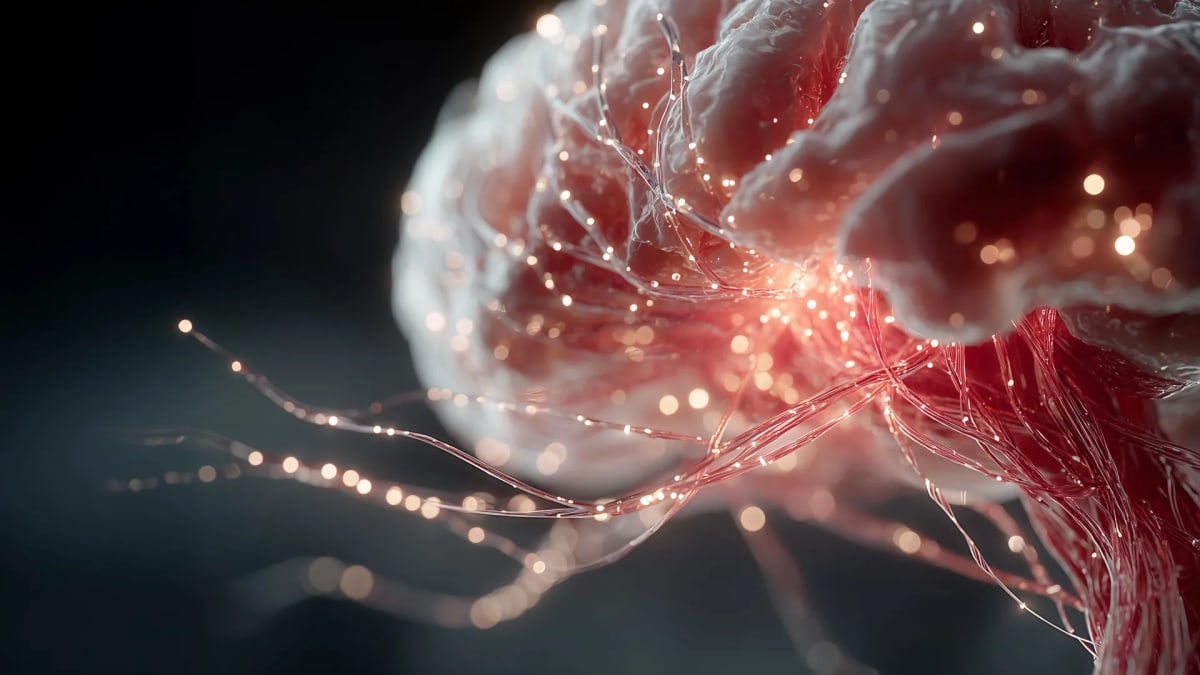
The research focused on superficial white matter, a network of short nerve fibers connecting nearby brain regions. Think of these as local roads linking neighboring areas, allowing them to share information quickly. Gray matter processes information, while this underlying wiring helps regions communicate.
The study included 459 adults aged 60 and older from communities across India. Researchers used advanced brain imaging to measure the health of these hidden connections and tested participants on memory, language, and other cognitive skills.
The results revealed something encouraging. People with healthier superficial white matter performed better on language tests, especially in brain regions involved in recognizing words and speaking fluently. Even more promising, when these local connections were healthy, gray matter loss had less impact on cognitive performance.
Two people might lose similar amounts of gray matter, but experience very different cognitive outcomes depending on the condition of their brain's local wiring. When superficial white matter was healthier, the link between gray matter loss and cognitive decline was weaker.
"Our findings suggest that cognitive health depends not only on how much gray matter is preserved, but also on the condition of the wiring that connects it," said Dr. Yingxu Liu, first author of the study published in Alzheimer's & Dementia.
The research broke new ground by studying a population that included many people with limited formal education and rural backgrounds, groups historically underrepresented in brain studies. Interestingly, the protective effect of healthy brain wiring appeared even stronger among participants with no formal education or those living in rural areas.
Why This Inspires
This discovery suggests our brains may have built-in resilience we didn't fully understand. The condition of these local connections could be a key piece of the puzzle explaining why cognitive aging varies so much between individuals. While gray matter loss remains the strongest predictor of cognitive changes, knowing that healthy wiring can help cushion those effects opens new possibilities for supporting brain health as we age.
The next step involves following participants over time to see if preserving these connections actually helps maintain sharper thinking. Understanding this hidden protective factor could eventually lead to new ways of supporting cognitive health in later life, giving hope that our brains have more defenses against decline than we realized.
Based on reporting by Science Daily
This story was written by BrightWire based on verified news reports.
Spread the positivity!
Share this good news with someone who needs it