Brazilian Scientists Destroy Water Pollutants with Sparks
Researchers in Brazil discovered a way to completely destroy pharmaceutical pollutants in water using high-energy sparks, solving a problem that has stumped environmental scientists for years. The breakthrough could finally clean drugs from rivers and waterways without creating toxic byproducts.
Scientists in Brazil just cracked a pollution problem that's been poisoning waterways worldwide for decades.
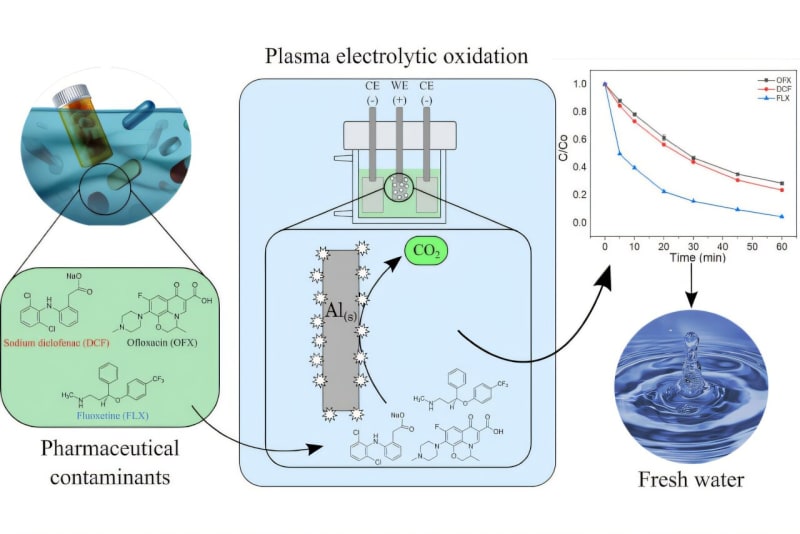
A team at the Federal University of São Carlos discovered that tiny electric sparks can completely destroy pharmaceutical pollutants in water. The method doesn't just break down drugs like antibiotics and antidepressants. It carbonizes them entirely, turning complex molecules into simple carbon dioxide and water.
Professor Ernesto Chaves Pereira led the research after years of frustration with existing cleanup methods. Traditional approaches like filters and catalysts only partially break down drugs, often creating byproducts that are even more toxic than the original contaminants.
The sparks form during a process called plasma electrolytic oxidation, where aluminum sits in contaminated water and receives an electrical charge. These micro-discharges last only fractions of a second but reach temperatures so extreme that researchers nicknamed them "the second sun."
The team tested three common pharmaceutical pollutants: the antibiotic ofloxacin, the anti-inflammatory diclofenac, and the antidepressant fluoxetine. After 60 minutes of treatment, the sparks destroyed 93% of the fluoxetine, 60% of the ofloxacin, and 58% of the diclofenac.
The breakthrough matters because pharmaceutical pollution persists stubbornly in nature. Drug companies design medications to last in the body, which means they also last in rivers and lakes after people excrete them. Even tiny concentrations can harm wildlife and create antibiotic-resistant bacteria.
Why This Inspires
Previous cleanup methods consumed enormous amounts of energy and often failed to remove drugs at the low concentrations found in real waterways. This new approach works best at those exact low levels, making it practical for actual rivers and streams.
The sparks also performed better when treating mixtures of different drugs, which is how pollution appears in the real world. Pereira's team found their method costs far less in energy than conventional treatments while achieving complete mineralization.
The researchers have already filed for a patent and begun testing the technology on bacteria and petroleum derivatives. Their study, published in the Chemical Engineering Journal in late 2025, fills what Pereira calls "a critical gap in current technologies by ensuring complete mineralization and eliminating risks associated with secondary pollution."
After four years of development, the solution is ready for the next steps toward real-world application. Rivers that have carried pharmaceutical pollution for decades might finally get the cleanup they need.
More Images
Based on reporting by Phys.org
This story was written by BrightWire based on verified news reports.
Spread the positivity!
Share this good news with someone who needs it