Britain's Largest Iron Age Hoard Reveals 4-Horse Carriage
A metal detector user in Yorkshire discovered Britain's largest Iron Age treasure trove, now revealing evidence of the island's first 4-horse carriage and challenging assumptions about ancient northern England's wealth. After five years of study, the remarkable finds go on display for the first time at the Yorkshire Museum.
📺 Watch the full story above
A treasure hunter in northern England just rewrote the history books with a discovery so massive that archaeologists were left speechless.
In 2021, an unnamed metal detector user was scanning a field near Melsonby, Yorkshire, when their device started beeping. Instead of pocketing the find, they immediately called archaeologists, a decision that led to the discovery of Britain's largest Iron Age hoard ever found.
"Finding a hoard or collection of ten objects is unusual, it's exciting, but finding something of this scale is just unprecedented," said Tom Moore, Durham's head of archaeology. "We were just lost for words."
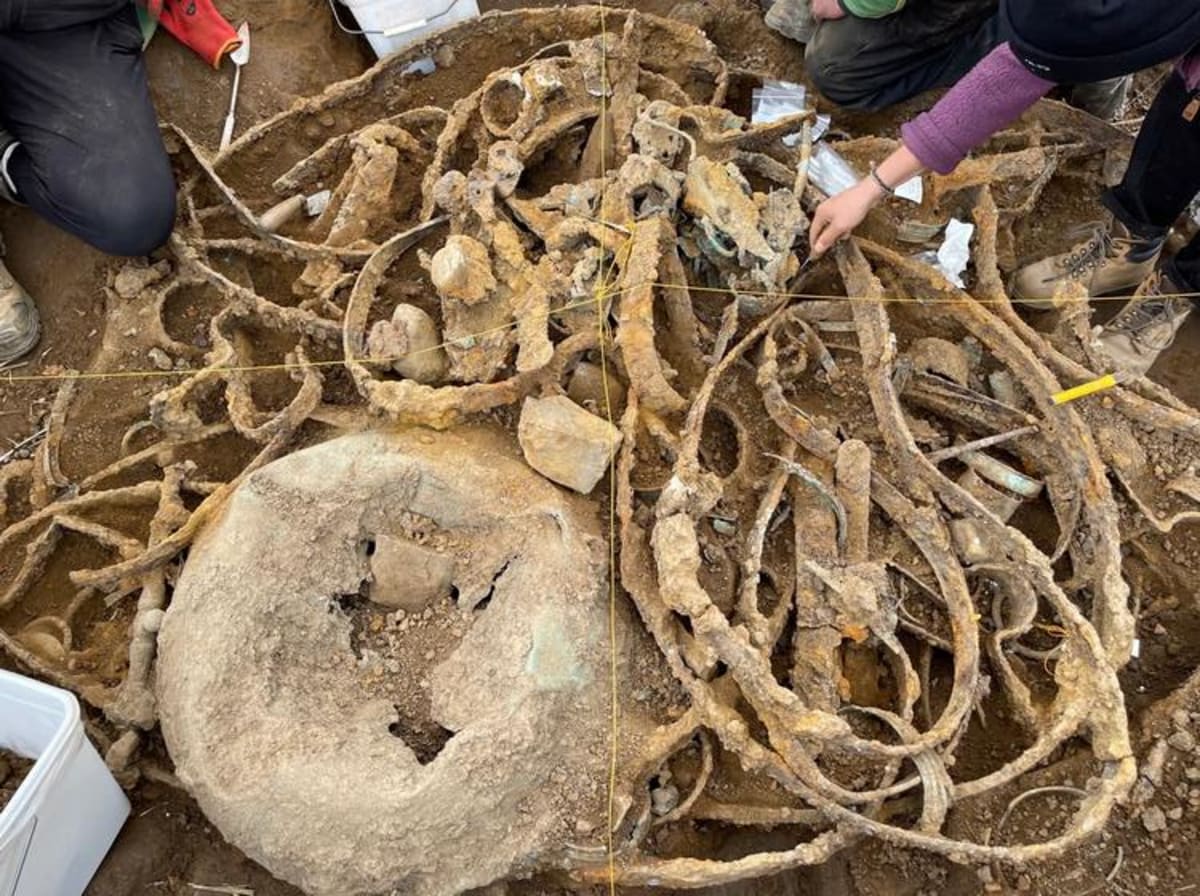
The hoard contains two remarkable groups of artifacts. The first includes carefully stacked chariot components and horse tackle, featuring bridles and bits that look surprisingly similar to modern versions. Excavators found 28 iron wagon tire bands stacked on top of each other, with wagon parts and harness pieces sandwiched between them.
These components reveal something never before seen in Iron Age Britain: evidence of a 4-horse-drawn carriage. The discovery includes lynchpins, yokes, and rein elements that point to sophisticated vehicle technology historians didn't know existed in the region.
The second group, nicknamed "the Block," is even more mysterious. This mass of fused iron and copper artifacts was apparently thrown into a large pit fire, pulled out while still hot, covered with a sheet, and buried. Even after a detailed CT scan in Southampton, much of what's inside remains unknown.
The Ripple Effect
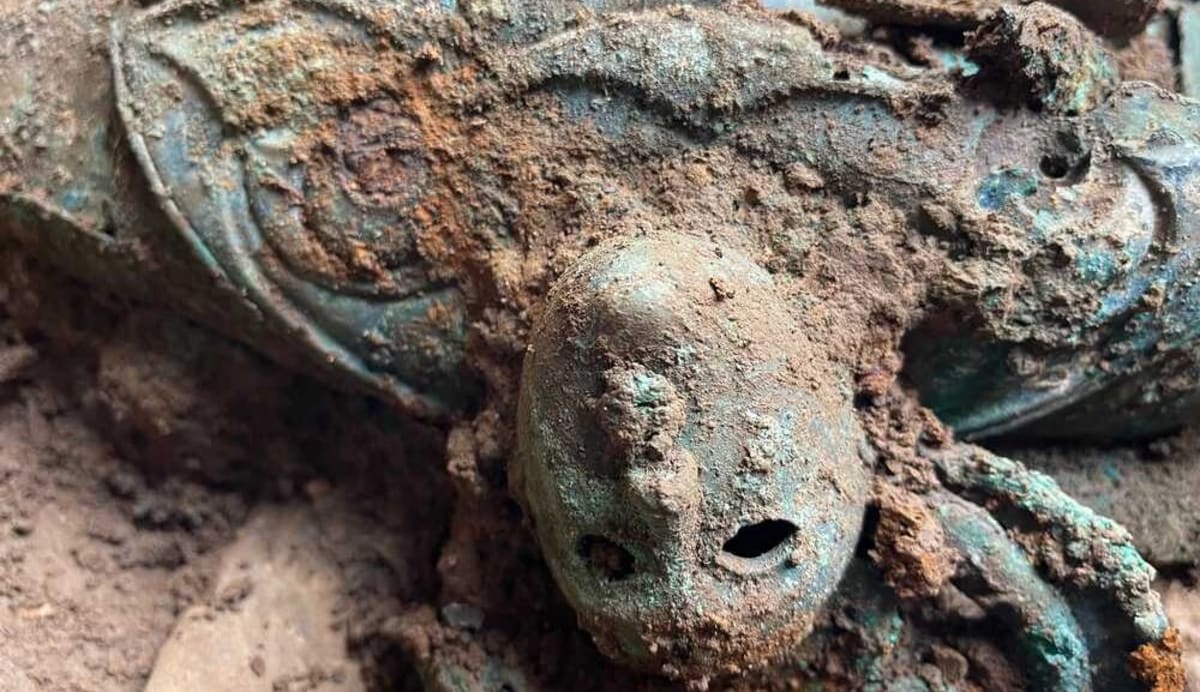
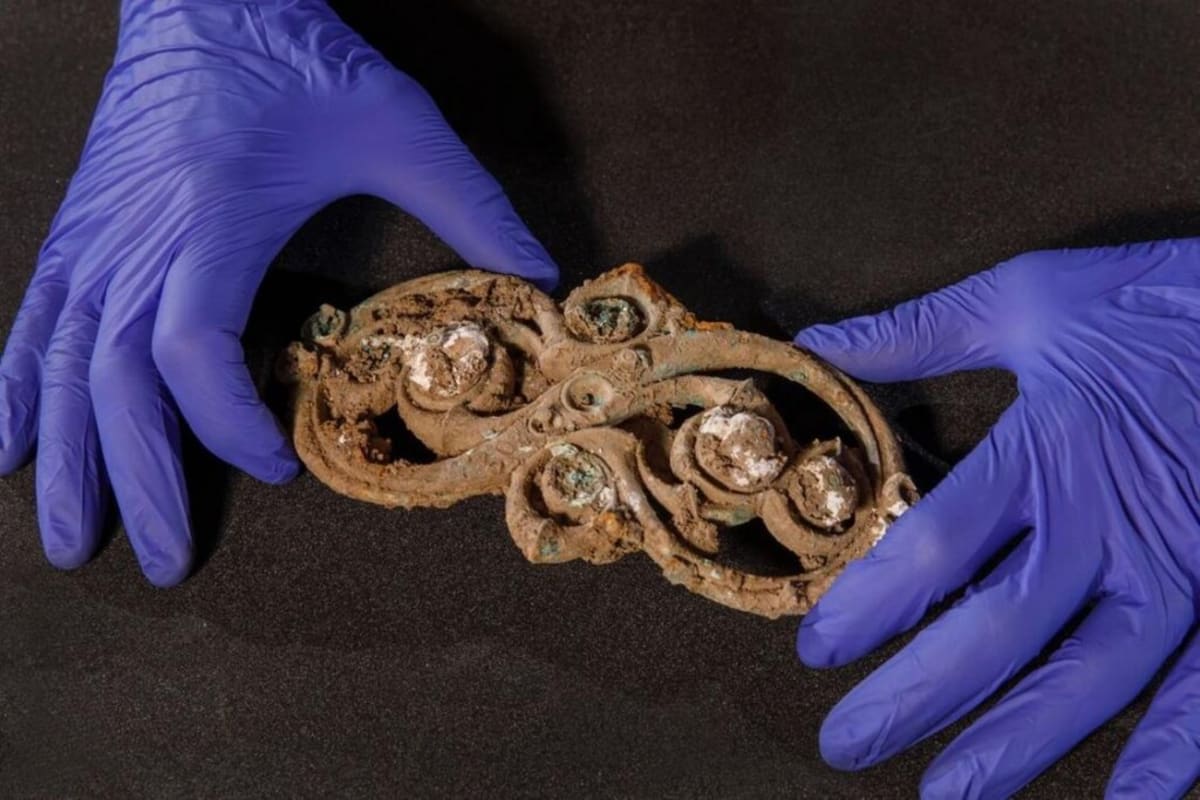
The hoard's most exciting finds suggest ancient Yorkshire wasn't the "rural backwater" historians assumed. Among the practical items, archaeologists found a large ornamented cauldron, a wine-mixing bowl with Mediterranean and British design elements, blue glass beads, and a mirror.
The wine bowl especially caught Moore's attention. "Its decoration combines both Mediterranean and British Iron Age styles. It also has elaborate decoration of coral, so whoever owned something like that has probably got a network across Britain and across into Europe and even the Roman world."
These luxury goods prove northern England had complex trade routes stretching across continents, possibly connecting with the Roman Empire. The discovery challenges the long-standing assumption that wealth and advanced technology existed only in southern Britain during this period.
The artifacts likely belonged to someone connected to the Brigantes tribe, who lived at nearby Stanwick fort. This tribe was ruled by Cartimandua, Britain's first documented female sovereign.
The exhibition "Chariots, Treasure and Power: Secrets of the Melsonby Hoard" now displays parts of this treasure at the Yorkshire Museum. Researchers are still working to answer key questions: Why was the hoard buried? Why were objects burned and destroyed? Who owned these lavish items?
After 3,000 years underground, northern England's forgotten riches are finally getting the recognition they deserve.
More Images
Based on reporting by Good News Network
This story was written by BrightWire based on verified news reports.
Spread the positivity!
Share this good news with someone who needs it