Brown Brain Fair Draws Hundreds to Explore Neuroscience
More than 100 student volunteers transformed Brown University's Sayles Hall into a playground of brain science, where Rhode Island families watched neurons in action and guided nerve fibers through mazes. For over a decade, this free event has made complex neuroscience accessible to curious learners of all ages.
A 6-year-old boy's eyebrows furrowed in concentration as he watched his father clench a fist and make his own fingers twitch without touching them. This magical moment of discovery was just one of dozens happening throughout Brown University's annual Brain Fair on March 15.
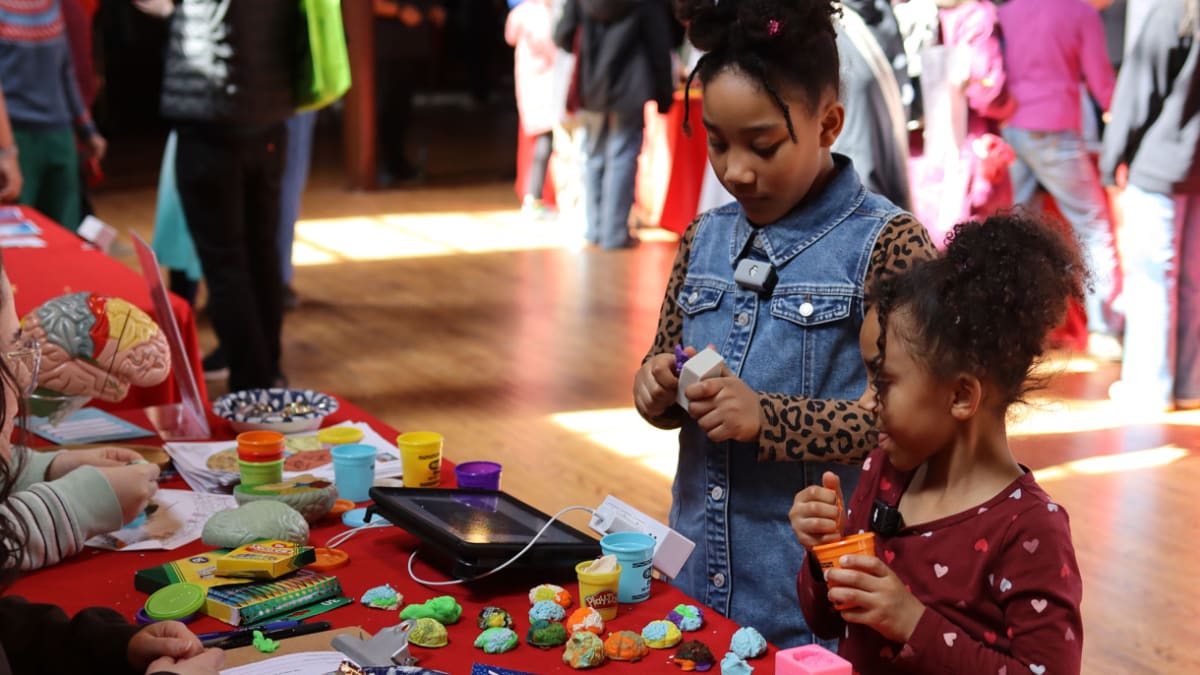
The free, all-ages event drew hundreds of Rhode Island families to explore the mysteries of the human brain through hands-on experiments, interactive games, and demonstrations. More than 25 Brown laboratories and research centers set up stations where visitors could see their own brain waves appear on screens, test their knowledge of neuroanatomy, and watch electrical signals travel between muscles in real time.
For Luc Gagne, who traveled from Warwick with his two children, the fair has become a cherished tradition spanning years. "The Brain Fair always has a lot of engaging things for the kids, and you learn something new every time," he said.
The event's secret weapon is its army of student volunteers. More than 100 Brown undergraduates, organized by the Brown Brain Bee student group in partnership with the Carney Institute for Brain Science, welcomed visitors and ran demonstrations throughout the day.
Eric Jiang, co-president of Brown Brain Bee, has helped organize the fair since 2024. His favorite part is manning the popcorn machine, where he asks families about their favorite discoveries.
Their answers reveal the magic happening across the hall. Some kids excitedly explain how memory works in the hippocampus after watching their brain waves get scanned with EEG electrodes. Others share facts about the longest neuron in the body while sporting freshly painted neurons on their faces.
One popular station turned brain development into a video game. Visitors guided a growing nerve fiber through a Pac-Man style maze, following magnetic signals while avoiding repelling ones to demonstrate how developing neurons navigate the brain to form connections that power thinking and movement.
The Ripple Effect
Ashley Bentley of Barrington watched her son experience the muscle-twitching demonstration and recognized something profound happening. "Moments like that are exciting because you know they'll remember them forever," she said.
That spark of curiosity represents the fair's deeper impact. When children pause to look closer and explore deeper, they're not just learning about neurons. They're discovering that science is accessible, exciting, and waiting to be explored.
The annual event has spent over a decade proving that complex brain science doesn't need to stay locked in laboratories. With creativity and enthusiasm, researchers can transform advanced neuroscience into experiences that captivate a 6-year-old and their parents equally.
Families left Sayles Hall with painted faces, popcorn, and new knowledge about the three pounds of tissue that makes everything possible.
More Images
Based on reporting by Google: scientific discovery
This story was written by BrightWire based on verified news reports.
Spread the positivity!
Share this good news with someone who needs it