Brussels Store Turns Demolition Waste Into Home Treasures
A Brussels cooperative is rescuing beautiful doors, tiles, and fixtures from buildings headed for the wrecking ball, proving that construction waste doesn't have to be trash. Their work is part of a growing movement that could cut the building sector's emissions by 40% by 2050.
In a warehouse in Brussels, solid wood doors still wearing their original brass handles lean against walls next to golden-tinted office windows waiting for a second life. Outside on the wet grass, a photographer arranges salvaged bathroom sinks for the online catalog.
This is Rotor DC, a cooperative that's making urban mining more than just a buzzword. Since 2016, their team has been carefully rescuing everything from hand-painted art nouveau floor tiles to Murano glass light fixtures from buildings about to be demolished.
The work matters more than you might think. Construction and demolition create over a third of all trash in the European Union. The building sector alone consumes half of all extracted materials and produces up to 12% of total emissions.
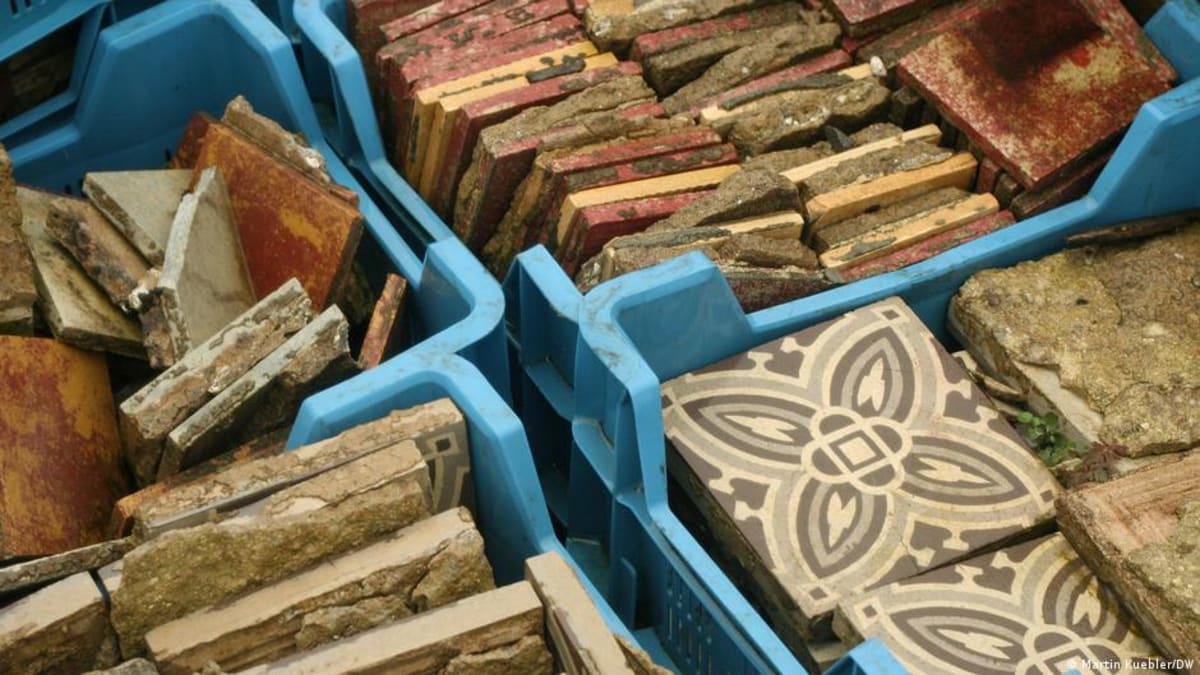
Micheal Ghyoot, a researcher at Rotor DC, holds up a century-old cement tile decorated with blue and gray florals. These tiles once covered floors in early 1900s Belgian homes before someone decided they were outdated. Now they're being cleaned, sorted, and heading back into modern homes that value their craftsmanship.
The idea isn't new. Medieval builders salvaged Roman structures to save time and money, and those buildings still stand today in Rome. But mass manufacturing in the 20th century made new materials so cheap and easy that reuse seemed pointless.
Now the environmental cost of that convenience is clear. A 2019 report found that reusing steel, aluminum, concrete, and plastic from buildings could help reduce construction emissions by 40% by 2050.
The Ripple Effect
Areti Markopoulou from the Institute for Advanced Architecture of Catalonia sees this shift gaining momentum across Europe and North America. Similar salvage stores are opening, though challenges remain around careful deconstruction, storage, and matching old materials with new projects.
Ghyoot admits convincing architects and contractors to use secondhand materials isn't easy. Supplies aren't consistent like ordering from a factory. Some older materials contain toxic elements or arrive degraded.
But the tide is turning. More designers are rethinking their workflows to accommodate salvaged components. More builders are learning to disassemble intelligently instead of just crushing everything efficiently.
Every reclaimed door, every rescued tile, every salvaged window represents materials that don't need to be manufactured new, and that's a win for everyone who breathes air on this planet.
More Images
Based on reporting by DW News
This story was written by BrightWire based on verified news reports.
Spread the positivity!
Share this good news with someone who needs it