Buffalo Lab Finds Key to Unclogging Brain Cells in Parkinson's
Scientists at the University at Buffalo discovered how a protein mutation can clear cellular traffic jams in brain cells affected by Parkinson's disease. The finding could unlock new treatments for millions living with the condition.
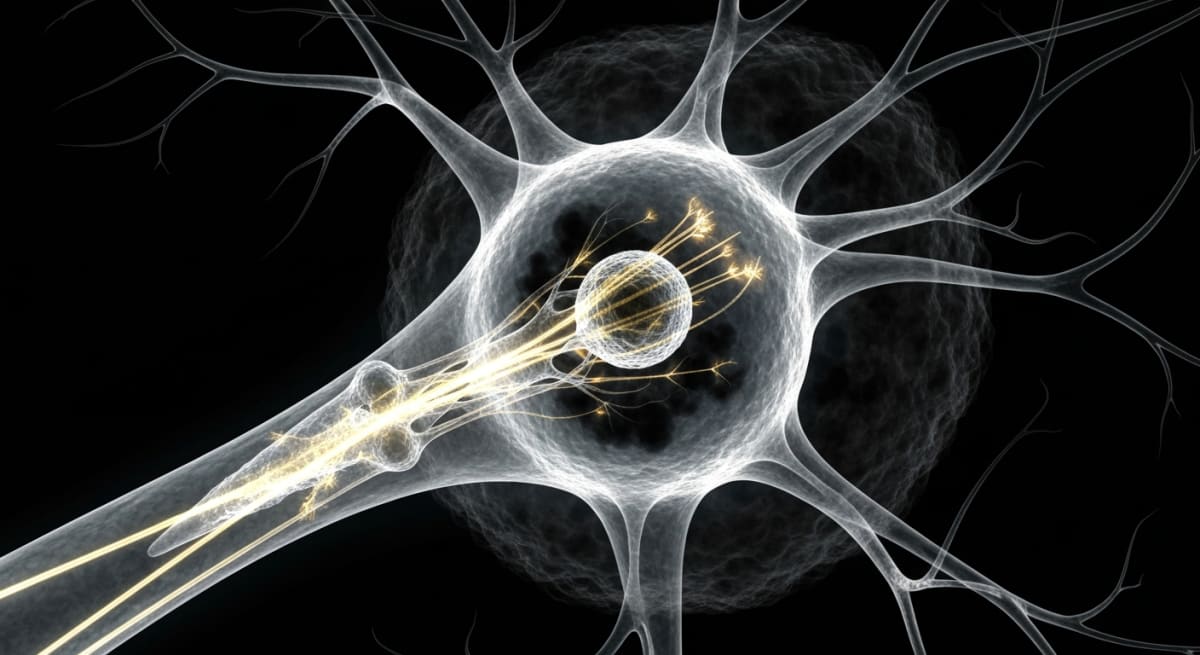
Imagine a highway backup inside your brain cells, where proteins pile up and block the delivery of essential materials. Researchers at the University at Buffalo just found a way to clear that traffic.
The team discovered that a specific mutation in the LRRK2 protein can ease the cellular congestion caused by alpha-synuclein, the protein that clumps together in Parkinson's disease. These clumps, called Lewy bodies, act like roadblocks inside neurons, preventing normal function and contributing to the disease's progression.
Dr. Shermali Gunawardena led the study published in April 2026. Her team found that when they increased levels of a mutant form of LRRK2, it stopped alpha-synuclein from binding to cellular cargo and disrupting the transport system that neurons need to survive.
Think of it like adding extra traffic controllers to a congested intersection. The LRRK2 mutation helps restore the flow of materials through the long branches of nerve cells, keeping them healthy and functional.
Parkinson's disease affects over 10 million people worldwide, causing tremors, stiffness, and movement difficulties. Current treatments manage symptoms but don't address the underlying cellular problems.
The Bright Side
This research connects two puzzle pieces that scientists have been studying separately for years. Both LRRK2 and alpha-synuclein are known to play roles in Parkinson's, but understanding how they interact opens new doors for treatment.
The team didn't just identify the problem. They found a potential solution by showing that manipulating the relationship between these proteins can restore normal cellular function.
Dr. Gunawardena explained that these proteins must work in harmony, and any imbalance leads to transport issues. By uncovering this link, her team took an important step toward understanding the early stages of Parkinson's.
The researchers are now investigating whether improving cellular transport can prevent the formation of Lewy bodies and protect neurons from dying. They're also exploring whether targeting this protein interaction could become a new therapeutic approach.
For the millions of families touched by Parkinson's, this discovery represents real hope that scientists are getting closer to treatments that address the root causes of the disease, not just its symptoms.
Based on reporting by Google News - Health Breakthrough
This story was written by BrightWire based on verified news reports.
Spread the positivity!
Share this good news with someone who needs it