Butterfly Hatches in Space, Adapts to Zero Gravity
A butterfly emerged from its chrysalis aboard China's Tiangong space station and quickly learned to fly in zero gravity, opening new possibilities for space farming. The experiment used minimal life support, proving insects can thrive in harsh space conditions.
A butterfly just proved that life finds a way, even 250 miles above Earth.
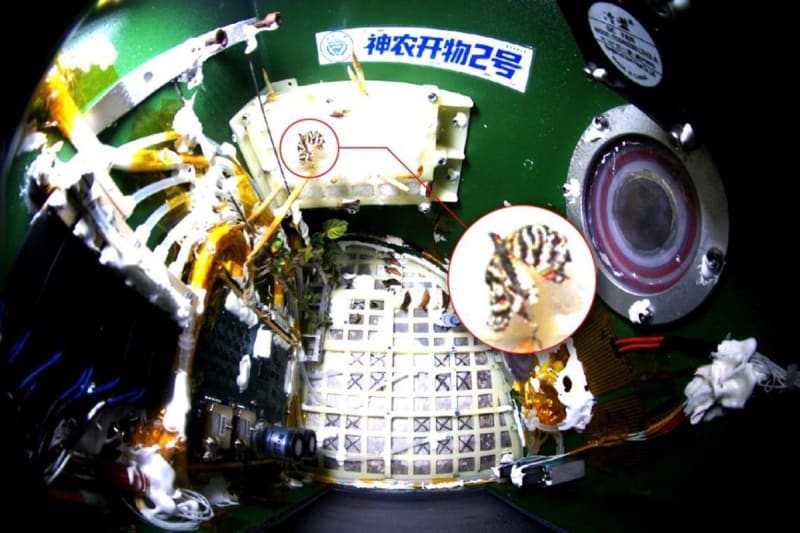
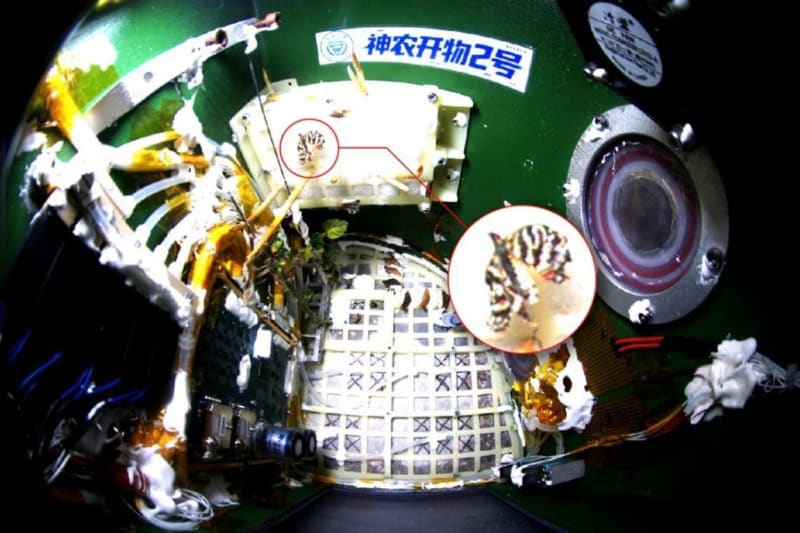
Aboard China's Tiangong space station, astronauts watched as a butterfly emerged from its chrysalis in December and began fluttering around its chamber as naturally as it would in any garden back home. The insect adapted to zero gravity within hours, resting on leaves and flying freely despite many scientists' doubts that it could manage without Earth's gravity.
This wasn't your typical pampered space experiment. The butterfly's 14.2-liter chamber had no radiation shielding, no temperature controls beyond basic heating, and no full-spectrum lighting, making it one of the most challenging metamorphosis experiments ever attempted in orbit.
Xie Gengxin, who designed the experiment at Chongqing University's Space Science and Technology Research Institute, wanted to see how tough these delicate creatures really are. The chrysalis arrived via cargo spacecraft in a heated capsule containing plants and microorganisms to create a self-sustaining mini ecosystem. After emerging, the butterfly survived for several days in conditions that would make most Earth-bound labs nervous.
While a monarch butterfly did transform aboard the International Space Station back in 2009, that experiment involved constant human monitoring and environmental controls. This Chinese butterfly went through its entire metamorphosis unmanned, facing the harsh reality of space with minimal support.
The Ripple Effect
Xie's vision extends far beyond one inspiring insect. He's the same scientist who grew the first plants with leaves on the Moon during the Chang'e 4 mission, and he sees both achievements as building blocks for future space agriculture.
The butterfly experiment could inform the design of orbital and planetary farms where insects serve as natural pollinators, just as they do on Earth. On the Moon or Mars, where human settlements might one day need to grow their own food, having pollinators that can adapt to extreme conditions becomes essential.
"Lunar and Martian farms will become a reality in the future," Xie told reporters. His experiments are proving that Earth's delicate biological systems might be more resilient than we imagined, capable of supporting human life far from home.
This tiny winged pioneer just showed us that the dream of thriving in space isn't science fiction anymore.
More Images
Based on reporting by Futurism
This story was written by BrightWire based on verified news reports.
Spread the positivity!
Share this good news with someone who needs it