Calgary Teens Build Cat-Inspired Tail to Help Parkinson's
Two high school students created a wearable robotic tail that helps people with Parkinson's disease maintain their balance and avoid dangerous falls. The device mimics how cats use their tails to stay stable, costs just $100 to make, and won national science fair recognition.
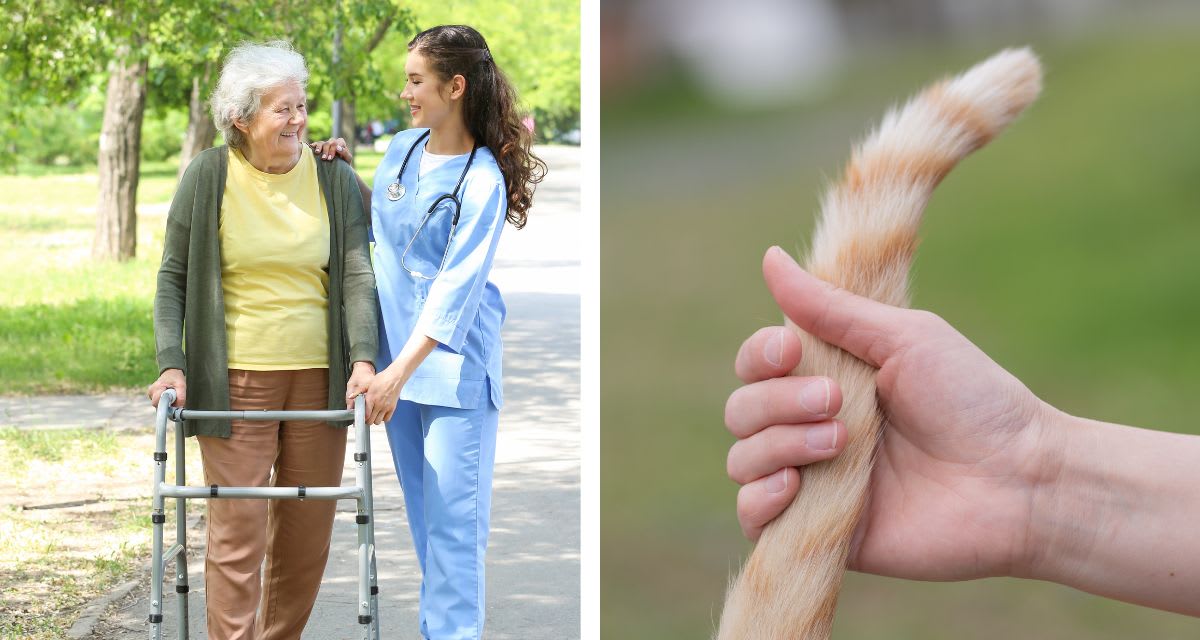
Falling is one of the scariest realities for people living with Parkinson's disease, but two Calgary teenagers just invented a solution inspired by their neighborhood cats.
Allen Guo-Lu and Luotong Shi designed a wearable robotic tail that helps Parkinson's patients stay balanced and upright. The device clips onto a belt and moves automatically to counteract wobbles, just like a cat's tail does when the animal leaps or turns.
The technology works through built-in sensors that detect when someone's balance shifts. Flexible tubes act as artificial tendons, moving the lightweight tail to stabilize the wearer's center of gravity in real time.
Users can adjust the tail's sensitivity through a smartphone app to match their specific walking pattern and needs. The device weighs between 0.8 and 2.6 pounds depending on how much support someone requires.
What makes this breakthrough even more remarkable is the price tag. Building one costs around $100 using 3D-printed parts, making it an affordable option compared to most medical devices.
The students originally designed the tail for Parkinson's patients, but Shi notes it could help anyone struggling with balance issues. That includes elderly people, stroke survivors, or anyone recovering from injuries that affect stability.
Their invention earned them the University of Calgary Chancellor and Senate Award at the Calgary Youth Science Fair. They also became finalists at the Canada-Wide Science Fair in Edmonton.
Why This Inspires
Ko Currie from Parkinson Canada points out that young researchers bring fresh eyes to old problems. Teenagers aren't boxed in by what "should" work, so they're free to try wild ideas like borrowing balance tricks from house cats.
This invention joins a growing wave of medical breakthroughs from teenage scientists. In recent years, high schoolers have created affordable cancer detection methods, 3D-printed prosthetic limbs, and smartphone-based diagnostic tools that make healthcare more accessible.
These students prove that age doesn't limit impact. When schools give young people space to experiment and tools to build, their curiosity can solve real-world problems that improve thousands of lives.
The next generation of scientists isn't waiting for college to start changing the world.
More Images



Based on reporting by Upworthy
This story was written by BrightWire based on verified news reports.
Spread the positivity!
Share this good news with someone who needs it