California Bets $4.7B on Wind Power Despite Federal Pushback
While Washington pays companies to abandon offshore wind projects, California is charging ahead with a massive $4.7 billion plan to build America's first floating wind farm. The Port of Long Beach is betting on a clean energy future that could power millions of homes by 2045.
Southern California is building one of the world's most ambitious renewable energy projects, even as federal opposition intensifies.
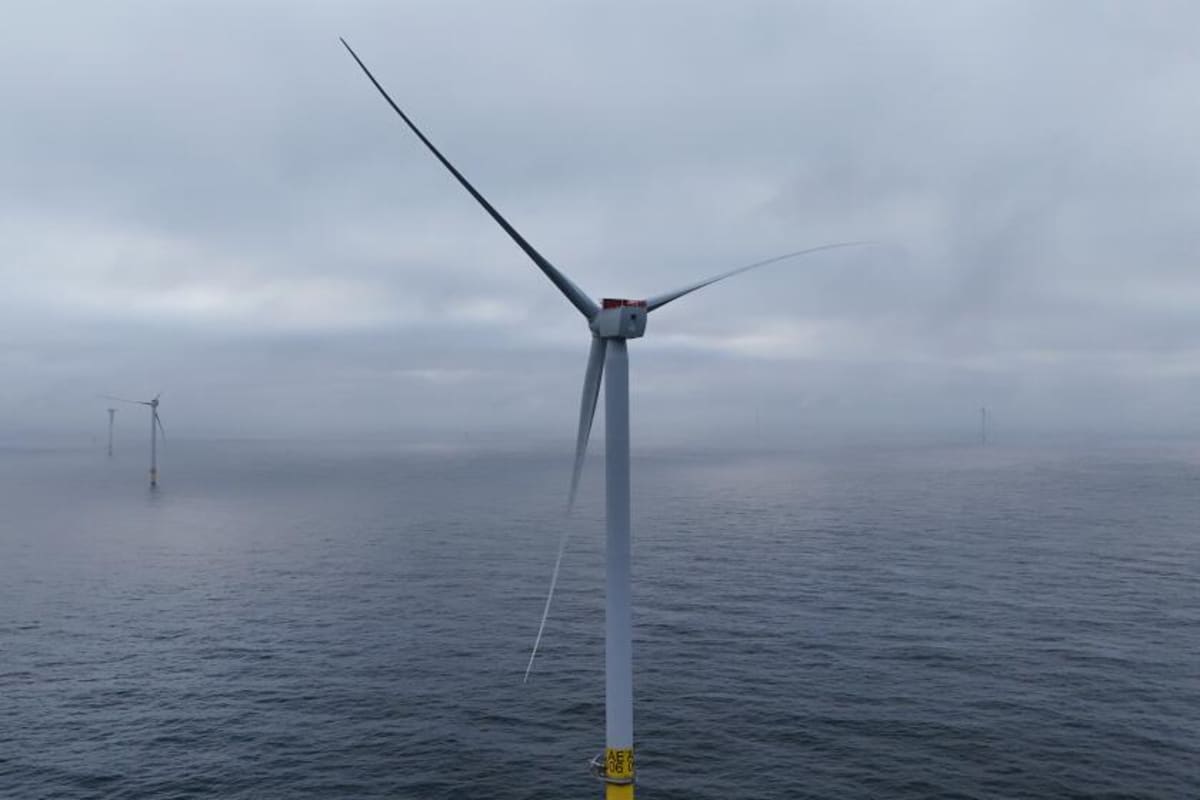
The Port of Long Beach is moving forward with Pier Wind, a $4.7 billion terminal that will assemble massive floating wind turbines taller than the Eiffel Tower. These turbines will eventually be towed north to waters off Morro and Humboldt bays, creating enough clean electricity to reach California's goal of 25 gigawatts of offshore wind power by 2045.
The timing makes this especially remarkable. The Trump administration has taken more than two dozen actions against offshore wind since January 2025, including paying energy companies nearly $2 billion to abandon their wind lease plans and invest in oil and gas instead.
But California isn't backing down. "We're just moving forward with all the things in our control," said Suzanne Plezia, managing director of engineering services at the Port of Long Beach. The project's 400-acre terminal will handle positioning, storage and assembly of some of the world's largest offshore turbines.
The state faces a unique engineering challenge that makes this project groundbreaking. Unlike the East Coast where turbines can be anchored to the seafloor, California's ocean is too deep. The solution is floating turbines, a technology that would make California home to the world's deepest floating wind farm.
The Ripple Effect
Hundreds of investors, regulators and industry leaders gathered at the Pacific Offshore Wind Summit in Long Beach recently, and their message was clear: they're staying the course. They point to success stories like the United Kingdom, where offshore wind now generates nearly one-fifth of all electricity.
California Energy Commission Chair David Hochschild told the crowd the strategy isn't about resistance. "The operative word is not 'resist,' it's 'create,'" he said.
The project will take a decade to complete, involving massive dredge-and-fill operations to create land for the terminal. The Port of Long Beach is one of only two locations in California equipped for this assembly work, making it essential infrastructure for the state's clean energy future.
While California won't hit its 2030 goals for offshore wind, officials remain committed to the 2045 target. The state is preparing its ports and power grid now to eventually handle electricity from 1,000 turbines in federal waters.
This approach represents a remarkable act of patience and planning. California is essentially building the foundation for a clean energy revolution, betting that federal policy will eventually catch up to global momentum on renewable power.
More Images


Based on reporting by Google News - Wind Energy
This story was written by BrightWire based on verified news reports.
Spread the positivity!
Share this good news with someone who needs it