
California Creates 61,000 Jobs, Trains 142,000 Workers in 2025
California's Jobs First initiative invested nearly $1.6 billion in 2025, creating over 61,000 new positions and training more than 142,000 workers across all 13 economic regions. The locally-driven program empowers communities to build their own economic futures while focusing on high-growth industries from film production to quantum technology.
California just proved that economic growth works best when communities lead the way.
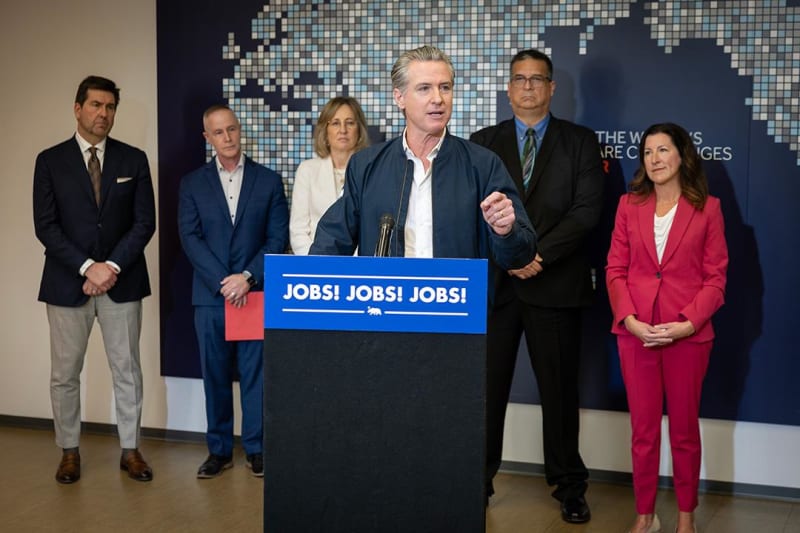
Governor Newsom's California Jobs First initiative wrapped 2025 with impressive results: over 61,000 new jobs created and 142,000 workers trained through nearly $1.6 billion in strategic investments. The program reached all 13 economic regions across the state, from tribal nations to major metropolitan areas.
What makes this different from typical government programs is how it was built. Starting in 2021, each of California's 13 regions formed planning bodies called collaboratives, bringing together labor unions, businesses, local governments, schools, environmental groups, and community organizations. These local teams crafted their own economic plans based on regional data and community needs, identifying which industries made sense for their areas.
The state then funded those locally-designed plans. Orange County focused on life sciences and high-tech manufacturing. Other regions prioritized aerospace, agriculture technology, and film production. Each region got to shape its own economic future rather than following a one-size-fits-all state mandate.
The money flowed through multiple channels. Tax credits brought 21 companies to expand or relocate in California, spurring $2.56 billion in private investment. Film and television credits supported 155 projects expected to generate nearly $5 billion in economic activity and create over 33,000 jobs for cast and crew.
Training programs got major attention too. The Employment Training Panel invested over $82 million to help 299 California businesses train more than 70,000 workers. Apprenticeship programs expanded with $91 million in funding, benefiting over 69,000 apprentices and pre-apprentices learning skilled trades.
California even supported its smallest entrepreneurs. The State Trade Expansion Program helped 204 small businesses reach international markets, generating $33 million in export sales and supporting 254 jobs across every continent except Antarctica.
The state is also betting big on emerging technologies. November 2025 saw the launch of Quantum California, uniting government, universities, and private companies to lead in quantum innovation and create new jobs in this cutting-edge field.
The Ripple Effect
When communities design their own economic strategies, the benefits multiply beyond just job numbers. Workers gain skills that match what local employers actually need. Businesses find qualified candidates in their own regions. Tax dollars support industries that make sense for local geography and culture rather than generic priorities.
The tribal phase particularly demonstrates this ripple effect, with $15 million awarded to 14 California Native American tribes for economic development tailored to their unique needs and priorities. These aren't temporary fixes but sustainable pathways built by the people who know their communities best.
Even crisis response improved through this framework. When wildfires devastated Altadena and Pacific Palisades, the LA Jobs First Collaborative quickly deployed $3 million to support tourism and small businesses, using existing regional networks to respond faster than typical government programs.
California is showing other states that economic development doesn't require choosing between top-down control and leaving communities on their own—there's a third path where state resources empower local vision.
More Images
Based on reporting by Google News - Jobs Created
This story was written by BrightWire based on verified news reports.
Spread the positivity!
Share this good news with someone who needs it