California Solar Canals Save Water While Powering 304K Homes
California is testing solar panels built over irrigation canals that prevent water evaporation while generating clean energy. The project could save enough water for thousands of households while helping the state reach its 100% clean energy goal.
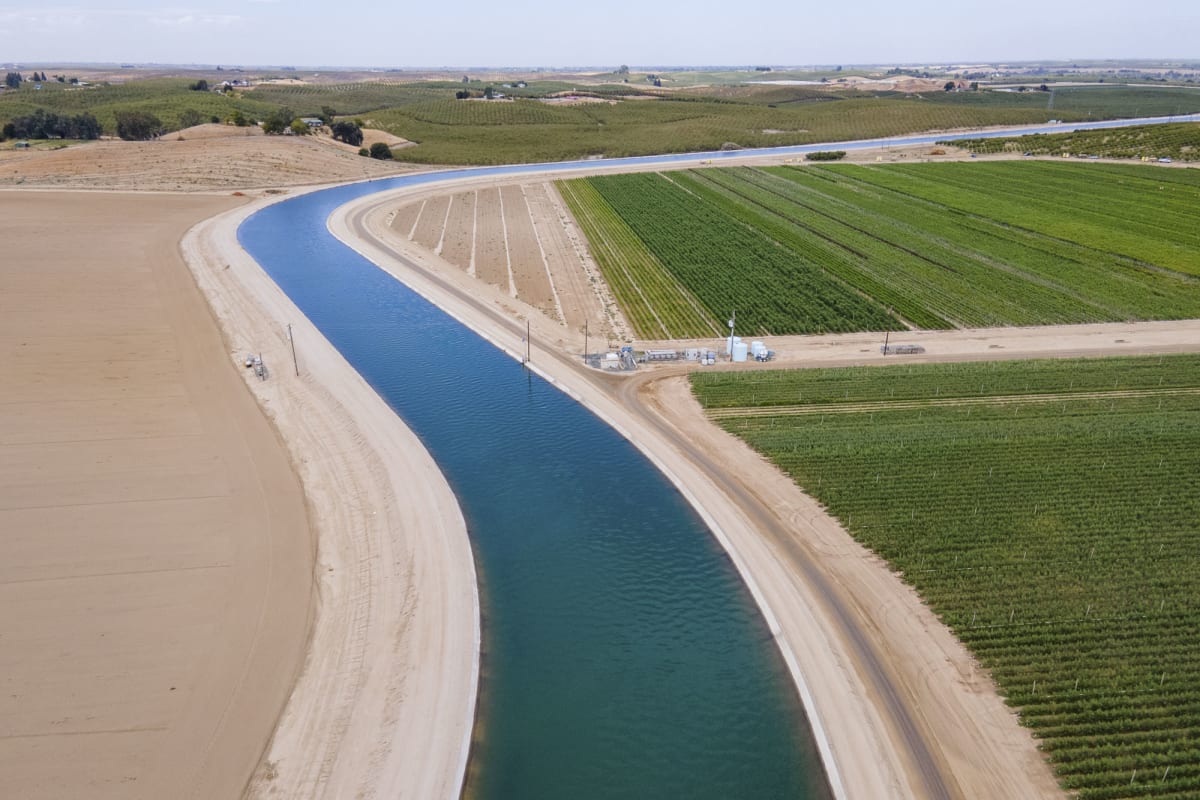
When Jordan Harris drove between Los Angeles and San Francisco, he couldn't stop thinking about all the water slowly disappearing from California's concrete canals under the desert sun. The solution he dreamed up could help save the state from both energy shortages and devastating droughts.
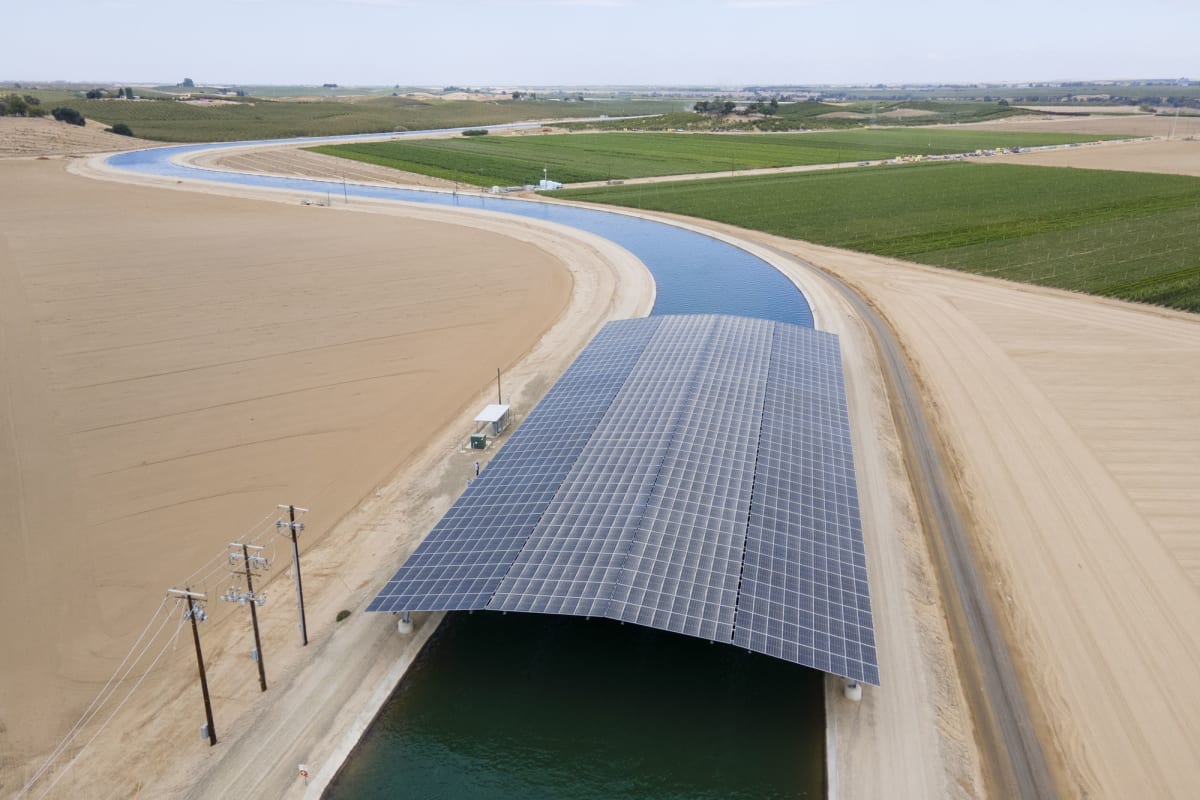
Harris teamed up with Robin Raj to launch Project Nexus, covering sections of Turlock's irrigation canals with solar panels. The genius is simple: the panels shade the water to prevent evaporation while generating clean electricity at the same time.
California faces a water crisis that's only getting worse. Researchers at UC Davis estimate the state's water supply could shrink by 25% by 2050 because of climate change. That's equal to losing two Lake Shastas worth of water.
Meanwhile, California needs to reach 100% clean electricity by 2045. The state currently gets 62% of its power from renewable sources, but meeting that goal requires a massive expansion of solar capacity.
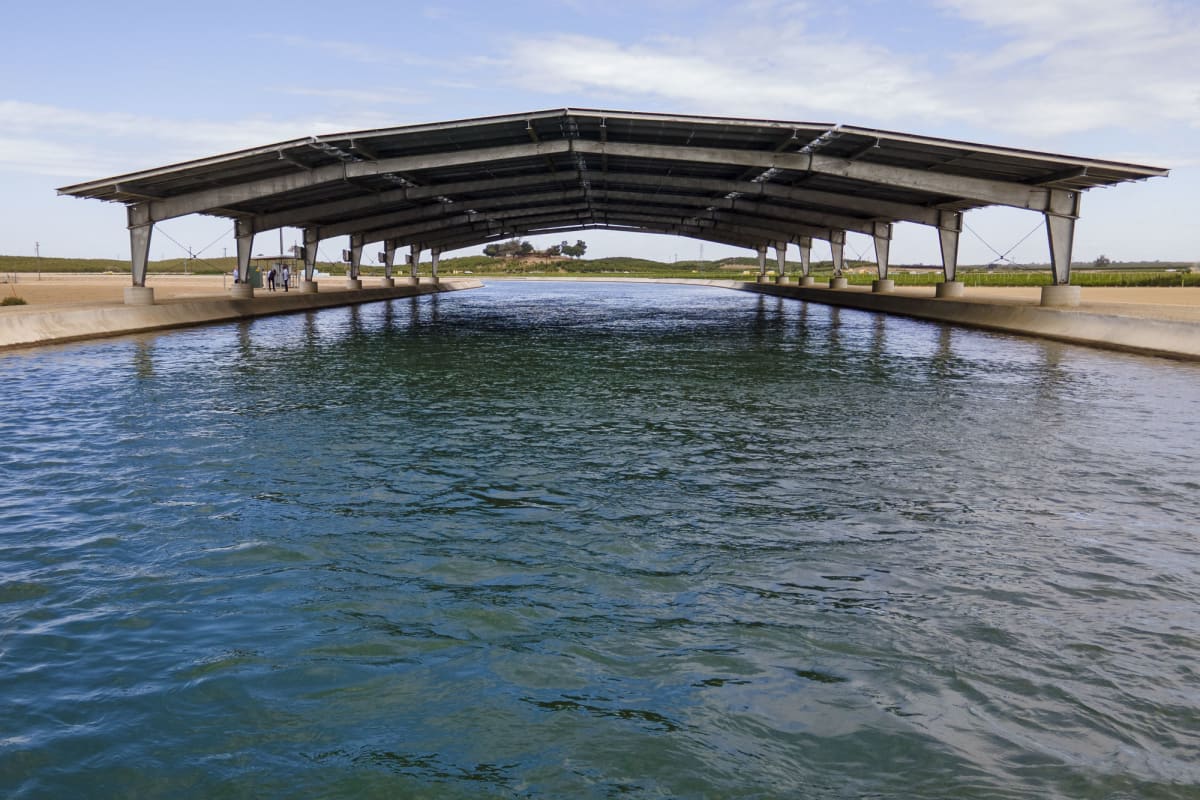
Project Nexus tests three different designs over Turlock's canals. A wide barn-like canopy stretches over a 115-foot canal, classic slanting panels sit on a 20-foot canal, and accordion-style retractable panels fold across narrow waterways.
The numbers tell an exciting story. Covering just 100 miles of narrow canals could save enough water for 2,700 households annually while powering 77,000 homes. Scaling up to 100 miles of wide canals could save water for 11,000 households and power 304,000 homes.
The Bright Side
The research team discovered unexpected bonuses that make the project even more valuable. The shade reduces algae growth and aquatic weeds, which means less maintenance and cleaner water for communities downstream.
Building solar panels over existing canals instead of on natural land preserves habitats and farmland. It also speeds up development dramatically. Getting permits for undeveloped land takes 621 days on average, compared to just 110 days for projects on already developed spaces.
Roger Bales, the UC Merced professor who helped convince the state to invest in the pilot, put it simply: the project "just makes sense." His team fully energized the system last year and continues monitoring its performance.
California manages 4,000 miles of open canals that currently do nothing but transport water. Project Nexus proves these concrete channels could become dual-purpose powerhouses that protect water while generating the clean energy California desperately needs.
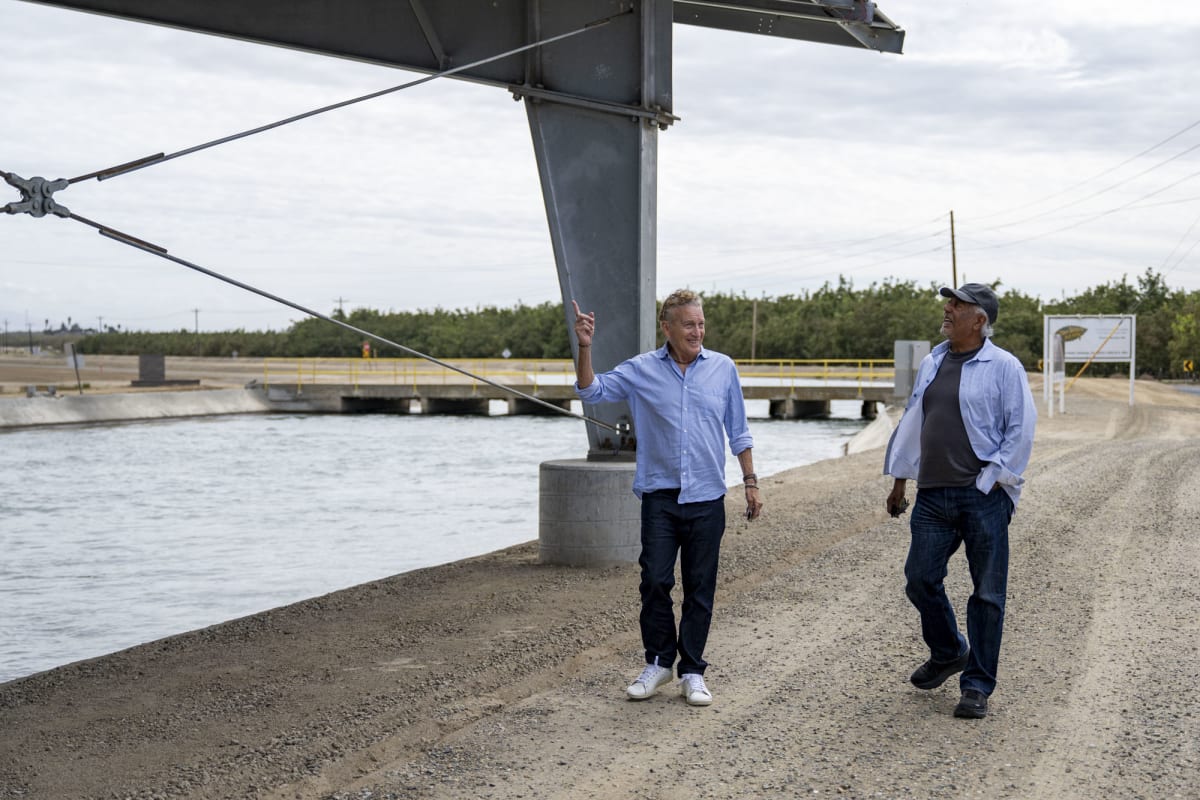
Harris walked alongside the arching solar panels earlier this month, looking at the shaded canal below. "These are disturbed spaces," he explained. "So why not take advantage of the fact that we've already done that and help them work harder?"
The pilot shows California can fight climate change and water scarcity with the same solution, turning a simple concrete ditch into infrastructure that works twice as hard for the state's future.
More Images
Based on reporting by Google News - Clean Energy
This story was written by BrightWire based on verified news reports.
Spread the positivity!
Share this good news with someone who needs it