Cambodia's Mangroves Shield Coasts and Fight Climate Change
Mangrove trees are saving fishing communities in Cambodia while capturing massive amounts of carbon from our atmosphere. What started as a local solution to protect fish populations is now recognized as a powerful weapon against global warming.
A humble tree growing along tropical coastlines is doing double duty as both a lifeline for struggling fishing communities and a superhero in the fight against climate change.
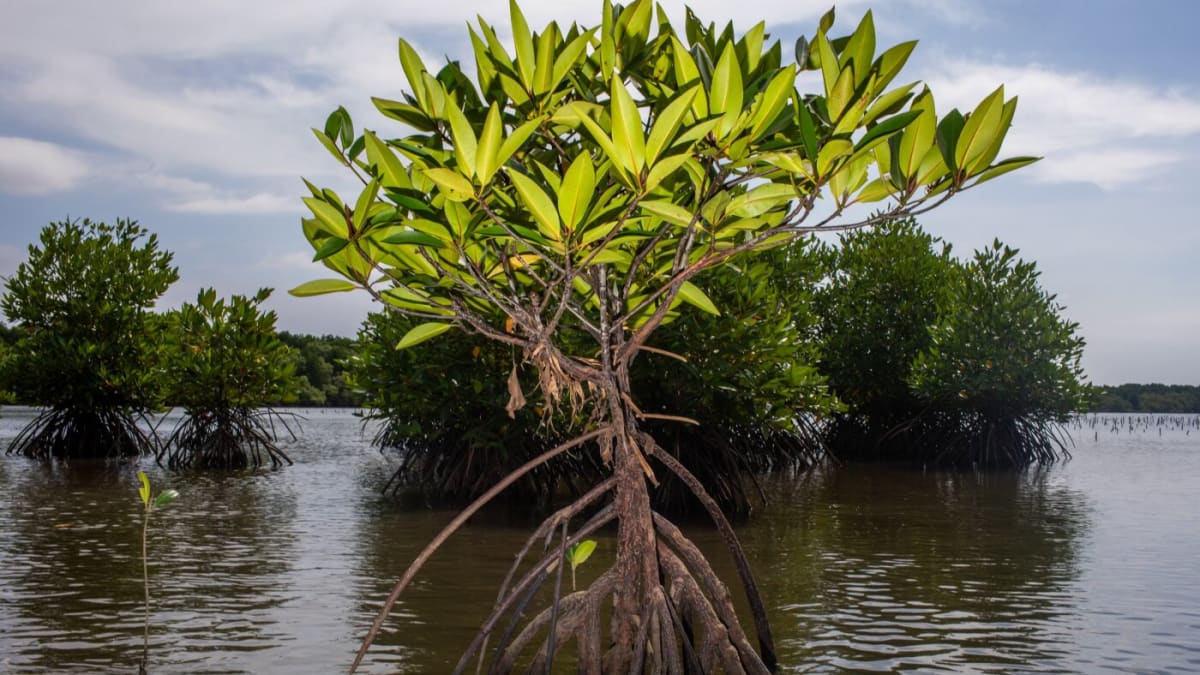
Mangrove trees, with their distinctive tangled roots that dip into coastal waters, are proving essential to communities in Cambodia and around the world. These coastal forests serve as nurseries for baby fish, supporting the majority of fish species that people eat worldwide.
Fishing communities across the globe have watched their catches decline because of climate change, pollution, and overfishing. In Cambodia, protecting and restoring mangrove forests has become a strategy to bring fish populations back to healthy levels.
But scientists recently discovered these trees offer an unexpected bonus. Mangroves capture and store carbon dioxide at rates that far exceed typical forests, earning them the nickname "supertrees" among climate researchers.
The trees' complex root systems don't just shelter young fish. They also trap sediment and organic matter that would otherwise release carbon back into the atmosphere. This process locks away greenhouse gases in the soil for decades or even centuries.
Coastal communities protecting mangroves for their fishing needs are unknowingly contributing to global climate solutions. The forests also shield shorelines from storm surges and erosion, adding another layer of protection as sea levels rise.
NPR reporters who traveled to Cambodia found thriving mangrove restoration projects where local people recognize the trees' value for their daily survival. What these communities may not fully realize is how their conservation efforts ripple outward to benefit the entire planet.
The Ripple Effect
The mangrove story shows how local environmental solutions can have global impact. Communities protecting these trees to feed their families are simultaneously removing carbon from the atmosphere at scale.
Scientists now estimate that protecting existing mangrove forests and planting new ones could become a significant tool in slowing global temperature rise. The trees grow quickly in tropical climates and start providing benefits within just a few years.
Conservation groups are working to expand mangrove protection worldwide, often partnering with fishing communities who understand the trees' value firsthand. These partnerships ensure that climate solutions also support the people who need them most.
The success in Cambodia demonstrates that environmental protection and human prosperity can grow together, rooted in the same soil.
More Images




Based on reporting by Google News - Climate Solution
This story was written by BrightWire based on verified news reports.
Spread the positivity!
Share this good news with someone who needs it