Canada Floats Solar Panels on Foam to Beat Winter Ice
Canadian researchers just solved a major cold-weather solar challenge by floating panels on foam and using simple air bubbles to prevent ice. The system generated more energy than traditional setups and paid for itself in just over four years.
Solar panels floating on water just became a real option for cold climates, thanks to a brilliantly simple Canadian innovation.
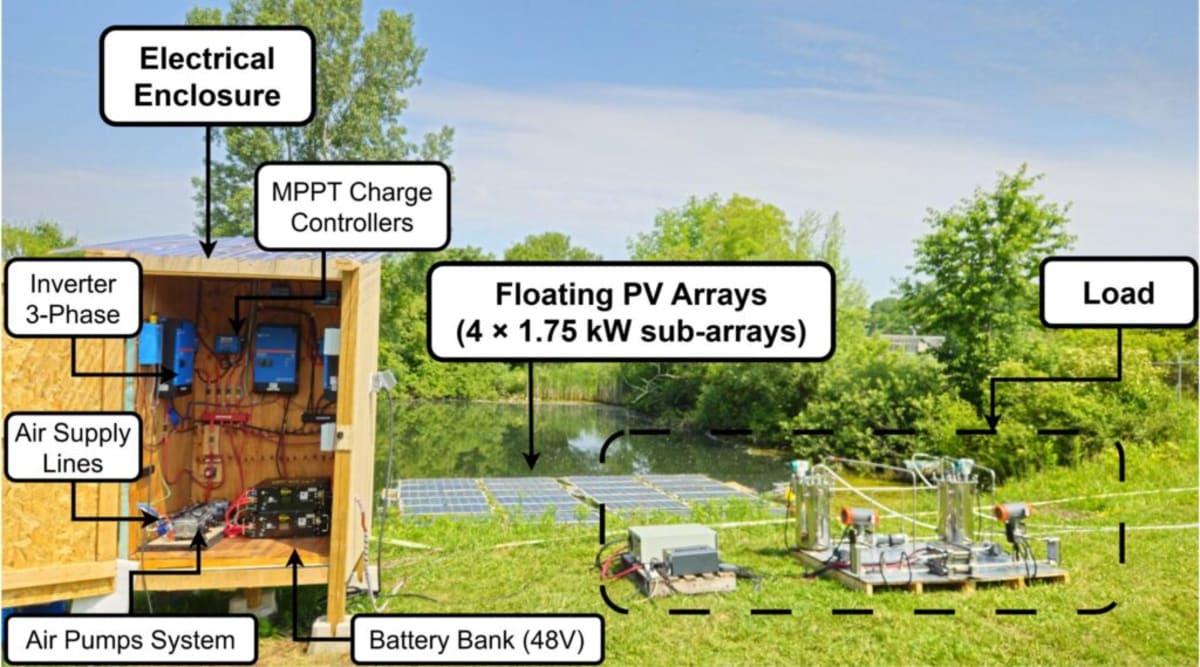
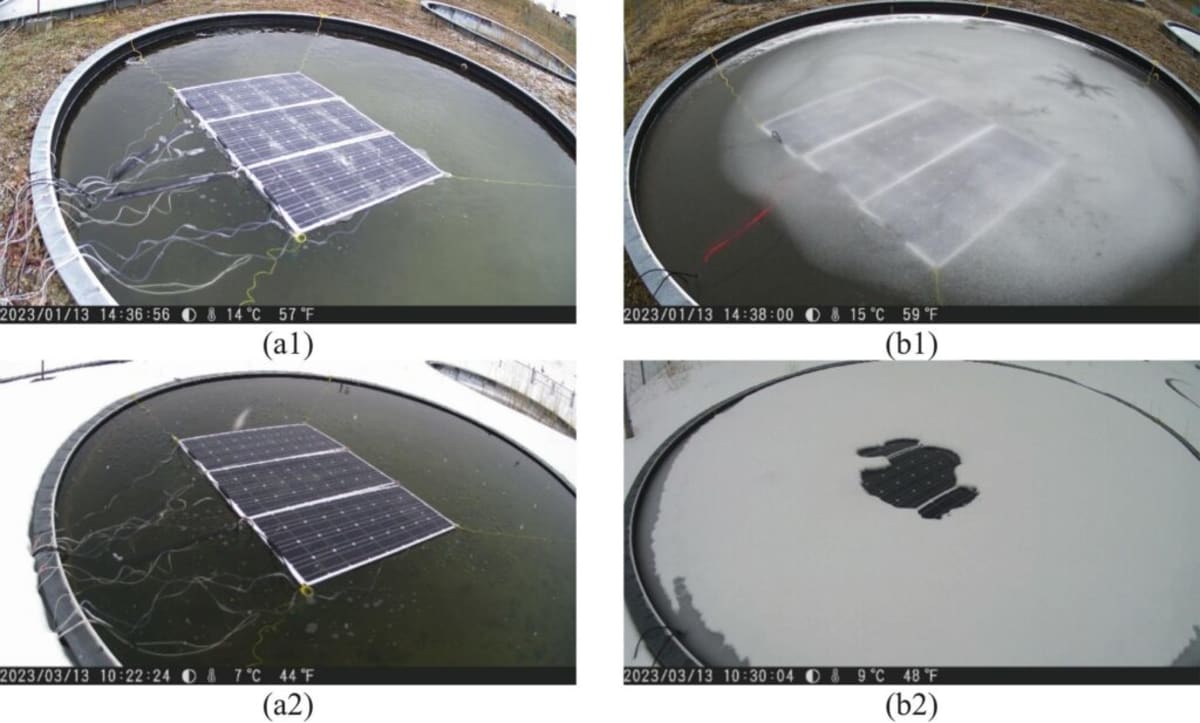
Researchers at Western University in Ontario spent nearly a year testing a new kind of floating solar system that can survive harsh Canadian winters. Instead of using the usual plastic pontoons, they bonded solar panels directly to foam slabs that float just one centimeter above the water.
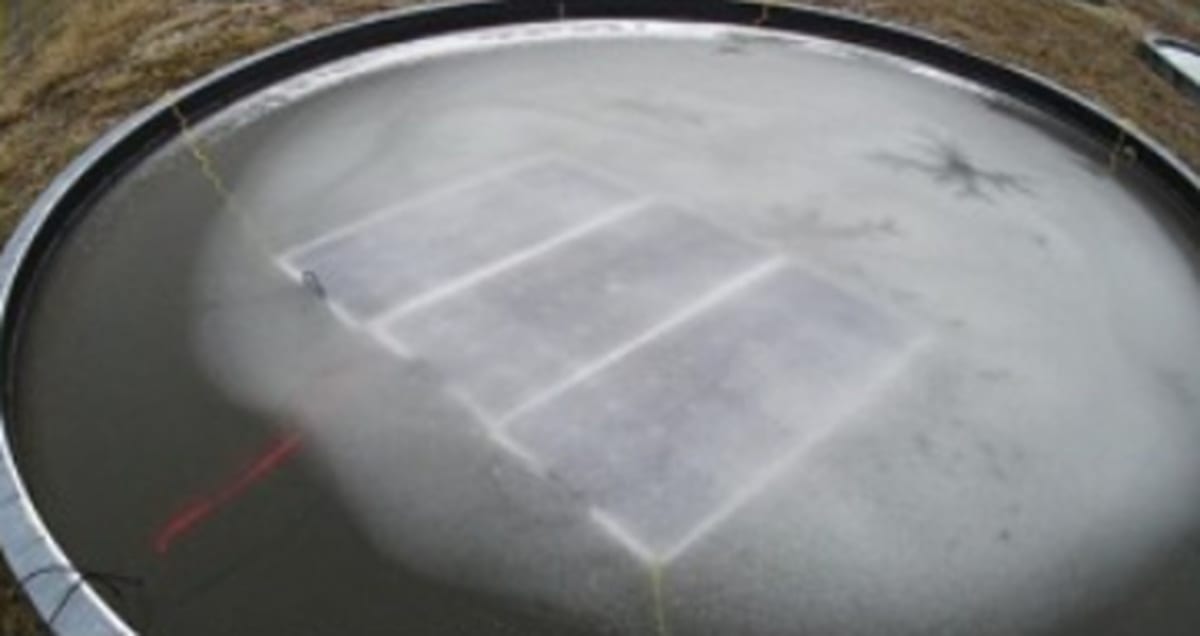
The team installed 40 solar panels on an artificial pond, creating a 7-kilowatt system that floated through summer heat and winter ice. From August 2024 to June 2025, they tracked everything from temperature to energy output.
The winter ice problem seemed like it could sink the whole project. But lead researcher Joshua Pearce and his team found an elegant solution: an air-bubbler system that keeps a thin layer of water ice-free by gently stirring it from below.
The energy cost? Almost nothing. The bubbler used as little as 1.9 kilowatt-hours over the entire year in the best scenario, barely a blip compared to the system's total output.
The Ripple Effect
The foam-based system generated 7.7 megawatt-hours annually, producing up to 2.7% more energy than other solar panel types. The foam backing created unique thermal conditions that actually helped the panels perform better in cold weather than standard temperature models predicted.
Water conservation emerged as an unexpected bonus. The floating panels reduced evaporation from the pond, saving up to 927 cubic meters of water per year when covering half the pond's surface. For farmers and communities watching water levels drop, that's a meaningful amount.
The economics work too. Under high electricity price scenarios typical for off-grid systems, the installation achieved a positive return of $41,000 USD with a payback period of just 4.2 years.
Pearce emphasized that these results prove floating solar can expand beyond warm climates into cold regions. The foam-based approach solves the ice formation challenge that has kept this technology from spreading to northern latitudes where solar energy is desperately needed during long summer days.
The breakthrough matters because millions of artificial ponds, reservoirs, and water bodies sit unused in cold climates worldwide. These surfaces could generate clean energy without taking up valuable land, all while helping conserve the water beneath them.
Clean energy just gained thousands of square miles of new territory in the world's coldest regions.
More Images


Based on reporting by PV Magazine
This story was written by BrightWire based on verified news reports.
Spread the positivity!
Share this good news with someone who needs it