Canada Tests "Poop Pills" to Boost Lung Cancer Treatment
A groundbreaking $4 million clinical trial in Canada is pairing gut bacteria capsules with immunotherapy to help lung cancer patients who aren't responding to standard treatments. If successful, the LUNA-2 trial could extend lives and reduce side effects for thousands of Canadians.
For nearly half of lung cancer patients, immunotherapy slows the disease but can't stop it. Now, Canadian researchers are testing whether tiny capsules filled with healthy gut bacteria could change that outcome.
The LUNA-2 trial launches this year as the largest study of its kind in Canada, enrolling 160 people with non-small cell lung cancer. Researchers will combine standard chemotherapy and immunotherapy with fecal microbiota transplantation, or FMT, delivered through easy-to-swallow capsules nicknamed "poop pills."
The science behind this approach is surprisingly straightforward. Your gut microbiome plays a crucial role in how your immune system functions. By introducing carefully screened beneficial bacteria from healthy donors, researchers hope to strengthen the body's response to cancer treatment.
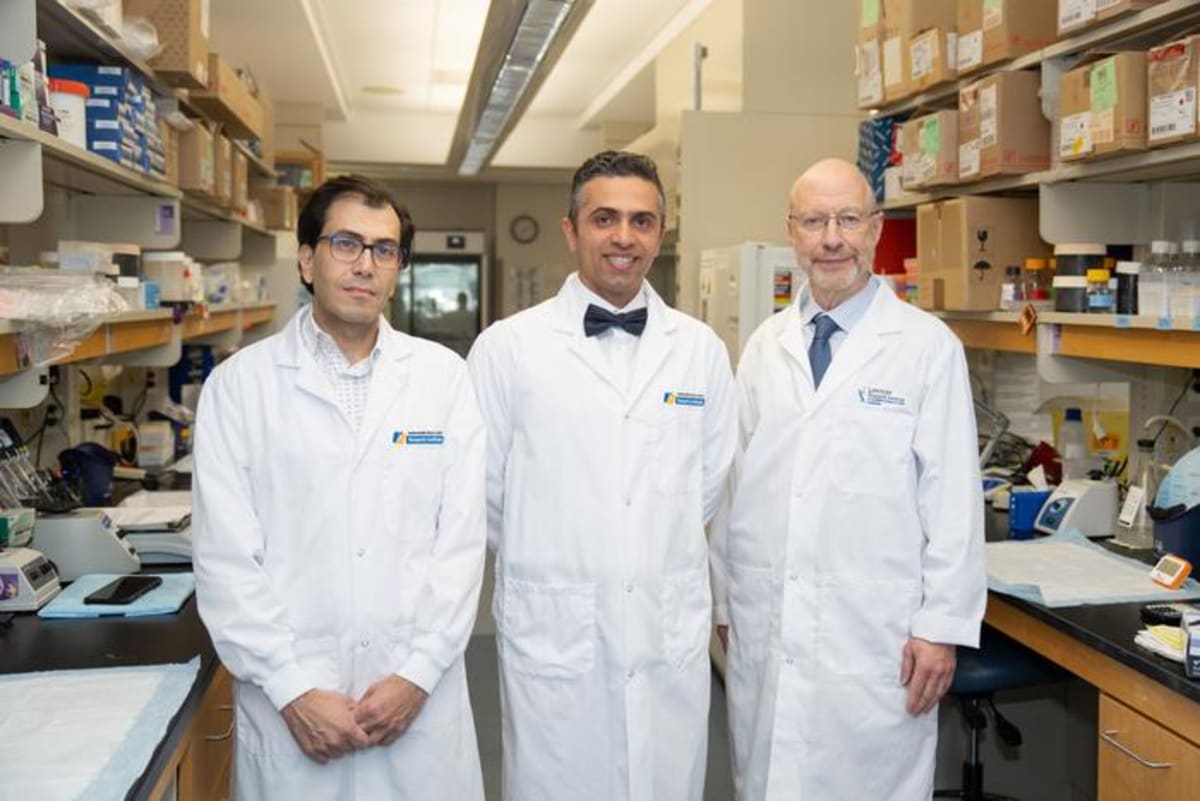
Dr. Saman Maleki, a scientist at London Health Sciences Centre Research Institute, leads the effort alongside experts from Lawson Research Institute. The team developed a world-first formulation of FMT specifically designed for cancer immunotherapy, a uniquely Canadian innovation.
The stakes are high. Lung cancer remains the most commonly diagnosed cancer in Canada and the leading cause of cancer death. Only about 27 percent of people survive longer than five years after diagnosis.
Earlier studies testing FMT with other cancers showed promising results, improving treatment success while reducing harsh side effects. The Canadian Cancer Society and Weston Family Foundation invested $4 million to find out if the same benefits apply to lung cancer patients.
The trial represents more than just new treatment options. Every capsule is manufactured in London, Ontario, and the trial will run at sites across Canada, making this a truly homegrown medical breakthrough.
The Ripple Effect
Success with LUNA-2 would reshape how doctors approach lung cancer treatment worldwide. The trial directly supports the Canadian Cancer Society's Pan-Canadian Lung Cancer Action Plan, which aims to reduce lung cancer deaths by 30 percent by 2035.
Beyond statistics, this research offers something invaluable to patients and families facing difficult diagnoses: time. For people whose cancer isn't responding to standard treatments, every additional month matters. The trial provides hope for longer lives with better quality of life.
The partnership between philanthropic funders, research institutions, and patient volunteers shows what's possible when communities rally around bold ideas. This marks the second time the Canadian Cancer Society and Weston Family Foundation have teamed up to support major FMT clinical trials.
Results from LUNA-2 could open doors to even larger studies and influence how future cancer treatments are designed across multiple cancer types. The gut microbiome's role in fighting disease continues to reveal new possibilities for personalized medicine.
For now, 160 brave participants will help answer a question that could benefit thousands: can the microscopic ecosystem in our gut become a powerful weapon against cancer?
More Images
Based on reporting by Google News - New Treatment
This story was written by BrightWire based on verified news reports.
Spread the positivity!
Share this good news with someone who needs it