Captain Builds Robot to End Deadly Oil Tank Cleaning Jobs
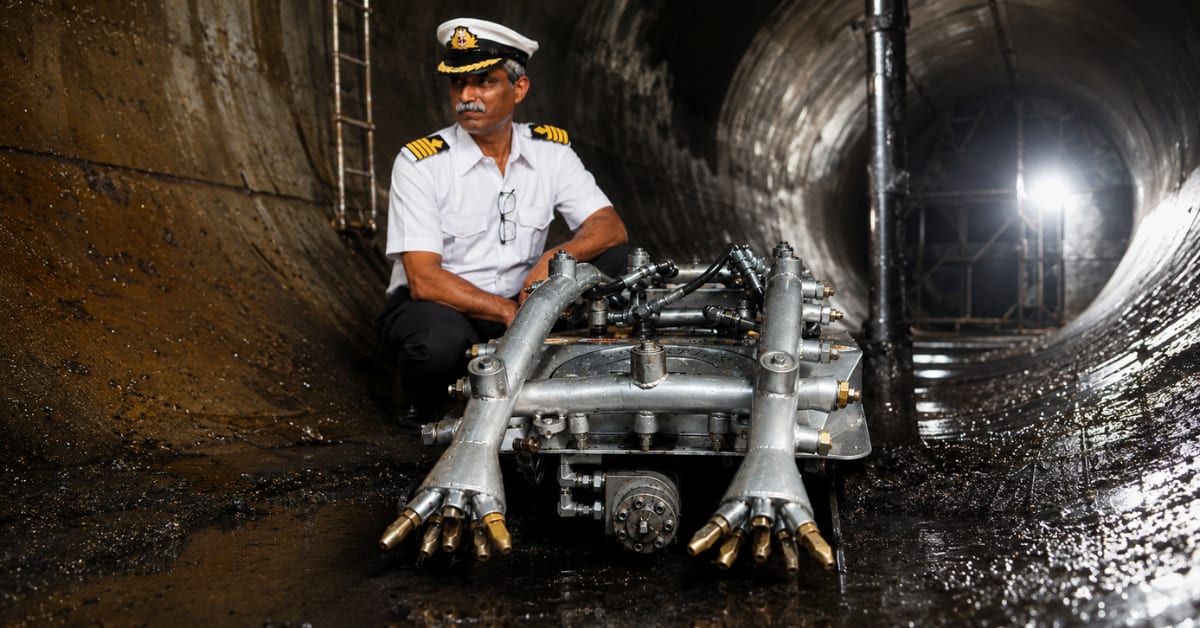
After nearly 20 years climbing into toxic petroleum tanks, Captain DC Sekhar founded BetaTANK Robotics to eliminate one of the shipping industry's most dangerous jobs. His hydraulic robots now clean massive oil tanks remotely, keeping workers safe from poisonous gases and oxygen-starved chambers.
Twenty metres below the deck of an oil tanker, Captain DC Sekhar stood surrounded by toxic fumes and thick black sludge that coated every steel surface around him.
For nearly two decades in the Merchant Navy, this was his reality. He entered and cleaned more than 150 petroleum tanks, facing hydrogen sulphide gas so toxic it can incapacitate someone within moments, oxygen-deficient air pockets, and greasy floors where one wrong step could prove fatal.
But what troubled Sekhar most wasn't just the danger. It was that in an age of advanced technology, people still had to risk their lives doing this work manually.
"I remember thinking in the mid-1990s, it's been over 30 years since humans landed on the moon," he recalls. "Why are we still sending people inside oil tanks to clean sludge?"
He made himself a promise: if nobody else built a robot for this job, one day he would.
That day came in 2019. After securing Rs 2.55 crore from Oil India Limited, Sekhar launched BetaTANK Robotics with a 10-member team and a clear mission: end manual petroleum tank cleaning forever.
The engineering challenge was immense. Petroleum storage tanks can hold up to 6,000 cubic metres of fuel and accumulate thick layers of sludge that must be removed for maintenance. For decades, workers climbed inside with shovels, filled heavy bags with toxic waste, and hauled them to the surface using winches.
Sekhar's robots had to work in an environment where a single electrical spark could trigger an explosion. His solution? Hydraulic power instead of electric motors, using pressurised fluid to control all movement safely.
The only electrical component is an explosion-certified camera. Operators stay safely outside, watching live video while remotely guiding the robot through the tank.
Unlike traditional suction systems, BetaTANK's robots use a pushing mechanism to move thick sludge more efficiently across the tank floor. They navigate beneath heating coils and tight spaces where even nimble workers struggle.
Every component underwent years of testing. The result is a patented system that transforms one of the world's most dangerous jobs into a remote operation.
Why This Inspires
Sekhar's innovation proves that accepted dangers don't have to stay dangerous. He lived the problem for 20 years before building the solution, turning personal experience into technology that protects workers worldwide.
His robots don't just save individual lives. They challenge an entire industry to rethink what's possible when we refuse to accept "that's how it's always been done" as an answer.
Today, BetaTANK Robotics is engineering danger out of an industry that has relied on risky manual labor for generations, one tank at a time.
More Images
%2Fenglish-betterindia%2Fmedia%2Fmedia_files%2F2026%2F07%2F16%2Fbeta-tank-2026-07-16-17-39-07.png)
%2Ffilters%3Aformat(webp)%2Fenglish-betterindia%2Fmedia%2Fmedia_files%2F2026%2F07%2F16%2Fbeta-tank-2026-07-16-15-19-53.png)
%2Ffilters%3Aformat(webp)%2Fenglish-betterindia%2Fmedia%2Fmedia_files%2F2026%2F07%2F16%2Fbeta-tank-2026-07-16-15-20-31.png)
Based on reporting by The Better India
This story was written by BrightWire based on verified news reports.
Spread the positivity!
Share this good news with someone who needs it