Carnegie Mellon Finds Potential Treatment for Muscular Dystrophy
Scientists at Carnegie Mellon University have discovered a precise way to target toxic RNA that causes myotonic dystrophy type 1, the most common adult-onset muscular dystrophy affecting 1 in 2,300 people worldwide. The breakthrough could lead to treatments with fewer side effects for this currently incurable disease and other devastating genetic disorders.
Imagine your body's genetic instructions getting stuck on repeat, causing muscles to waste away with no treatment available. Scientists at Carnegie Mellon University just found a way to fix that glitch.
Researchers developed tiny molecules that act like precision tools, targeting the toxic RNA repeats that cause myotonic dystrophy type 1 (DM1). This progressive disease weakens muscles and affects the heart, lungs, and eyes, with no effective treatment currently available.
The problem starts when a genetic "stutter" occurs in people with DM1. Healthy people have a specific DNA sequence repeated 5 to 35 times, but people with DM1 can have thousands of repeats. When converted to RNA, these repeats form a tangled hairpin loop that traps essential proteins, creating what scientists call a cellular traffic jam.
"Diseases like myotonic dystrophy, Huntington's disease and fragile X syndrome, which have complicated, life-stealing symptoms, are caused by the repeat of only three nucleobases, which seems so simple," said Danith Ly, chemistry professor and director of the Institute for Biomolecular Design and Discovery.
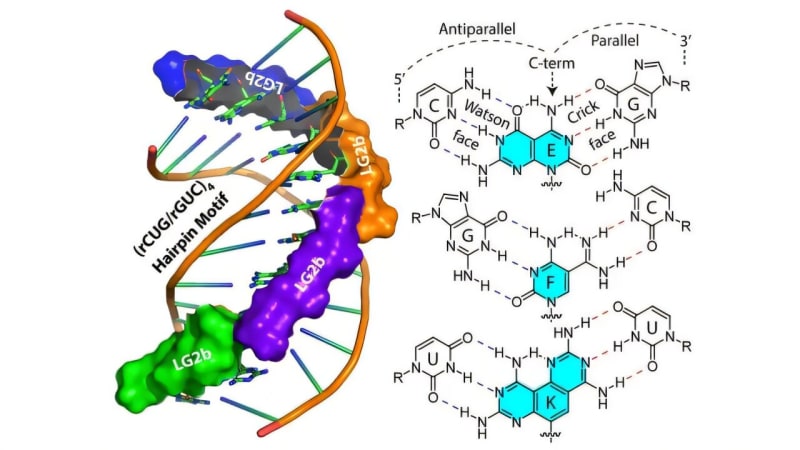
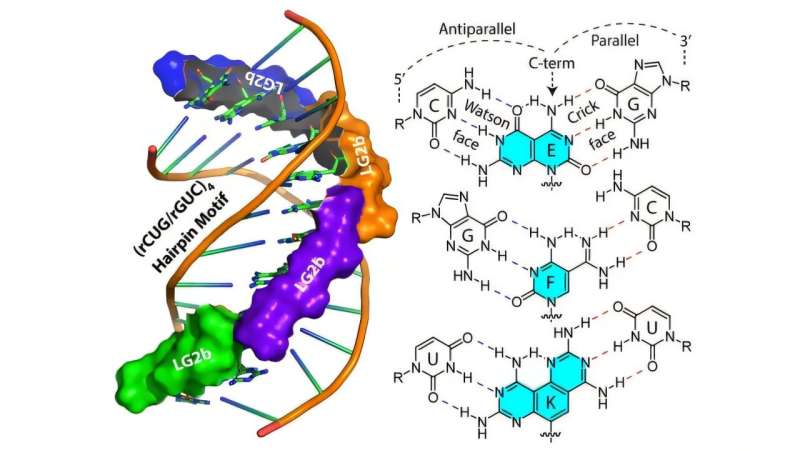
Ly's team created special molecules called nucleic acid ligands that work like a "pothole filler" for damaged genetic code. These molecules slip between the two strands of toxic RNA and bind precisely to the disease-causing sections without disturbing healthy RNA.
The approach uses something called peptide nucleic acids with Janus bases, named after the two-faced Roman god. These double-sided molecules can grab both strands of RNA at once, making them far more precise than current experimental treatments.
The Ripple Effect
This breakthrough extends beyond muscular dystrophy. The same approach could work for other RNA-repeat disorders including spinocerebellar ataxias, Friedreich's ataxia, and ALS (Lou Gehrig's disease). Traditional therapies often struggle to tell the difference between healthy and harmful RNA, leading to unwanted side effects.
The new method overcomes this challenge through what scientists call bifacial recognition, ensuring the treatment hits only the disease-causing targets. Laboratory tests of the lead molecule, called LG2b, showed promising results in their research published in the Proceedings of the National Academy of Sciences.
For the thousands of people living with DM1 and similar genetic disorders, this research represents the first real hope for treatment that addresses the root cause. More severe cases start earlier in life, making effective therapy urgent for patients and families.
The precision of this approach means potentially fewer side effects and broader applications across multiple devastating genetic diseases. While more research is needed before human trials, the foundation is solid.
After decades of these diseases stealing lives one repeat at a time, science finally has a tool precise enough to fight back.
More Images



Based on reporting by Medical Xpress
This story was written by BrightWire based on verified news reports.
Spread the positivity!
Share this good news with someone who needs it