CERN's Particle Collider Now Heats 6,000 French Homes
The world's most powerful particle accelerator just got a second job: keeping thousands of homes warm. CERN is redirecting waste heat from its massive collider to heat an entire French neighborhood instead of releasing it into the air.
The same machine that discovered the Higgs boson and unlocked secrets of the universe is now doing something even more practical: warming homes on chilly winter nights.
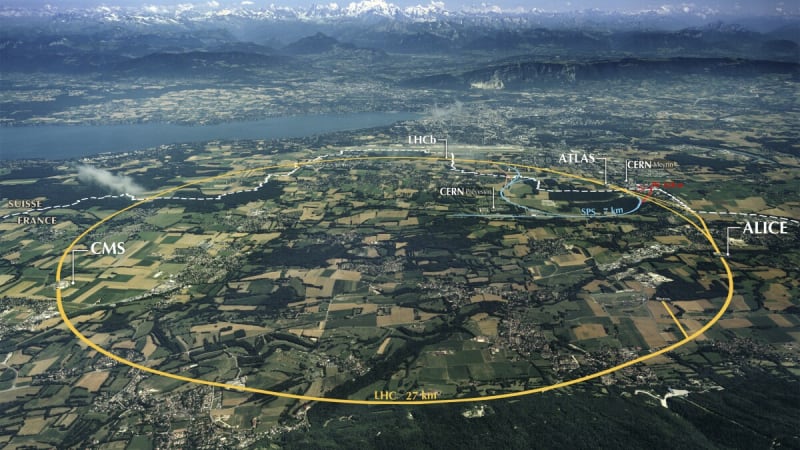
The Large Hadron Collider at CERN consumes up to 750 gigawatt hours of electricity every year to smash particles together at mind-bending speeds. That's roughly enough power to run a city of 200,000 people. All that energy generates enormous amounts of heat that previously just evaporated into the atmosphere through cooling towers.
Now that waste heat has found a home. CERN partnered with the French town of Ferney-Voltaire to redirect hot water from the collider into a district heating system that serves several thousand residential and commercial buildings. The system became fully operational this month after its December inauguration.
The setup works through two powerful heat exchangers installed at Point 8 on the accelerator ring. Instead of cooling the hot water by releasing it into the air, the exchangers transfer that thermal energy directly into Ferney-Voltaire's heating network. The system delivers 5 megawatts of heating power to homes and businesses in a new development area.
"Hot water would typically pass through a cooling tower, releasing heat into the atmosphere so that cooled water could be reinjected into the equipment," explains Nicolas Bellegarde, CERN's energy coordinator. "In the new setup, hot water initially passes through two heat exchangers, which transfer thermal energy to the new heating network."
The Ripple Effect
This isn't just about keeping homes cozy. District heating systems like this one reduce the need for individual gas or electric heaters in every building, cutting both energy costs and carbon emissions for entire neighborhoods. CERN estimates the system will prevent thousands of tons of CO2 emissions annually while saving residents money on heating bills.
The project shows how even the most specialized scientific facilities can become community partners. What started as an environmental challenge became an opportunity to strengthen ties between an international research center and its neighbors.
Other particle physics labs and industrial facilities around the world are now watching CERN's experiment closely, looking to replicate the model wherever large amounts of waste heat meet communities in need of warmth.
Science just found a way to warm hearts and homes at the same time.
More Images



Based on reporting by New Atlas
This story was written by BrightWire based on verified news reports.
Spread the positivity!
Share this good news with someone who needs it