Chile Solar Farm Cuts Diesel Use 57% at Salmon Site
A floating solar farm on a remote Chilean salmon operation now supplies over half its power and eliminates the need for 36,750 gallons of diesel annually. The 2025 project proves renewable energy can work even in harsh offshore conditions far from any power grid.
In southern Chile's remote coastal waters, a salmon farm just proved you can power offshore operations without burning thousands of gallons of diesel every year.
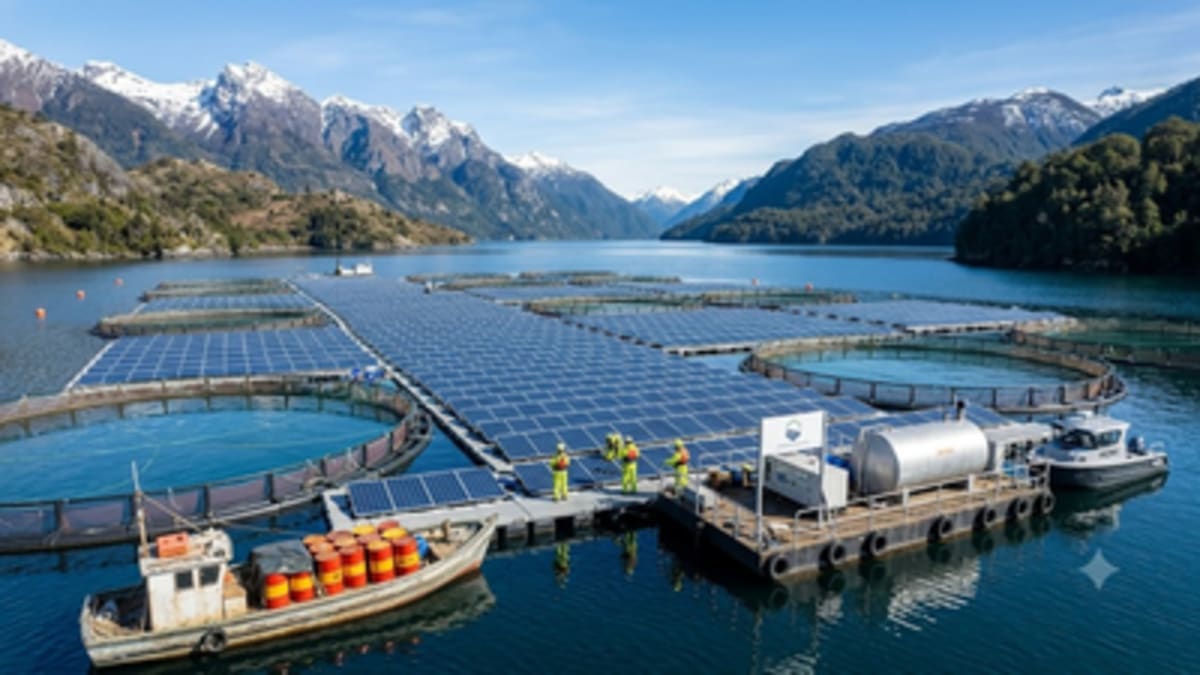
Mowi launched Chile's first floating solar cage at its Isla Huar salmon farm in June 2025. The company partnered with AKVA group, Alotta Energy, and Fjord Maritime to attach solar panels directly onto the farming structure, where they face constant wind and waves far from shore.
One year later, the numbers tell a compelling story. The hybrid system now supplies 57% of the farm's electricity needs while cutting diesel consumption by roughly 139,200 liters annually. That's 36,750 gallons of fuel the farm no longer burns or transports by boat to the isolated site.
The secret lies in battery storage, not just the panels themselves. Power generated during sunny periods gets stored for use after dark or during cloudy weather, keeping operations running around the clock without constant diesel generator noise.
Mowi doesn't own the system outright. Instead, Alotta provides the technology through an energy-as-a-service model, meaning the salmon farm simply purchases renewable electricity rather than managing the entire installation.
The diesel reduction translates to about 350 tonnes less CO₂ released into the atmosphere each year. Beyond emissions, the farm also needs fewer fuel deliveries by boat, reducing both noise pollution and marine traffic around the facility.
The Ripple Effect
Remote aquaculture sites face a stubborn challenge: they need reliable electricity but operate far from conventional power grids. For years, diesel generators seemed like the only practical option despite the fuel costs, emissions, and logistics of constant boat deliveries.
This Chilean installation demonstrates that renewable power can work even in demanding offshore conditions. Alotta previously tested the floating solar technology along Norway's coast before bringing it to Chile, refining the approach for harsh marine environments.
The project keeps diesel generators as backup rather than eliminating them entirely, acknowledging that renewable energy won't always meet 100% of demand. That practical approach makes the technology more viable for farms that can't risk power interruptions affecting fish health.
Other remote salmon operations are watching closely. If floating solar and battery storage can handle 57% of energy needs at one site, the model could spread to similar facilities across Chile's extensive coastline and beyond.
The Los Lagos region farm shows that even industries operating in some of the most challenging conditions can transition toward cleaner energy, one floating solar panel at a time.
More Images



Based on reporting by Google News - Chile Renewable Energy
This story was written by BrightWire based on verified news reports.
Spread the positivity!
Share this good news with someone who needs it