Scientists Turn Plant Waste Into Fuel Using New Catalyst
Researchers created a breakthrough catalyst that transforms stubborn plant waste into valuable chemicals typically made from petroleum. The discovery could help convert agricultural and forestry leftovers into renewable building blocks for fuels and plastics.
Scientists just figured out how to turn the toughest parts of plant waste into useful chemicals that could replace petroleum products.
Researchers at the University of Manchester developed a highly efficient catalyst that breaks down lignin, the stubborn material that gives plants their strength. Lignin makes up about 35% of agricultural and forestry waste, but its complex structure has always made it extremely difficult to use.
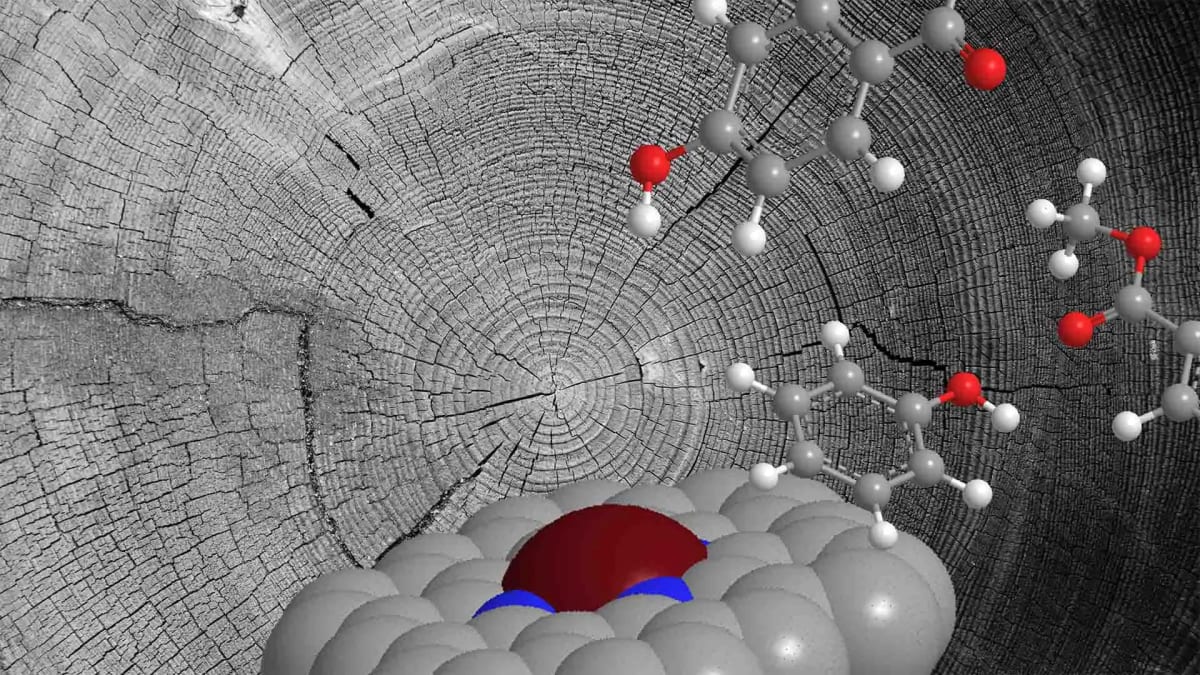
The new catalyst contains individual ruthenium atoms embedded in nitrogen-doped carbon. By keeping the metal atoms isolated, the design delivers powerful results while using only tiny amounts of precious metal.
The real breakthrough came when the team identified exactly how the catalyst works at the atomic level. They discovered that a specific arrangement called a "Ru-N4 site" activates oxygen molecules and helps break the strong chemical bonds holding lignin together.
When tested, the catalyst converted nearly all the lignin samples into valuable products like phenol. The process works under relatively mild conditions without harsh chemicals, making it practical for real-world manufacturing.
The researchers didn't stop with simplified compounds in the lab. They tested the catalyst on actual lignin from multiple biomass sources and successfully converted those samples into aromatic compounds that could become building blocks for fuels, plastics, and other materials.
Why This Inspires
This discovery shows how understanding nature's toughest materials at the smallest scale can unlock solutions to our biggest challenges. Instead of burning or discarding plant waste from farms and forests, we could transform it into the same valuable chemicals currently made from petroleum.
Dr. Christopher Parlett, who worked on the project, explained that knowing exactly how these catalysts operate allows scientists to design even better materials for converting renewable resources. That knowledge creates a roadmap for developing more efficient systems in the future.
The approach could accelerate the shift from traditional petroleum-based chemical production toward a circular economy built on renewable biomass. Every ton of agricultural waste that becomes fuel or plastic instead of petroleum is a step toward sustainable manufacturing.
The findings give scientists a detailed blueprint for creating more powerful catalytic systems that work with nature instead of against it.
Based on reporting by Science Daily
This story was written by BrightWire based on verified news reports.
Spread the positivity!
Share this good news with someone who needs it