Chimps Solve Resource Dilemmas Better in Larger Groups
Scientists discovered that chimpanzees cooperate more effectively to manage shared resources when working in larger groups with tolerant leaders. The findings offer surprising insights into sustainable cooperation that may help us understand human behavior.
Chimpanzees just taught us something unexpected about teamwork and sustainability. When researchers presented our closest living relatives with a shared resource challenge, larger groups dramatically outperformed pairs at managing the resource for everyone's benefit.
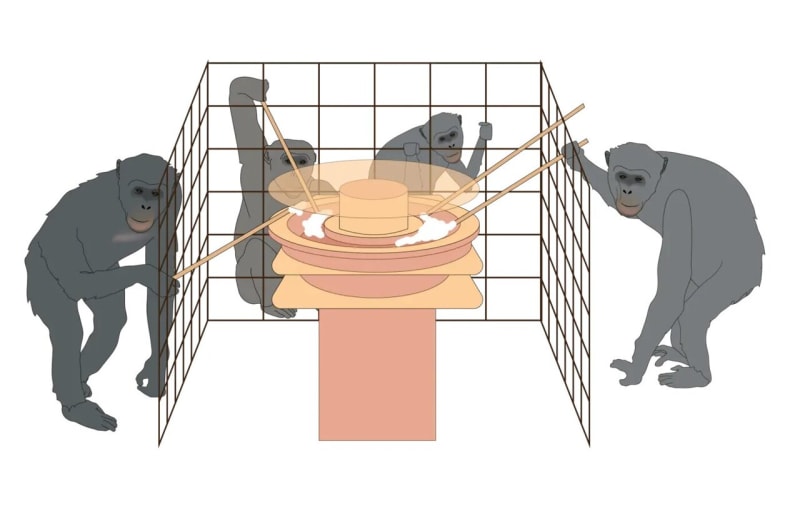
Scientists at the Max Planck Institute for Evolutionary Anthropology in Germany created a clever test using yogurt, a chimp favorite. The setup included sticks for accessing the treat, but those same sticks supported a lid that would permanently close if removed. At least one stick had to stay in place, meaning someone always had to wait their turn.
The twist? Pairs of chimps failed miserably at this challenge. They grabbed their sticks quickly and lost access to the yogurt, just like in control trials without consequences.
But groups of four chimps showed remarkable restraint. They left one stick supporting the lid for an average of 83 seconds longer than pairs did. The same individual chimps who failed in pairs suddenly cooperated successfully when part of a larger group.
Social tolerance made all the difference. Groups where members typically hung out peacefully together, with low aggression, performed best at sustaining access to the shared resource.
Leadership mattered too, but not in the way you might expect. When the highest-ranking chimp was left without a stick, the resource stayed accessible longer. These dominant chimps exercised restraint rather than bullying their way to the food, and everyone benefited from their patience.
The researchers tested 24 groups over multiple trials to confirm the pattern. When powerful chimps shared fairly, cooperation thrived. When they took more than their share, sustainability collapsed.
Why This Inspires
This research challenges assumptions about both chimp intelligence and how we study it. Many experiments test apes in pairs, potentially missing their true cooperative abilities since they evolved for group living.
The parallels to human society feel unmistakable. We face similar resource dilemmas with overfishing, fossil fuels, and antibiotic resistance. Like chimps, we struggle when groups are too small or when leaders prioritize short-term personal gain over collective sustainability.
But the chimp groups show us something hopeful: larger communities with tolerant, restrained leadership can overcome the temptation of immediate rewards. When those in power exercise self-control and social tolerance runs high, everyone shares in lasting benefits.
The study proves that sustainable cooperation isn't just about rules or punishment but about group size, social bonds, and how leaders choose to use their influence.
More Images

Based on reporting by Phys.org
This story was written by BrightWire based on verified news reports.
Spread the positivity!
Share this good news with someone who needs it