China and EU Launch Joint Satellite Despite Trade Tensions
Scientists from China and Europe just launched their first satellite together, proving that collaboration can thrive even when governments disagree. The SMILE mission will study how Earth's magnetic shield protects us from solar winds.
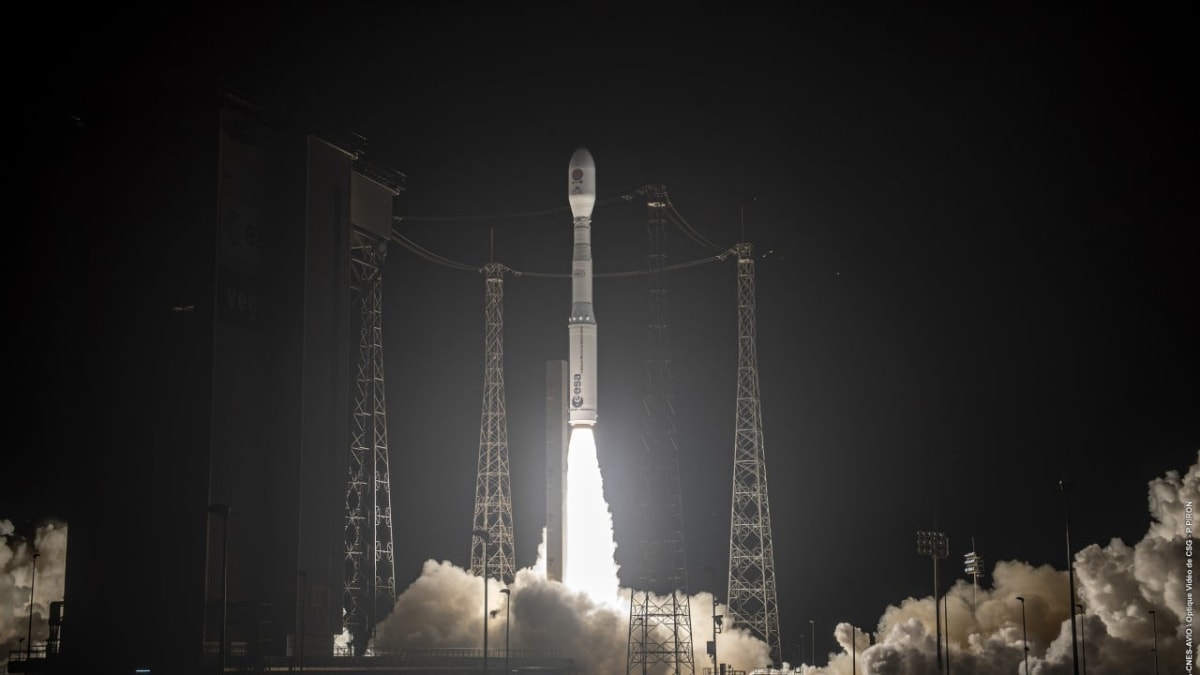
When politics divide, science can still unite. China and the European Union successfully launched their first joint satellite on Tuesday, a triumph of international cooperation happening right in the middle of escalating trade disputes between Beijing and Brussels.
The Solar Wind Magnetosphere Ionosphere Link Explorer, called SMILE, lifted off as a testament to what scientists can achieve when they focus on shared goals. The satellite will study the invisible magnetic shield that protects our planet from damaging solar winds, helping us understand the forces that make life on Earth possible.
The project began back in 2015 as a true partnership between the Chinese Academy of Sciences and the European Space Agency. Both sides contributed equally to design and build what scientists are calling the most powerful tool ever created for studying Earth's magnetic environment.
Getting here wasn't easy. Teams worked through pandemic travel restrictions, time zones, and the challenge of coordinating across continents. Yet the engineering and science teams on both sides maintained what ESA's director of science, Carole Mundell, called a "trusted collaboration" through every obstacle.
The timing makes this achievement even more remarkable. The EU and China currently face their largest trade deficit in years, with geopolitical tensions rising on multiple fronts. Trade disputes and political disagreements dominate headlines about the relationship between these two powers.
But 250 miles above those earthly tensions, SMILE now orbits as proof that scientists can build bridges even when diplomats struggle to find common ground.
The Ripple Effect: This mission shows what becomes possible when countries choose collaboration over competition on scientific challenges that benefit everyone. The data SMILE collects will help researchers worldwide better understand space weather, which can disrupt satellites, power grids, and communication systems that billions of people depend on daily.
The satellite builds on decades of scientific heritage from previous missions, taking proven technologies and applying them in new ways. Scientists from both regions will share all the data freely, advancing human knowledge regardless of political boundaries.
Future generations of scientists in China, Europe, and around the world will study SMILE's discoveries. They'll learn not just about Earth's magnetic shield, but about what humans can accomplish when they work together toward something bigger than themselves.
This 50/50 collaboration launched more than just a satellite into space—it sent a message of hope that even in divided times, our shared curiosity about the universe can bring us together.
Based on reporting by South China Morning Post
This story was written by BrightWire based on verified news reports.
Spread the positivity!
Share this good news with someone who needs it