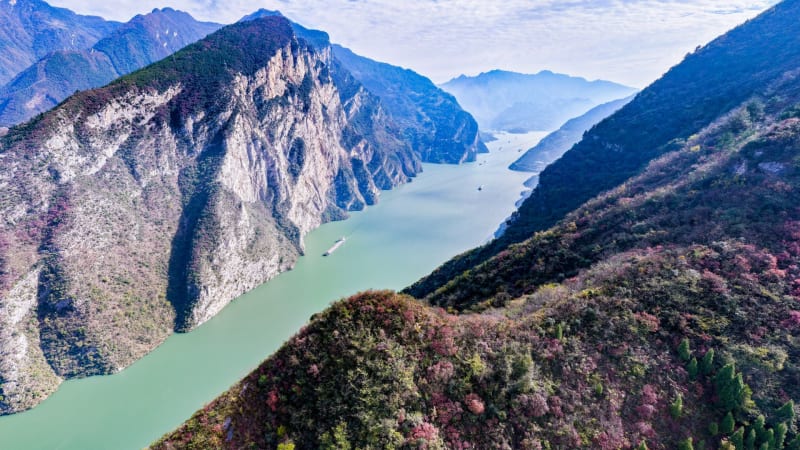
China Bans Fishing on Yangtze River, Species Bounce Back
Three years after China banned commercial fishing on its longest river, fish populations have more than doubled and endangered species are making a stunning comeback. It's proof that bold action can reverse biodiversity loss.
The Yangtze River is coming back to life, and scientists have the numbers to prove it.
China imposed a complete 10-year fishing ban on the Yangtze in 2021, and the results are better than anyone expected. Total fish mass has more than doubled since 2018, and the number of species has jumped 13%.
The Yangtze is China's longest river, flowing through 11 provinces that generate nearly half the country's economy. About 30% of China's population depends on this massive waterway.
But decades of overfishing, dam building, and pollution had pushed the ecosystem to the breaking point. Two species went extinct: the Yangtze River dolphin and the Chinese paddlefish. Another 135 fish species disappeared from surveys.
China tried protected areas and invested over $300 billion in water quality improvements. Nothing worked until they took the drastic step of banning all commercial fishing.
Scientists led by Yushun Chen at the Chinese Academy of Sciences tracked fish populations before and after the ban. What they found gave them hope for rivers worldwide.
Large fish species at the top of the food chain have bounced back dramatically. Black Amur bream and white Amur bream, both economically valuable species, are growing bigger and contributing more to the river's total biomass.
Endangered species are recovering too. The Yangtze sturgeon, Chinese sucker, and tube fish all show positive population trends. Slender tongue sole are swimming farther upstream to spawn than they have in years.
The biggest success story belongs to the Yangtze finless porpoise, the river's only remaining freshwater mammal. Their population jumped from 445 in 2017 to 595 in 2022, a 33% increase in just five years.
The porpoises are thriving because they have more big fish to eat, fewer boat strikes, less fishing net entanglement, and quieter waters without constant propeller noise.
The Ripple Effect
This recovery shows that biodiversity loss isn't a one-way street. "Strong political decisions are required to restore biodiversity," says Sébastien Brosse, an ecologist at the University of Toulouse who co-authored the study published in Science. "This is an encouraging message because biodiversity loss is often seen as irreversible."
China enforced the ban with river police and strict penalties, combining the fishing moratorium with continued environmental management. The approach worked because it was comprehensive and unflinching.
The Yangtze's comeback offers a blueprint for struggling river ecosystems around the world. When governments act boldly and give nature time to heal, recovery can happen faster than we think.
More Images



Based on reporting by Live Science
This story was written by BrightWire based on verified news reports.
Spread the positivity!
Share this good news with someone who needs it