China Beams Power to Moving Drone From 30 Meters Away
Chinese scientists wirelessly transmitted over 1,000 watts of electricity to multiple moving targets at once, including a flying drone. The breakthrough brings space-based solar power stations one step closer to reality.
Imagine charging your phone without plugging it in, except the charger is floating 200 miles above Earth, beaming power down from space.
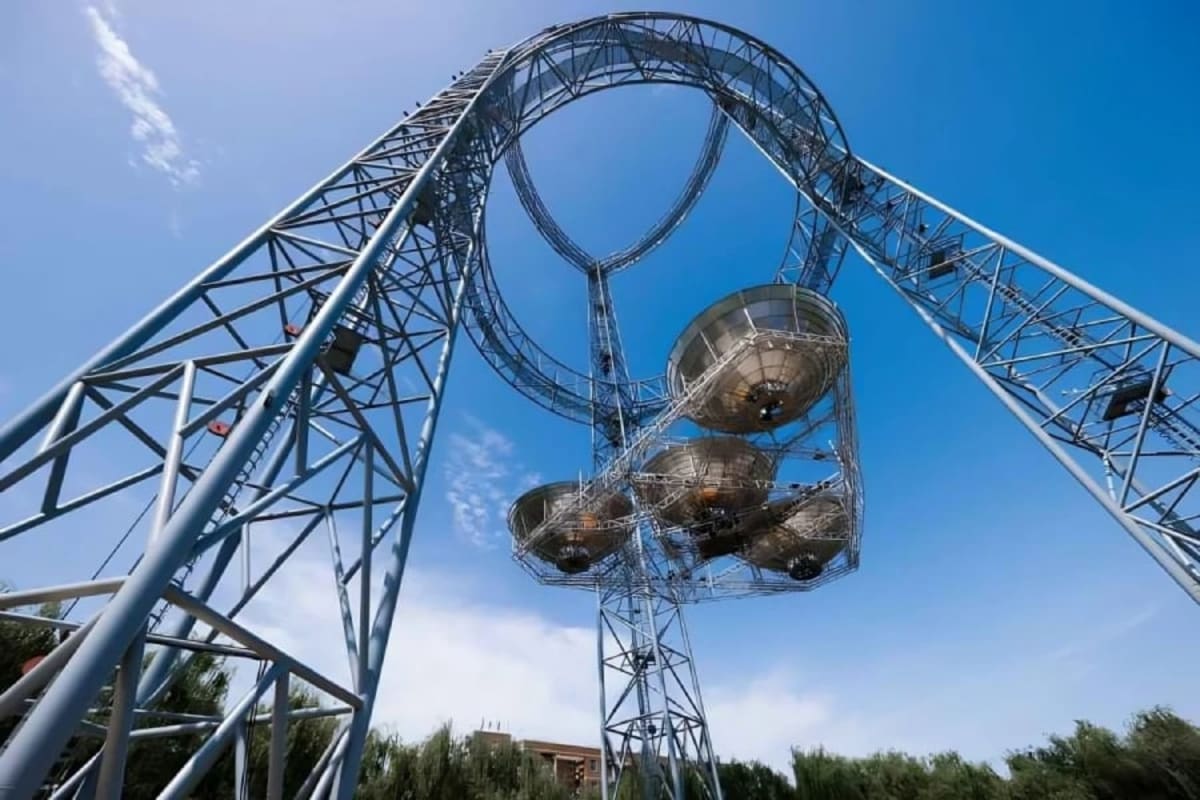
Chinese researchers just made that future a little less fictional. A team at Xidian University in Xi'an successfully transmitted 1,180 watts of electricity wirelessly to several moving targets at once, using a 75-meter tower equipped with precision microwave beams.
The real showstopper? They powered a drone flying at 18 miles per hour from 30 meters away, delivering 143 watts of stable electricity while it zipped through the air. No wires, no batteries running out mid-flight.
The system is part of China's "Zhuri" project, which translates to "Chasing the Sun." Led by engineer Duan Baoyan, the initiative has been working since 2014 to turn orbital space into a giant power outlet for satellites and other devices.
The technology tackles one of the biggest headaches in space operations: keeping things powered. Satellites in low Earth orbit spend long stretches in Earth's shadow, draining their batteries. A space-based solar station could beam continuous power, eliminating those dark periods.
The recent test achieved 20.8% efficiency, meaning about one-fifth of the generated energy made it successfully to the target and converted back into usable electricity. The system also maintained 88% beam collection efficiency, keeping the microwave energy tightly focused without scattering.
Why This Inspires
This isn't just about powering drones or satellites. The same technology could eventually deliver clean energy to remote areas on Earth where traditional power grids can't reach. Disaster zones, isolated communities, or emergency situations could receive electricity beamed from orbiting stations.
By 2022, the Zhuri team had already built the world's first complete ground-based verification platform, testing every step: capturing sunlight, converting it to electricity, transforming it into microwaves, transmitting it, and converting it back. Their newest version, called Distributed OMEGA, uses modular building blocks that can be assembled in space like cosmic Lego pieces.
The ability to power multiple moving targets simultaneously solves what researchers considered one of the hardest technical barriers. Keeping a microwave beam locked onto something zipping around at high speed requires extraordinary precision.
Space solar power has been a dream since the 1960s, but engineering challenges kept it firmly in the realm of science fiction. This test proves the core technology actually works outside the lab, with real targets moving in real time.
The next frontier is taking these systems orbital, where sunlight is constant and powerful, unfiltered by Earth's atmosphere. What started as a tower in Xi'an could become humanity's first off-world power grid.
Based on reporting by Google: solar power breakthrough
This story was written by BrightWire based on verified news reports.
Spread the positivity!
Share this good news with someone who needs it

%2Ffile%2Fattachments%2Forphans%2FWhatsAppImage2026-08-19at1527412_771386.jpeg)