China Brings Extinct Hog Deer Back From the Brink
A deer species that vanished from China's wild decades ago is making a comeback through careful breeding programs. Scientists are now preparing these animals to return to nature after generations in captivity.
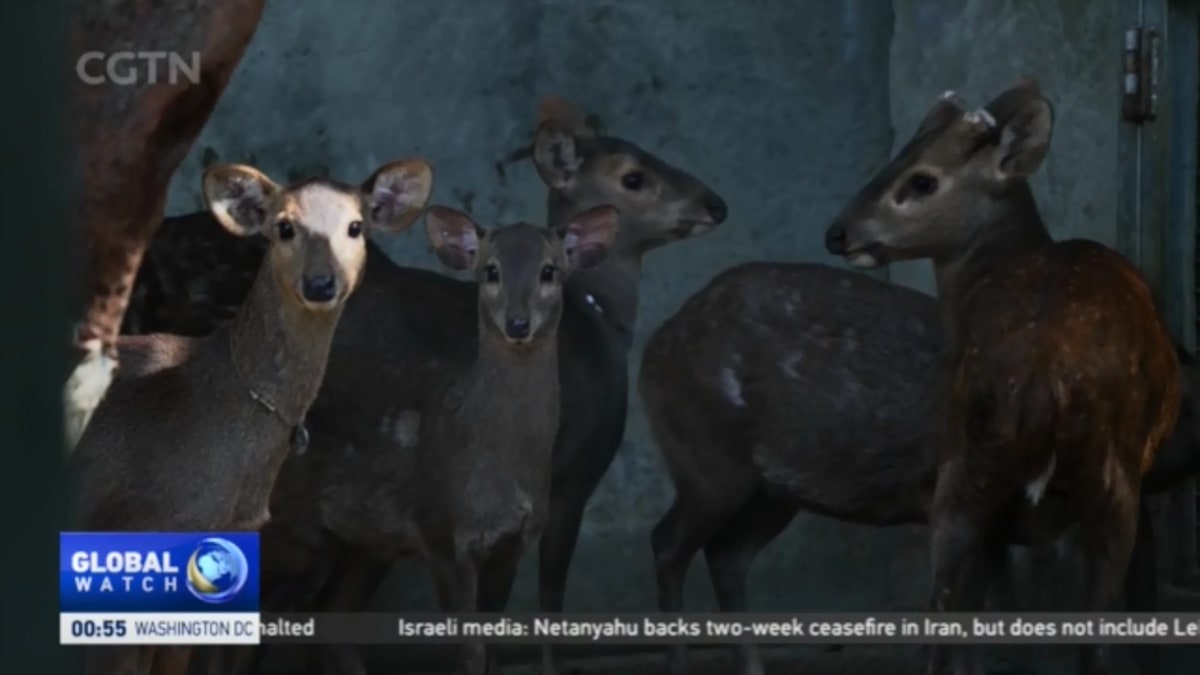
The hog deer hasn't roamed wild in China for decades, but a tiny fawn taking her first wobbly steps at Chengdu Zoo represents hope for an entire species coming back to life.
This unique deer earned its name from an unusual trait. Unlike most deer that leap gracefully, hog deer run low to the ground like pigs, hugging the earth as they move through grasslands.
Habitat loss and hunting drove them to local extinction years ago. Today, every single hog deer in China exists only because humans decided to save them.
Three zoos across the country now care for captive populations, with Chengdu Zoo housing over 70 percent of them. Each animal receives meticulous attention, from daily health checks to hormone analysis extracted from their droppings.
"We assess different conditions, for example, to determine whether they are pregnant, or to monitor their stress levels," explains researcher Xiong Bo. This scientific approach has successfully grown their numbers in captivity.
But zookeepers and scientists share a bigger dream than just breeding deer in enclosures. They want to return these animals to the wild where they belong.
The Ripple Effect
This recovery effort shows how conservation can evolve beyond simply keeping species alive in zoos. The team is actively scouting locations for future release sites, though their original habitats have changed too dramatically to support them anymore.
Training has already begun to prepare captive deer for wild life. Keepers now deliberately keep their distance, avoiding the friendly interactions that might make these animals too comfortable around humans.
"You don't know what might happen if they become used to humans in the wild," says keeper Zhai Ying. It's a careful balance between providing care and preserving the wildness these deer will need to survive on their own.
The search for suitable release sites continues, focusing on areas that can provide the right habitat even if they're not the species' historical range. Researchers understand that successful rewilding requires patience and perfect conditions.
Each new fawn born represents both immediate joy and long-term possibility. These babies may become the generation that finally runs free again, not as zoo animals but as truly wild deer reclaiming their place in China's ecosystem.
For now, their survival depends entirely on human commitment, but every scientific advancement and every successful birth brings the species closer to independence.
Based on reporting by Google News - Endangered Species Recovery
This story was written by BrightWire based on verified news reports.
Spread the positivity!
Share this good news with someone who needs it