China Builds Electric Aviation Industry Around High-Speed Rail
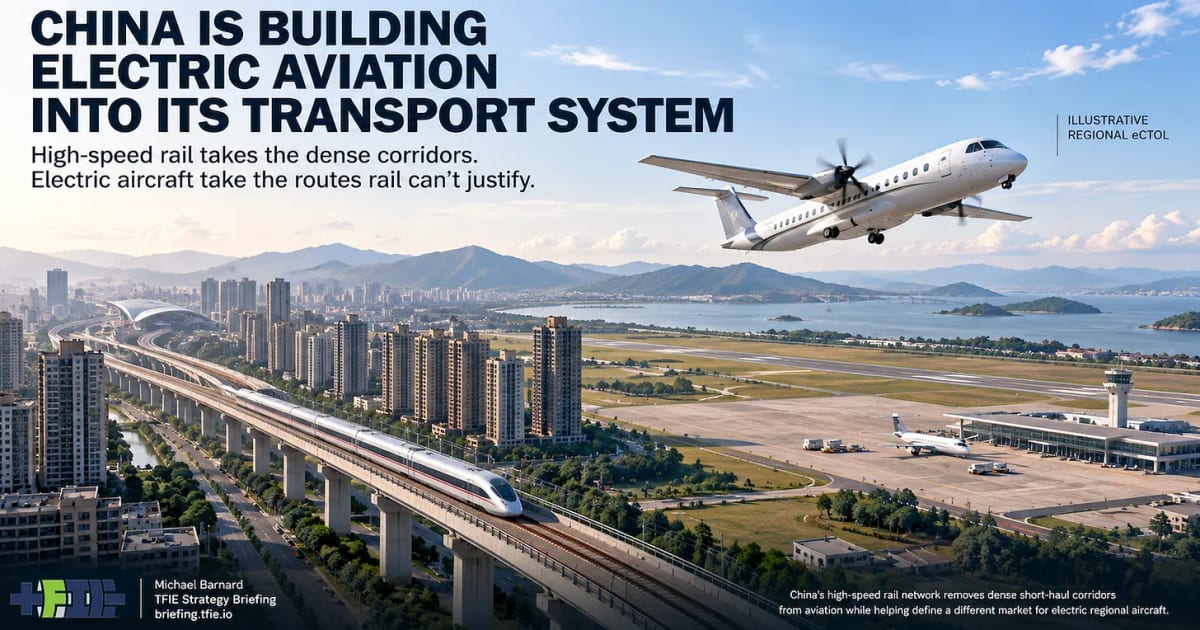
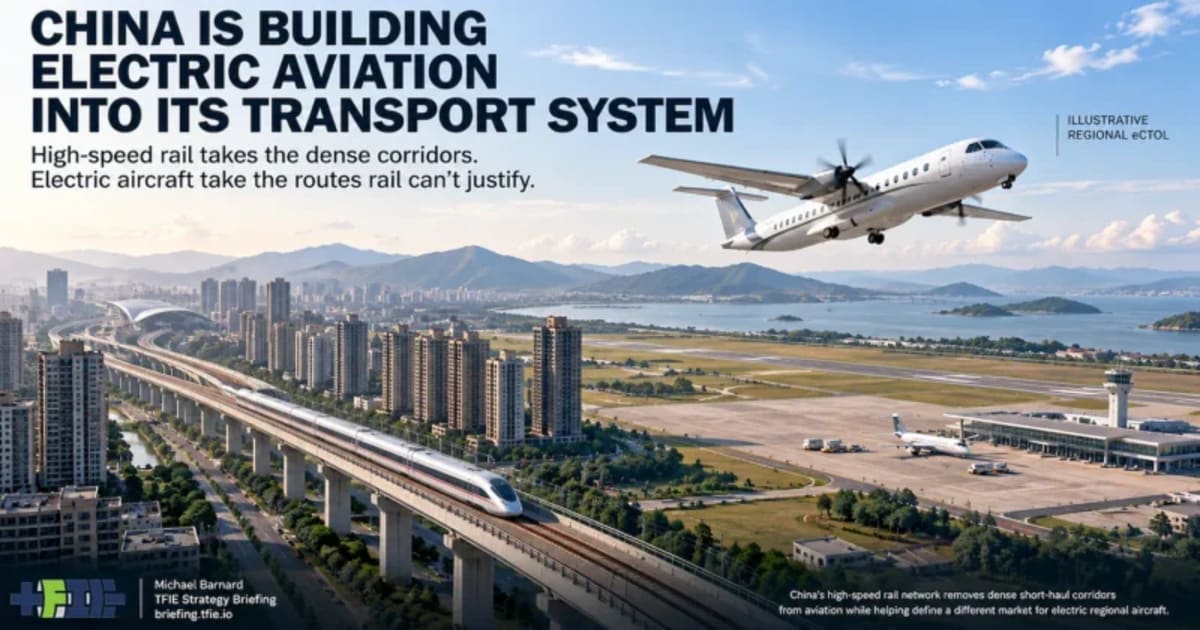
While other countries chase electric aircraft prototypes, China is building an entire transport system that makes electric planes make sense. Its massive high-speed rail network handles dense city routes, leaving regional gaps where battery-powered flights can truly shine.
China isn't just building electric planes. It's redesigning its entire transportation map to make them work.
While aviation startups worldwide race to fly the first electric passenger plane, China has taken a different approach. The country built 50,400 kilometers of high-speed rail by the end of 2025, with plans to reach 60,000 kilometers by 2030. Those bullet trains now handle the crowded city routes that conventional planes serve inefficiently.
That leaves electric aircraft with a clearer mission. Regional routes, island connections, difficult terrain, and smaller cities become natural fits for battery-powered flight. China doesn't need electric planes to compete with 350 km/h trains between major cities, it needs them where building another railway makes no economic sense.
The real advantage isn't just aircraft design. China produced more than 80% of global battery cells in 2025, giving electric aviation developers access to the world's deepest battery expertise. CATL, a major battery maker, is now testing aviation-specific cells designed for the tough safety and power demands of flight, not just laboratory records.
China's aerospace industry is treating this as a system, not a science project. COMAC, the state aircraft manufacturer, is working on electric propulsion integration. AECC is developing megawatt-class hybrid engines for larger regional planes. The civil aviation authority has created operating frameworks for short-haul electric routes, covering the unglamorous essentials like airport charging, crew training, and maintenance oversight.
Europe and North America have strong programs too. Heart Aerospace flew its X1 demonstrator for 27 minutes in August 2026, proving megawatt-level electric propulsion at scale. Airbus, Embraer, and engine makers are all testing systems. The West leads in certification expertise and established aerospace supply chains.
The Ripple Effect spreads beyond aviation. When high-speed rail and electric aircraft work as complementary systems rather than competitors, countries can match each transport mode to routes where it performs best. Dense corridors get efficient trains. Thin regional routes get affordable electric flights. Remote communities gain better connections without the cost of conventional aviation or impractical railway construction.
Early electric trainers and demonstration flights don't prove an industry. The real test comes when hundreds of aircraft fly repeated schedules, batteries reach expected lifespans, operators understand true costs, and second orders arrive based on real-world performance. China's integrated approach, pairing the world's largest battery industry with a transport system already optimized for electric aviation's strengths, positions it to reach that scale first.
The race isn't about who flies an electric plane first, but who builds a transport system where electric planes become the obvious choice.
More Images


Based on reporting by CleanTechnica
This story was written by BrightWire based on verified news reports.
Spread the positivity!
Share this good news with someone who needs it