China Builds World's First 2D Chip That Beats Silicon Limits
Scientists in China just created the world's first working computer chip made from atom-thin materials, breaking through a barrier that threatened to end decades of computing progress. The breakthrough could keep our devices getting faster and cheaper for years to come.
For the first time ever, researchers have built a computer processor from materials just one atom thick, smashing through limits that threatened to stop computing progress in its tracks.
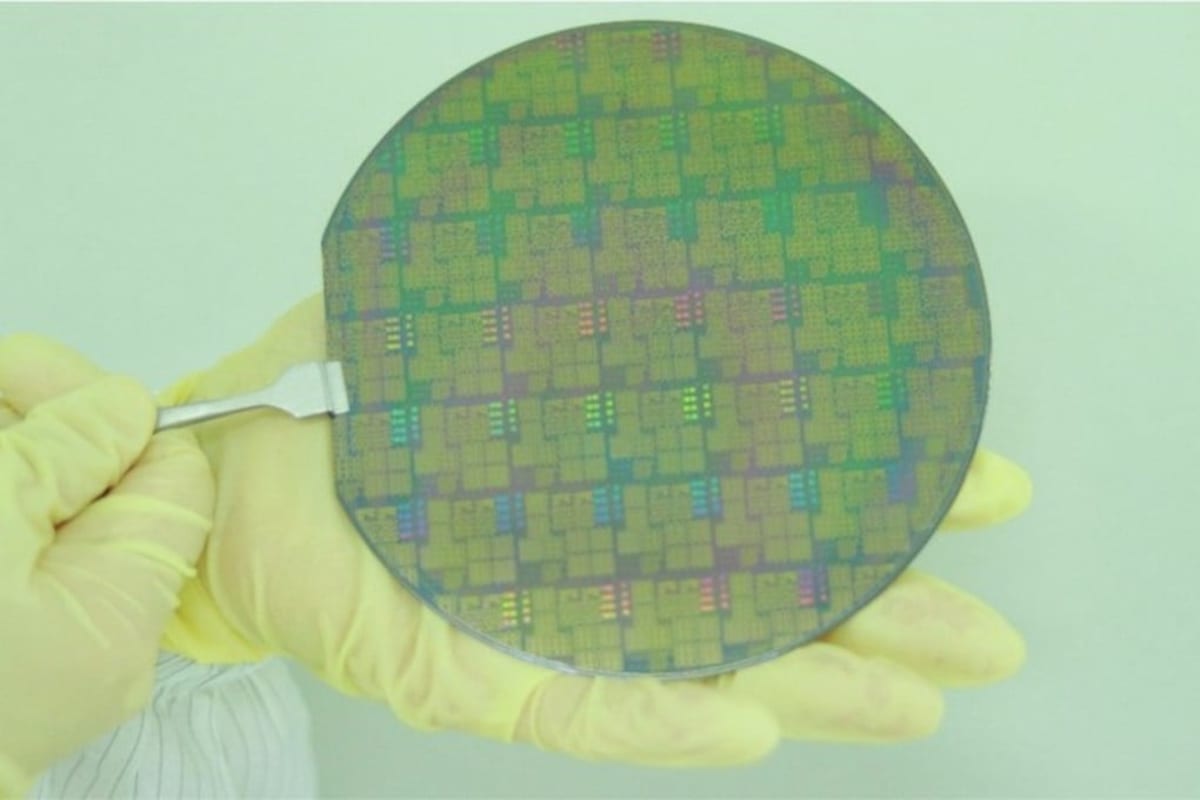
A team from Nanjing University partnered with Huawei Technologies to create the Mengqi-1000, a revolutionary microprocessor made from molybdenum disulfide instead of traditional silicon. The chip works by processing multiple pieces of information simultaneously, and it packs more computing power into a smaller space than any previous design.
The breakthrough tackles one of technology's biggest challenges. Moore's Law, the famous observation that computing power doubles every two years while costs drop by half, has driven five decades of innovation. But silicon chips are now so tiny that physics itself is starting to push back.
Traditional silicon components are approaching the size of individual atoms, where normal rules break down and electrons start behaving unpredictably. This threatens to end the steady march of progress that gave us smartphones, artificial intelligence, and countless other innovations.
The new chip solves this problem by using materials that are naturally atom-thin. Molybdenum disulfide allows electrons to move smoothly and efficiently even at these microscopic scales, letting engineers keep shrinking components without hitting a wall.
Professor Shi Yi from Nanjing University says the Mengqi-1000 achieved record-breaking integration density, meaning it squeezes more transistors onto a single chip than ever before. The research, published in Nature Electronics, represents years of collaboration between academic scientists and industry engineers.
Why This Inspires
This isn't just a laboratory curiosity. By partnering directly with Huawei, the researchers built their chip with real-world manufacturing in mind from day one.
China is showing that fundamental scientific research and practical industry applications can work hand in hand. The collaboration model could accelerate the journey from breakthrough discoveries to products that actually reach consumers.
The technology also reduces data delays, meaning future devices could respond faster while using less power. That matters for everything from extending battery life in phones to making data centers more energy efficient.
The successful creation of a working processor proves that two-dimensional materials aren't just theoretical possibilities. They're ready to start solving real problems and keeping the pace of innovation alive for another generation of technology.
The future of faster, cheaper computing just got brighter, one atom at a time.
More Images

Based on reporting by South China Morning Post
This story was written by BrightWire based on verified news reports.
Spread the positivity!
Share this good news with someone who needs it