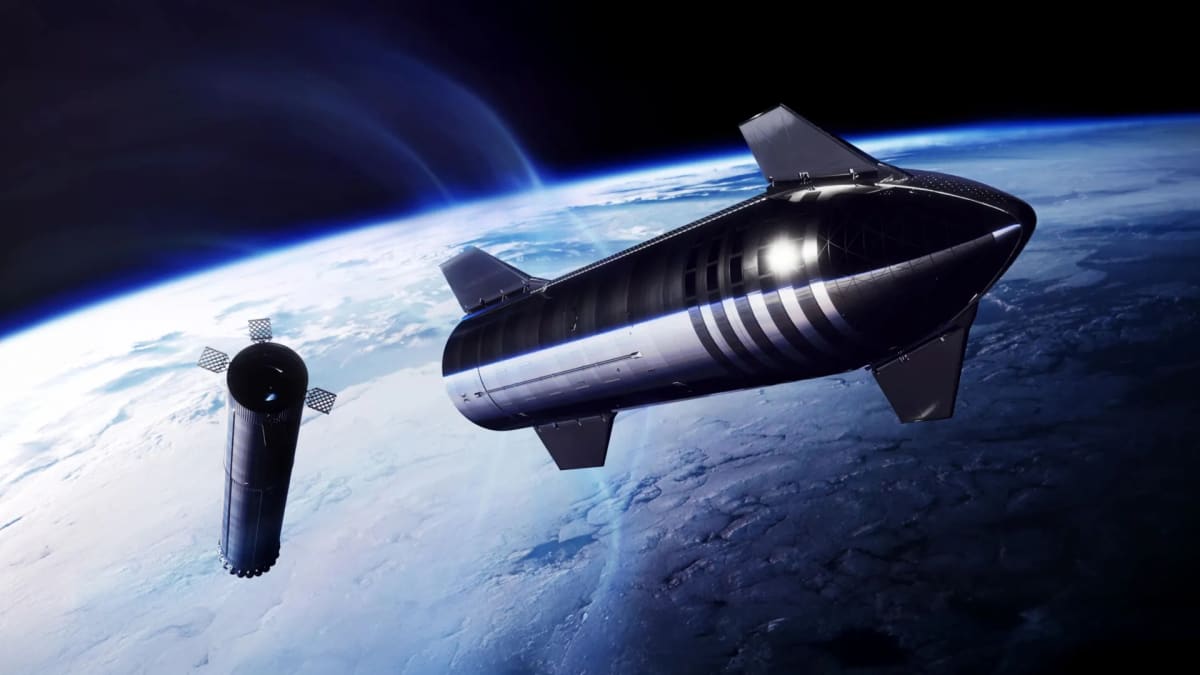
Europe's New Rocket Could Challenge SpaceX More Efficiently
German scientists analyzed SpaceX's Starship and confirmed it's as revolutionary as promised, then designed a European rocket that might reach space more efficiently. The race to build tomorrow's super heavy rockets just got more interesting.
When SpaceX caught a falling rocket booster with giant mechanical arms last year, it proved something remarkable was happening in spaceflight. Now independent researchers have confirmed just how impressive Starship really is, while revealing an alternative path that could work even better.
Scientists at the German Aerospace Center completed the most thorough independent study of Starship to date. Instead of trusting SpaceX's claims, they analyzed every second of video from the first four test flights to build their own performance models.
Their conclusion? Starship can already deliver 59 tonnes to orbit while staying fully reusable, matching what other heavy rockets can lift. The next generation version could launch 115 tonnes reusably, or 188 tonnes if it flies just once, surpassing the legendary Saturn V.
But the researchers didn't stop at analysis. They also designed a European alternative called the RLV C5 that takes a completely different approach to the same problem.
Instead of trying to make everything reusable immediately, the RLV C5 focuses on smart efficiency. It pairs a reusable winged booster with a disposable upper stage, using hydrogen fuel that packs more punch than Starship's methane.
The clever part comes during landing. Rather than burning precious fuel to touch down vertically, the RLV C5 booster would glide back through the atmosphere on wings, then get snagged mid-air by a large aircraft.
This design choice creates a striking advantage. Without needing to save fuel for landing, the RLV C5 dedicates 74% of its orbital mass to actual payload, compared to Starship's 40%.
Starship weighs three times more at launch than the proposed European rocket, largely because complete reusability requires heat shields, extra structure, and landing fuel. That hardware adds up fast.
The researchers emphasize these aren't really competitors, just different tools for different jobs. Starship's massive capacity suits ambitious projects like Mars colonies and giant satellite networks. The RLV C5 would give Europe independent heavy lift capability without the enormous cost of matching Starship's full reusability right away.
The Bright Side
One rocket is already flying while the other remains on paper, but that's exactly what makes this moment exciting. Starship's bold flights are inspiring engineers worldwide to rethink what's possible, not just copy what exists.
The RLV C5 builds on decades of European research into reusable spaceflight, particularly the SpaceLiner program. If developed, it could serve as a stepping stone toward Europe's own fully reusable rocket someday.
Both rockets still face serious challenges. Starship's heat shield took severe damage during early tests and needed major redesigns. Making rapid reuse economically viable remains unproven.
But the conversation has shifted from whether revolutionary rockets are possible to which approach works best. That's progress worth celebrating.
Based on reporting by Science Daily
This story was written by BrightWire based on verified news reports.
Spread the positivity!
Share this good news with someone who needs it


