Webb Telescope Captures Stunning New Views of Centaurus A
NASA's James Webb Space Telescope is celebrating four years in space by revealing never-before-seen details of Centaurus A, a galaxy just 11 million light-years away. For the first time, astronomers can study this mysterious galaxy star by star, unlocking secrets about how galaxies form and evolve.
The universe's most powerful telescope just gave us an extraordinary birthday gift: the clearest view ever of one of our most fascinating galactic neighbors.
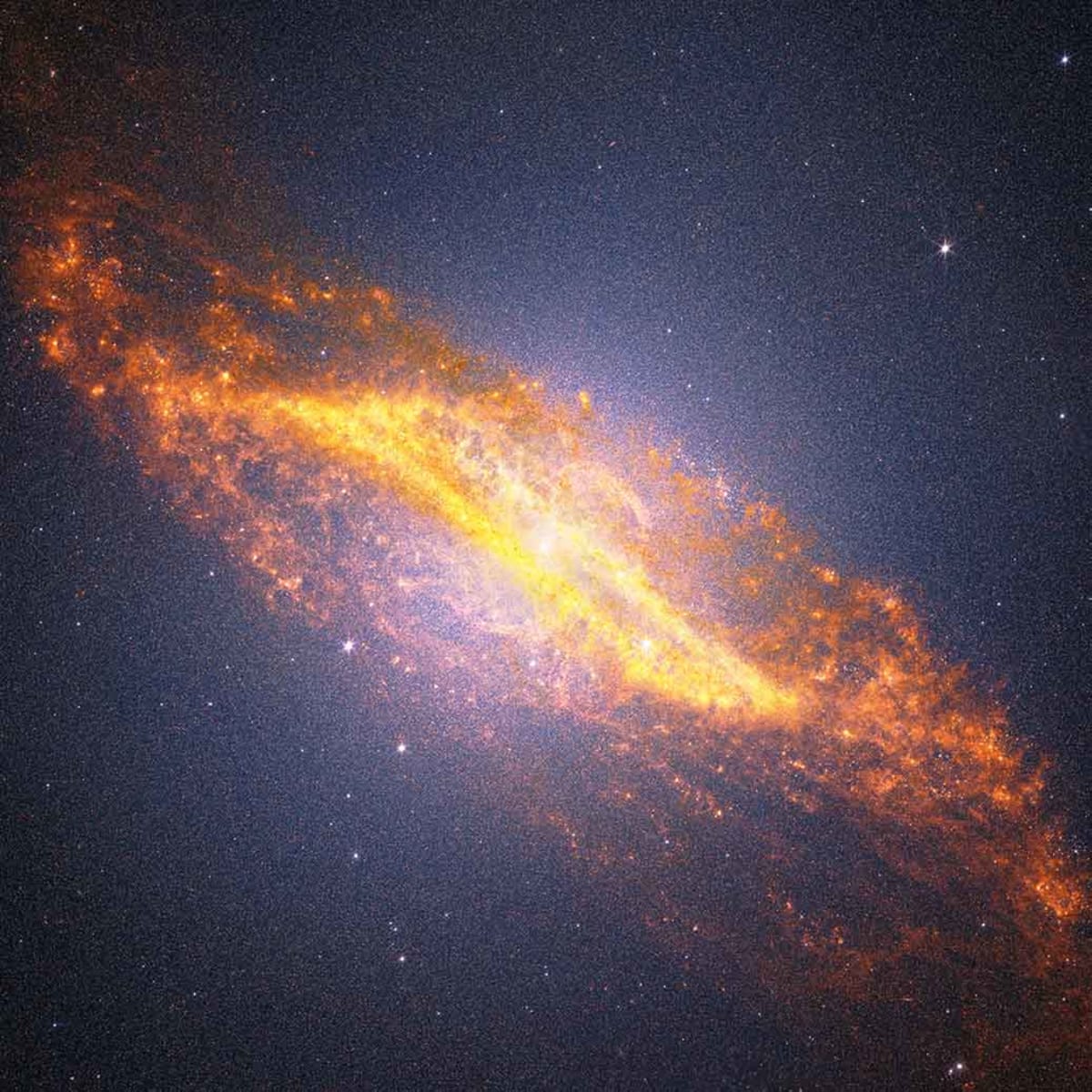
NASA's James Webb Space Telescope marked its fourth anniversary by capturing stunning new images of Centaurus A, a galaxy that has puzzled astronomers for decades. What makes this galaxy special is its rare combination of being both incredibly active and surprisingly close to us at just 11 million light-years away.
Previous telescopes could only glimpse parts of Centaurus A's story. The Hubble Space Telescope couldn't see through the galaxy's thick dust clouds, while the Spitzer Space Telescope lacked the power to spot individual stars. Webb's infrared vision finally cuts through the cosmic fog, revealing what's been hidden all along.
The images show a galaxy still recovering from a dramatic collision with another galaxy two billion years ago. At its heart, a supermassive black hole actively feeds, shooting out powerful jets of energy that shape the surrounding stars and gas. These violent forces create some of the most beautiful structures astronomers have ever seen.
One glowing feature cuts across the galactic center like a warped parallelogram with wispy tendrils stretching outward. Another mysterious structure shaped like the letter "S" has scientists scratching their heads, wondering how the black hole and ancient merger created such unusual patterns.
The real breakthrough comes from Webb's ability to resolve individual stars for the first time. Astronomers can now practice what they call "galactic archaeology," piecing together the galaxy's entire history by studying its stellar population. Each star tells part of the story: when the oldest stars formed, when star formation slowed, and how the ancient collision reignited a powerful burst of new stars.
The red glowing dots scattered throughout the images represent dusty areas where stars are either forming or dying. These stellar nurseries and dust-rich older stars work together to continue the galaxy's evolution, ensuring new generations of stars can form.
Why This Inspires
Webb's observations remind us that our understanding of the universe keeps expanding. What looked like mysterious dust clouds to earlier telescopes now reveals itself as a complex, dynamic galaxy full of individual stories. The same technology that helps us see distant galaxies more clearly also demonstrates how persistence and innovation solve long-standing mysteries.
Scientists can now track how the central black hole both creates and destroys, compressing gas to accelerate star formation in some areas while pushing it away in others. This delicate dance between destruction and creation shapes entire galaxies across the universe.
Four years into its mission, Webb continues exceeding expectations and opening windows into corners of space we've never seen before.
Based on reporting by Google: James Webb telescope
This story was written by BrightWire based on verified news reports.
Spread the positivity!
Share this good news with someone who needs it