China-Pakistan Seed Program Grows Hope for 500M Farmers
Chinese agricultural companies are bringing hybrid rice, canola, and vegetable seeds to Pakistan, helping farmers boost crop yields and income. The "small yet beautiful" projects show how international cooperation can transform lives one seed at a time.
When a Pakistani journalist held up his phone to show a picture of a giant watermelon and asked, "Can we grow this in Pakistan?", laughter rippled through the group, but his question held genuine hope for his country's farming future.
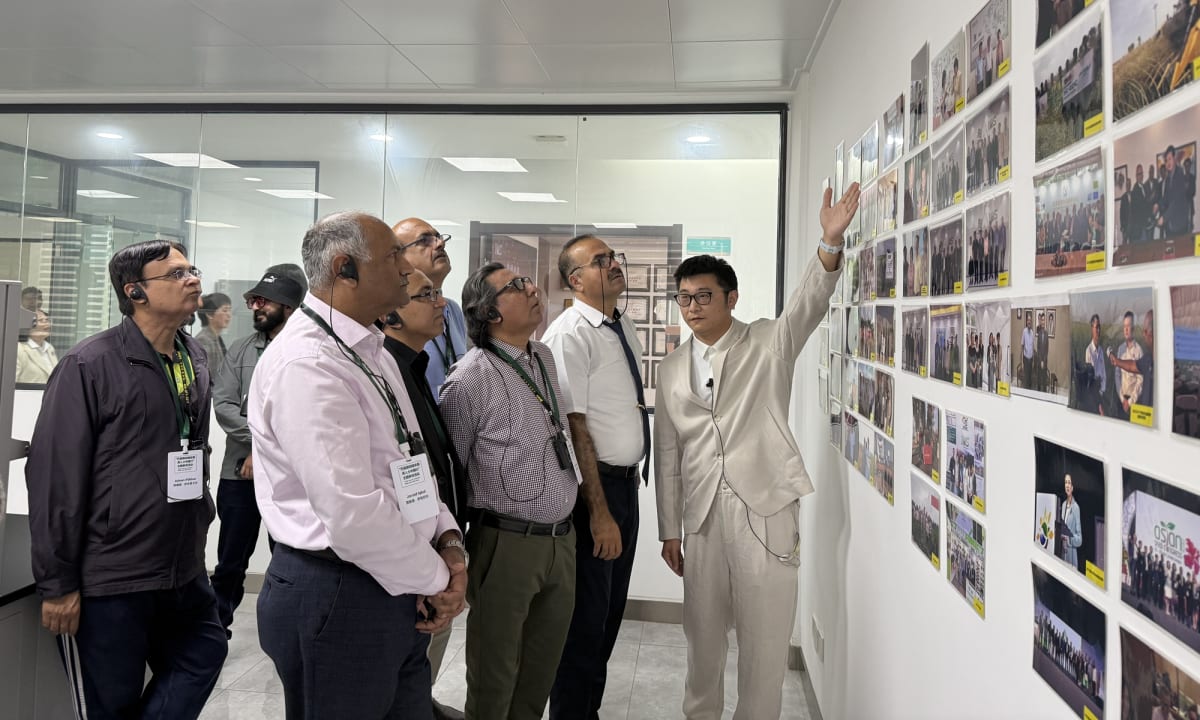
A delegation of Pakistani media professionals and researchers recently visited Wuhan Qingfa Hesheng Agricultural Development Company in central China's Hubei Province to see firsthand how seed technology is strengthening ties between the two nations. The company has been introducing hybrid rice, canola, watermelon, squash, chili peppers, and cauliflower varieties to Pakistani farmers through research farms, local breeding programs, and training sessions.
For Noor Ullah, senior manager of Jang Media Group, the rows of seeds on display represented more than just crops. "These are seeds of hope that China-Pakistan cooperation is sowing in our land," he said during the April 2025 visit.
Pakistan's agricultural potential runs deep. The country has vast arable land, diverse climates perfect for both staple grains and specialty crops like mangoes and cherries, and the massive Indus River irrigation system providing water to millions of farms.
China brings decades of expertise in hybrid breeding, water-saving irrigation, and agricultural technology. Pakistan offers complementary strengths: abundant land, ideal growing conditions, and strategic access to South Asian and Middle Eastern markets.
The partnership addresses real needs. Pakistani farmers need higher-yielding varieties to boost income and strengthen food security for the country's growing population.
The Ripple Effect
These agricultural exchanges go beyond business deals. Training programs bring Pakistani professionals to China to learn techniques they can share back home, creating knowledge networks that outlast any single project.
The timing aligns perfectly with both countries' development goals. China just began its 15th Five-Year Plan, while Pakistan advances its "Uraan Pakistan" vision for modernization.
During Pakistani President Asif Ali Zardari's recent five-day China visit, the two countries signed three new cooperation agreements covering desalination, agricultural technology, and tea sector development. These additions expand the foundation already being built by companies like Wuhan Qingfa Hesheng.
The projects prove that sustainable international cooperation doesn't require massive infrastructure or billion-dollar investments. Sometimes a single seed variety, one training program, or a small research farm creates the deepest roots and biggest impact on daily lives.
As the Pakistani delegation left the agricultural park, members continued excitedly discussing what they'd seen and imagining the possibilities for their farmers back home. Behind their enthusiasm lives a simple truth: better seeds today mean fuller harvests, stronger incomes, and more secure futures for farming families tomorrow.
Based on reporting by Google: cooperation international
This story was written by BrightWire based on verified news reports.
Spread the positivity!
Share this good news with someone who needs it