China Preps First Humanoid Robot Astronaut for Space
Two Chinese companies are racing to send humanoid robots into orbit, marking a new chapter in space exploration where machines handle the harsh conditions humans struggle with. One robot just became the first to connect directly to a satellite while on Earth.
📺 Watch the full story above
Robots are about to get their astronaut wings, and they might handle space better than we ever could.
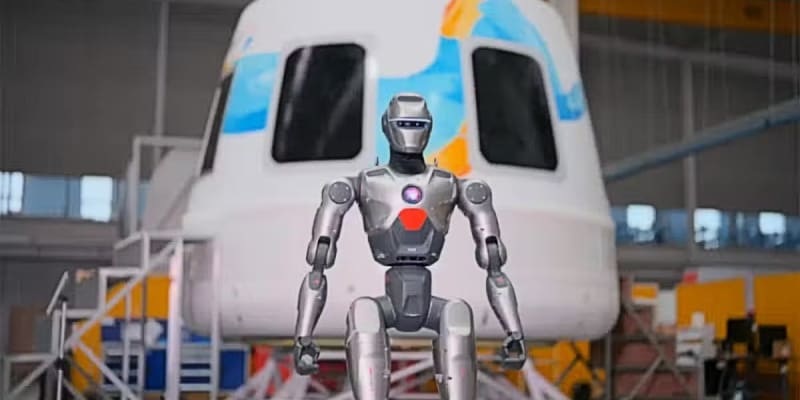
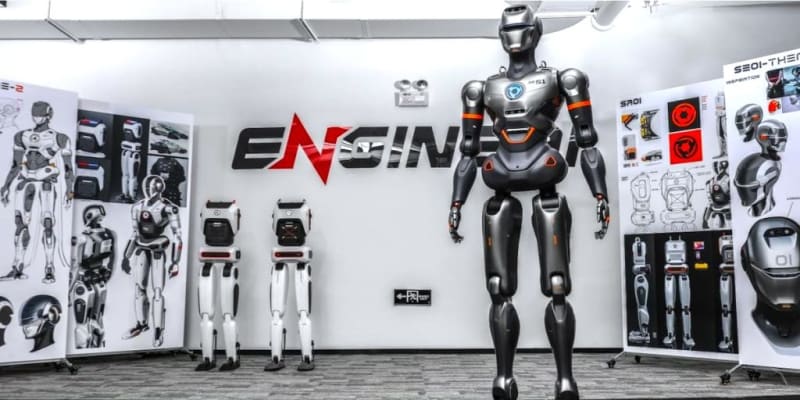
Engine AI, a company based in Shenzhen, China, just announced plans to launch their PM01 humanoid robot into space. If successful, PM01 would become the world's first humanoid robot astronaut, working in conditions that would be deadly for humans without expensive life support systems.
Meanwhile, another Chinese robot called "Embodied Tien Kung" achieved something remarkable this week. It became the first humanoid robot to connect simultaneously to a satellite, smartphone, and computer, streaming visual data in real time from all three sources.
These breakthroughs solve a real problem. Space is brutal on the human body with its lack of gravity, extreme temperature swings, intense radiation, and complete vacuum. Robots don't need oxygen, can withstand temperature extremes, and won't suffer bone loss from microgravity.
The PM01 robot brings high-precision sensors, millisecond-fast responses, and AI-powered autonomous decision making to the table. Its humanoid shape means it can use tools and equipment already designed for human astronauts, cutting down training time for remote operators back on Earth.
Satellite connectivity opens even bigger possibilities beyond space. Remote mountain regions, offshore islands, and disaster zones where cell towers don't work could all benefit from robots that stay online through satellites. When earthquakes knock out ground networks, satellite-connected robots could search rubble and assess damage.
The Ripple Effect
China's robot industry is booming in ways that echo America's space race decades ago. Global humanoid robot sales hit 16,000 units in 2024, with Chinese companies dominating the market and driving 508% year-over-year growth.
By 2027, experts predict China will sell over 100,000 humanoid robots annually, mostly for logistics, manufacturing, and automotive work. The entire market generated $440 million last year, and Chinese factories now produce a full heavy excavator every six minutes.
Engine AI is already selling PM01 robots to consumers, with prices starting around $25,000 for commercial versions. That accessibility means more companies can experiment with humanoid robots for challenging environments.
The technology developed for space robots will flow back to Earth applications. Better sensors, more reliable satellite connectivity, and smarter AI will help robots work in mines, offshore oil platforms, and nuclear facilities where human safety is always a concern.
As one company prepares to launch and another perfects satellite links, the race to put helpful robots in harsh places is heating up with benefits for everyone.
More Images


Based on reporting by Electrek
This story was written by BrightWire based on verified news reports.
Spread the positivity!
Share this good news with someone who needs it