China Rethinks Education to Build Homegrown Innovators
China is transforming science education from the ground up, starting with elementary students, to build the next generation of innovators without relying on overseas training. The shift comes as young, domestically trained teams are already creating breakthrough AI and robotics technology.
Young Chinese engineers are proving you don't need overseas degrees to build world class technology, and now their country wants to make that the norm, not the exception.
When Chinese AI company DeepSeek released its DeepSeek-R1 language model in early 2025, Silicon Valley took notice. The team behind it was mostly under 30 and trained entirely in China. Robotics firm Unitree followed with a humanoid robot that rivals far more expensive Western systems, built by similarly young, homegrown engineers.
These breakthroughs are sparking a rethink of how countries build scientific talent. For decades, China and many nations followed a predictable path: select top students through high stakes exams, send them abroad for advanced training, then welcome them back to lead domestic research. That worked for catching up, but global tensions and talent competition are making it less reliable.
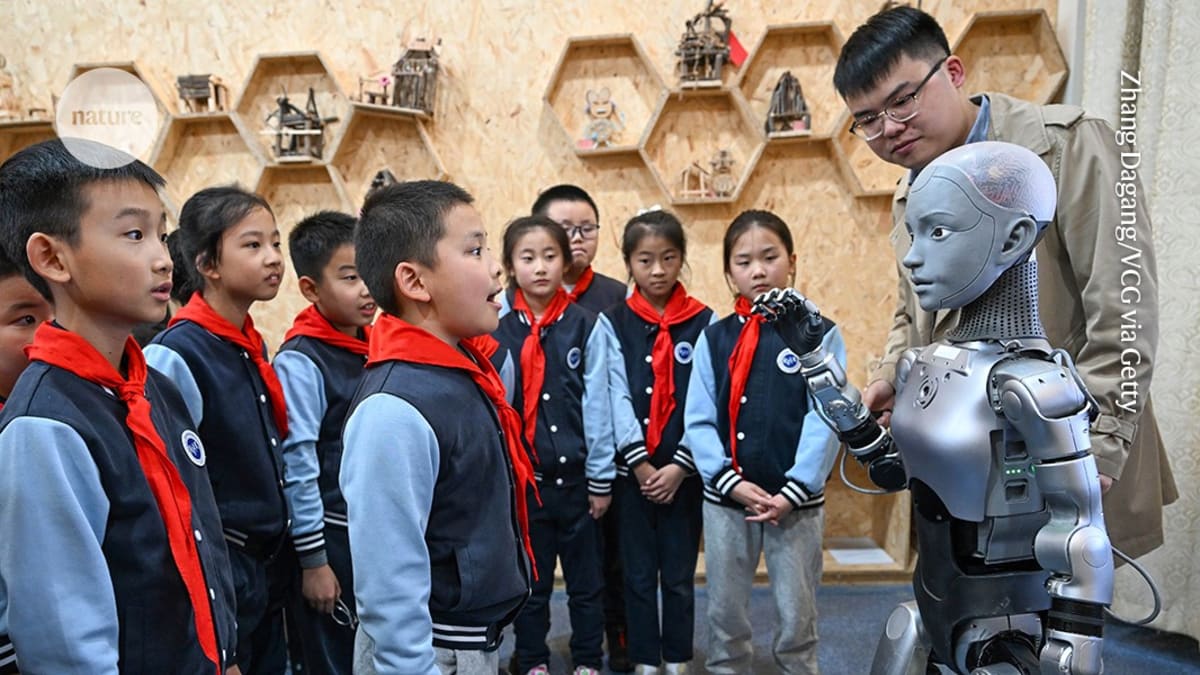
China's answer is to start much earlier. New education reforms are moving away from rote memorization toward hands on, project based learning that mirrors how real scientists work. Elementary and middle school students are now posing questions, conducting experiments, and solving real world problems across different subjects.
The Fertile Soil Plan is bringing universities, national labs, and tech companies directly into schools. Students gain access to equipment, mentors, and cutting edge research opportunities once reserved for college students. The Standout Programme lets secondary students pursue individualized learning paths and engage in authentic research projects.
The Ripple Effect
The reforms address a critical gap that affects countries worldwide. A 2021 survey of over 131,000 primary school science teachers in China found that more than 70% lacked STEM backgrounds, and most taught science only part time. The United States, Europe, and other regions face similar shortages of qualified science teachers.
China is now investing heavily in teacher training and ongoing professional development. The goal is building a workforce that can turn ambitious curriculum goals into daily classroom experiences. Without qualified teachers who understand both the science and how to teach it, even the best policies remain just ideas on paper.
The approach recognizes something fundamental: scientific talent doesn't suddenly appear in university lecture halls. It grows through stages, starting when young children first learn to ask "why?" and continuing as they develop critical thinking skills through their school years. Systems that only invest at the university level are building on shaky foundations.
Early results suggest the model can work. The young teams at DeepSeek and Unitree show that domestic education pipelines can produce innovators ready to compete globally. As more countries face similar challenges in attracting and retaining international talent, China's experiment in starting upstream could offer lessons for building sustainable innovation from the ground up.
The message is clear: tomorrow's breakthroughs begin in today's classrooms.
More Images




Based on reporting by Nature News
This story was written by BrightWire based on verified news reports.
Spread the positivity!
Share this good news with someone who needs it