China Startup Raises $70M for Satellite Laser Tech
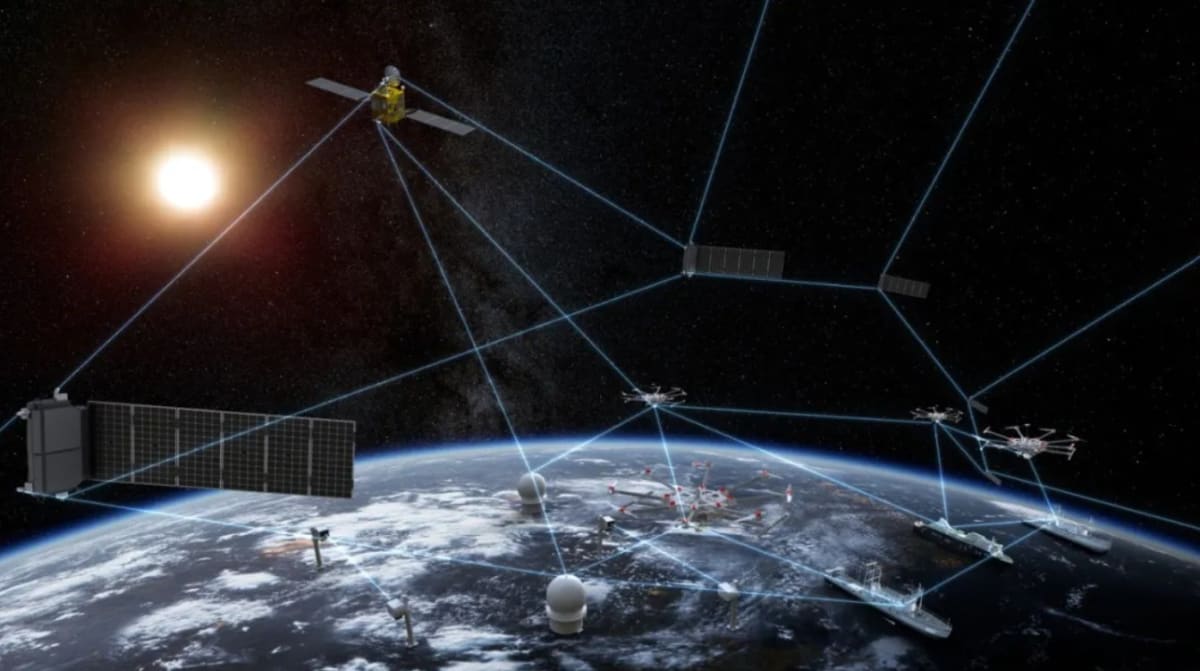
A Shanghai company just secured massive funding to build the laser communication systems that will connect thousands of satellites in orbit. The technology promises to beam high-speed internet across the globe without needing ground stations in every country.
Imagine sending data between satellites using beams of light instead of radio waves, creating a network in space that doesn't depend on infrastructure below.
That's exactly what BlueStar Optical Domain is building, and investors just bet $70 million the technology will transform how satellites talk to each other. The Shanghai startup announced its Series C funding round on March 9, backed by five major investment firms including Yuekai Capital and Galaxy Innovation Capital.
The money will help Laser Link, as the company is also known, scale up production dramatically. They're planning to upgrade their facilities to manufacture 1,000 laser communication terminals annually by mid-2026, a massive jump aimed at meeting surging demand from China's ambitious satellite internet projects.
The timing couldn't be better. China is preparing to launch two massive satellite constellations called Guowang and Thousand Sails, each planning to put more than 10,000 satellites into orbit. These satellites will need laser terminals to route internet traffic globally without relying on ground stations, which can face regulatory hurdles in different countries.
Laser communication offers a clever solution to a tricky problem. Instead of needing permission to build ground infrastructure worldwide, satellites equipped with laser terminals can communicate directly with each other, creating a space-based network that bypasses geopolitical complications entirely.
The company is focusing on developing its own core components, including high-end chips and high-power lasers. This push for self-reliance reflects China's broader strategy to build domestic capabilities in strategic technologies.
The Ripple Effect
This funding signals something bigger than one company's growth. The mix of venture capital and regional industrial funds shows strong confidence in the commercial space sector's future. Since China's government highlighted commercial space as strategically important, investment has poured into startups tackling the technologies needed for megaconstellations.
Laser Link's founder Yan Zhixin calls laser communications the "neural network" connecting space and Earth. The company launched its first test payloads in May 2022 and has been refining the technology ever since.
China's current five-year plan discussions in Beijing include satellite internet constellations as a national priority. The draft plan envisions an integrated system fusing communication, navigation, sensing, and computing across space, air, and ground, potentially extending to future 6G networks and applications in aviation.
The commercial space industry is preparing for launch activities to resume March 12 after pausing for Chinese New Year and political sessions. A Long March 8A rocket is scheduled to carry more satellites for the Thousand Sails constellation, marking the beginning of what could be years of rapid deployment.
Connecting thousands of satellites with laser beams might sound like science fiction, but it's becoming the backbone of tomorrow's global internet.
More Images


Based on reporting by SpaceNews
This story was written by BrightWire based on verified news reports.
Spread the positivity!
Share this good news with someone who needs it