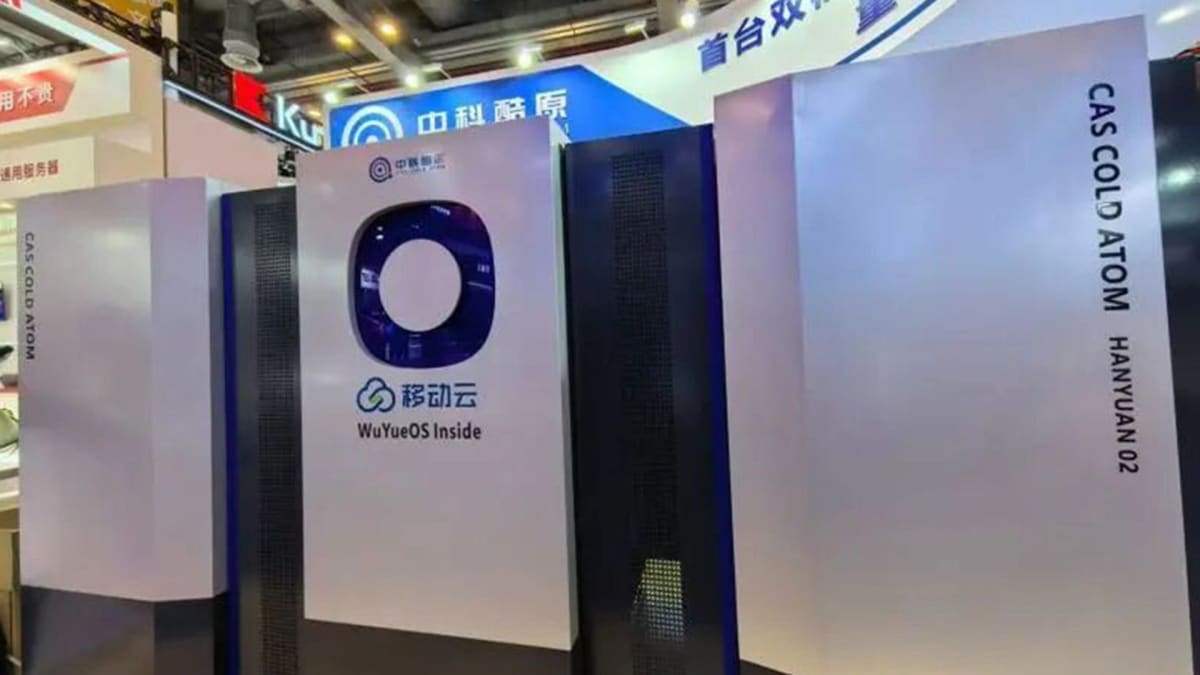
China Unveils World's First Dual-Core Quantum Computer
A Chinese company has built the world's first dual-core quantum computer that runs on room temperature and could solve one of quantum computing's biggest problems: keeping calculations stable. The machine uses 200 rubidium atoms split across two cores that work together to catch and correct errors.
Quantum computers just got a little less fragile, thanks to a breakthrough design from China that borrows a trick from regular computers.
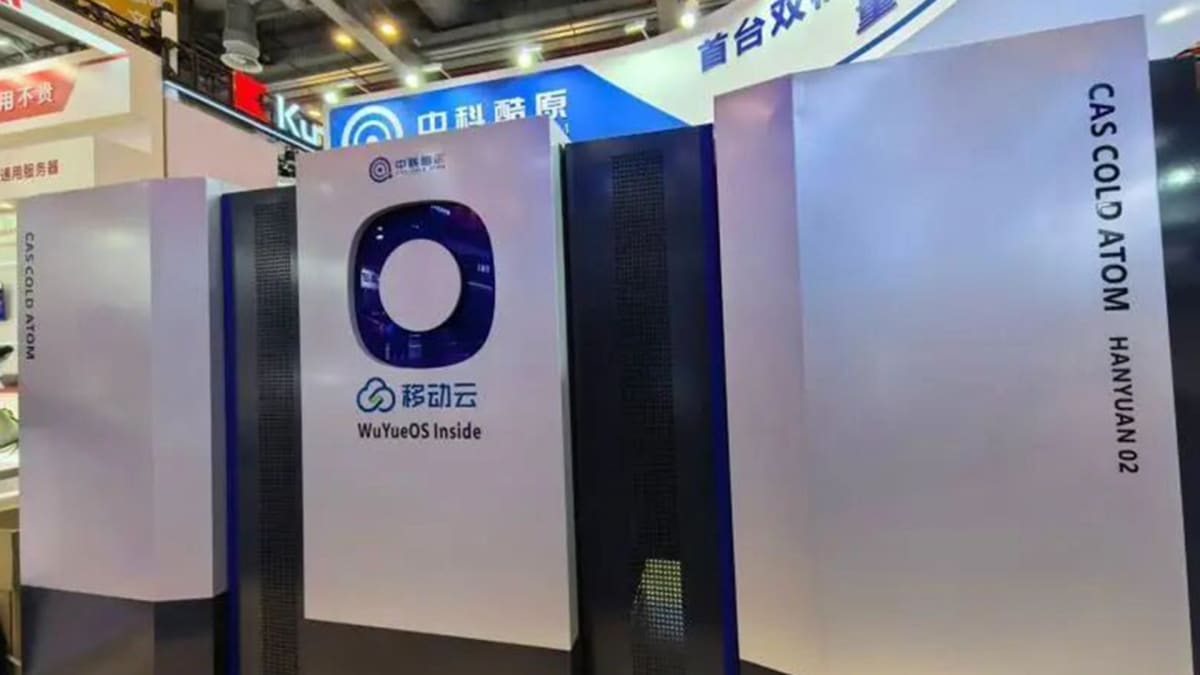
CAS Cold Atom Technology in Wuhan has unveiled Hanyuan-2, the first quantum computer with two separate cores that work as a team. The dual-core system uses 200 qubits made from rubidium atoms, split evenly between two arrays that can either divide tasks to work faster or team up so one checks the other's work.
This matters because quantum computers are notoriously delicate. Tiny disturbances like temperature shifts or stray electromagnetic waves can scramble calculations in seconds. Most quantum computers lose their data so quickly that researchers spend more time fixing errors than actually computing.
The dual-core design tackles this head-on. When one core starts making mistakes, the other can catch and correct them. Think of it like having two pilots in a cockpit instead of one.
But Hanyuan-2's biggest advantage might be what it doesn't need. Unlike quantum computers from IBM or Google that require massive refrigeration units to cool components to nearly absolute zero, this machine runs at room temperature. It uses less than 7 kilowatts of power and fits in a standard equipment rack.
That's possible because neutral atoms naturally resist interference from their environment. They're electrically balanced, so they don't react to every passing electromagnetic field. The team claims their qubits can hold information for 100 seconds, which would be remarkably long in quantum computing terms.
Senior solutions expert Gui-Guo Ge told Chinese state media that the dual-core approach solves major roadblocks that have held back single-core systems, particularly the problem of qubits interfering with their neighbors as you try to scale up.
The Ripple Effect
If the technology delivers on its promise, it could make quantum computers practical outside specialized research labs. The room-temperature operation and standard rack design mean universities, hospitals, and companies could potentially house these machines in regular data centers.
More accessible quantum computing could accelerate drug discovery, optimize supply chains, and crack complex climate models that regular computers struggle with. The modular design also suggests a clearer path to scaling up, potentially adding more cores as the technology matures.
Some key questions remain unanswered, though. The announcement didn't include error rates or benchmarks comparing performance to Western quantum computers. It's also unclear whether qubits can become entangled between the two cores, which matters because two separate 100-qubit arrays can't solve the same problems as a single 200-qubit system.
Still, the dual-core concept represents fresh thinking in a field where stability has been the stubborn challenge holding back real-world applications.
China's approach shows that sometimes the path forward in cutting-edge technology comes from reimagining the basics rather than just adding more power.
More Images


Based on reporting by Live Science
This story was written by BrightWire based on verified news reports.
Spread the positivity!
Share this good news with someone who needs it