China's Compact Robot Recovers Balance After Being Pushed
A new 4-foot humanoid robot doesn't just flip and dance. It can be shoved off balance and recover within seconds, showing the kind of real-world stability that could finally bring robots into our daily lives.
Getting pushed and staying upright might not sound impressive, but for robots, it's the breakthrough that matters most.
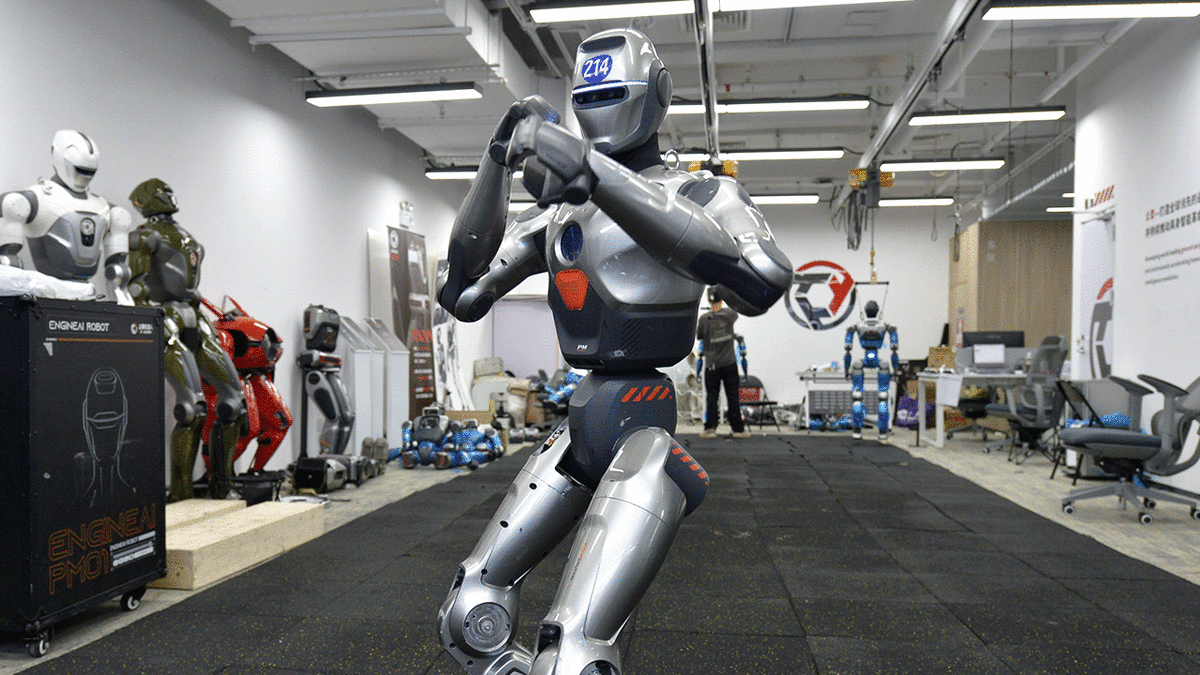
China's EngineAI has released footage of its PM01 humanoid robot being deliberately shoved while dancing. Instead of toppling over, the compact machine recalculates its center of mass in real time, performs a controlled forward slip, and smoothly regains its rhythm. The motion looks surprisingly natural, almost human.
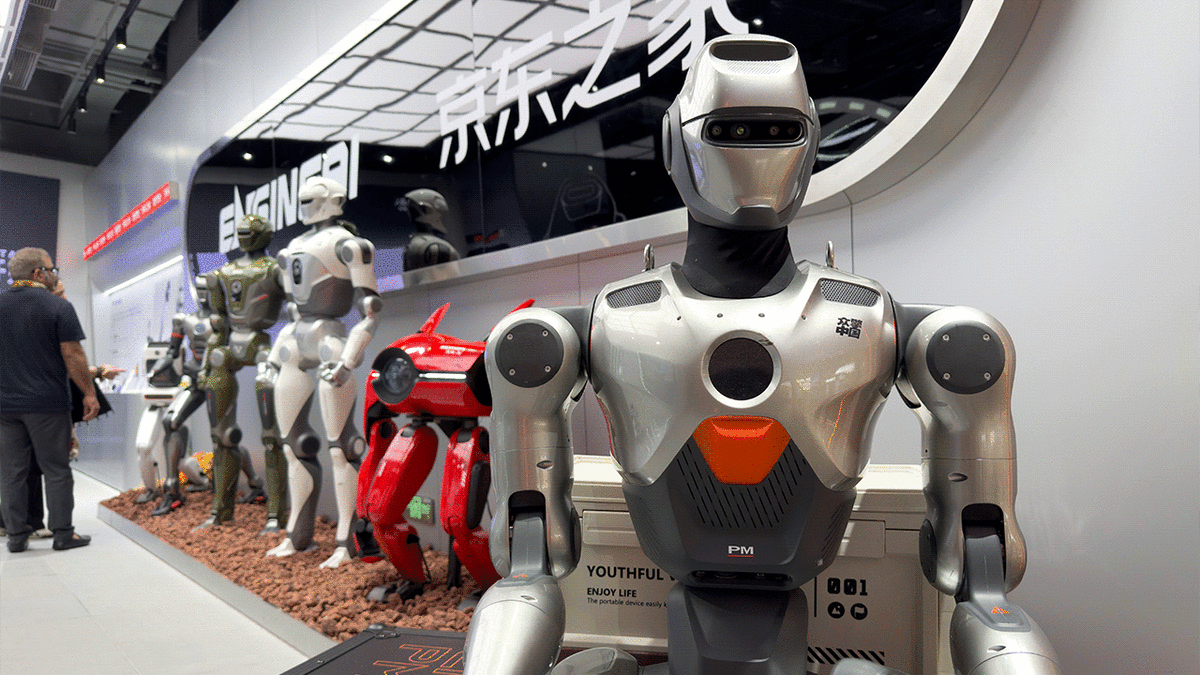
The PM01 stands just under 4 feet tall and weighs about 70 pounds. That smaller size gives it a lower center of gravity, making balance easier to maintain and flips less risky to execute. The robot also performed a front flip, which is typically harder than backflips because the body weight shifts forward, making landings trickier.
Under the surface, the PM01 combines an Intel RealSense depth camera with dual processors from Nvidia and Intel. This setup processes visual information and balance corrections in real time. The robot has 24 degrees of freedom across 12 joint motors, allowing coordinated movement that adjusts instantly when something unexpected happens.
While other humanoid robots have grabbed headlines for running at 22 mph or performing acrobatic stunts, EngineAI is taking a different approach. Their focus is on controlled recovery when things go wrong, not just raw speed or flashy tricks.
Why This Inspires
Speed and backflips get attention, but stability earns trust. If humanoid robots are going to work alongside us in warehouses, hospitals, or homes, they need to handle bumps and slips without falling apart or causing damage. A machine that can brace itself, fall safely, and stand back up is far more useful than one that performs a single perfect stunt.
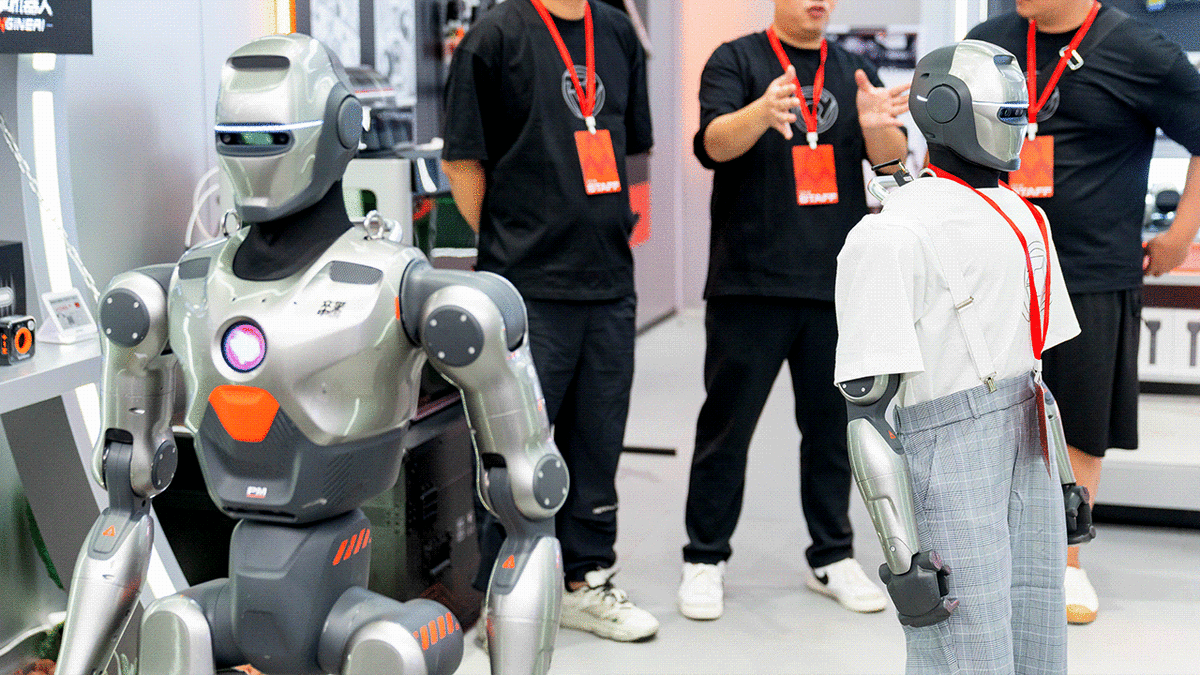
EngineAI recently addressed skepticism about whether their videos were computer-generated by releasing footage of their T800 model physically interacting with the company's CEO. In a crowded robotics market where bold claims are common, these real-world demonstrations help separate genuine engineering progress from digital effects.
The PM01 walks at about 4.5 miles per hour, which isn't record-breaking. But the company seems less interested in headline-grabbing speed and more focused on the kind of refined stability that makes robots practical for everyday environments. When a robot can dance, get shoved, and keep moving without missing a beat, we're watching the technology mature from lab experiment to potential household helper.
Resilience might be the most important feature robots can develop, and this compact dancer just showed us what that looks like.
More Images
Based on reporting by Fox News Tech
This story was written by BrightWire based on verified news reports.
Spread the positivity!
Share this good news with someone who needs it