China's First Arctic Solar Plant Stores Power for 24 Hours
A groundbreaking solar power plant in China's frozen northeast can now store sunshine as heat and generate electricity around the clock, even in one of the coldest regions on Earth. This breakthrough could unlock clean energy potential in frigid climates worldwide.
Scientists just proved that solar power can work anywhere, even where winter temperatures plunge far below freezing.
China General Nuclear Power Group connected its new 100-megawatt solar thermal plant to the grid this week in Jilin Province, nearly 600 miles north of Beijing. The facility marks the first time this technology has succeeded in such an extreme, high-latitude environment.
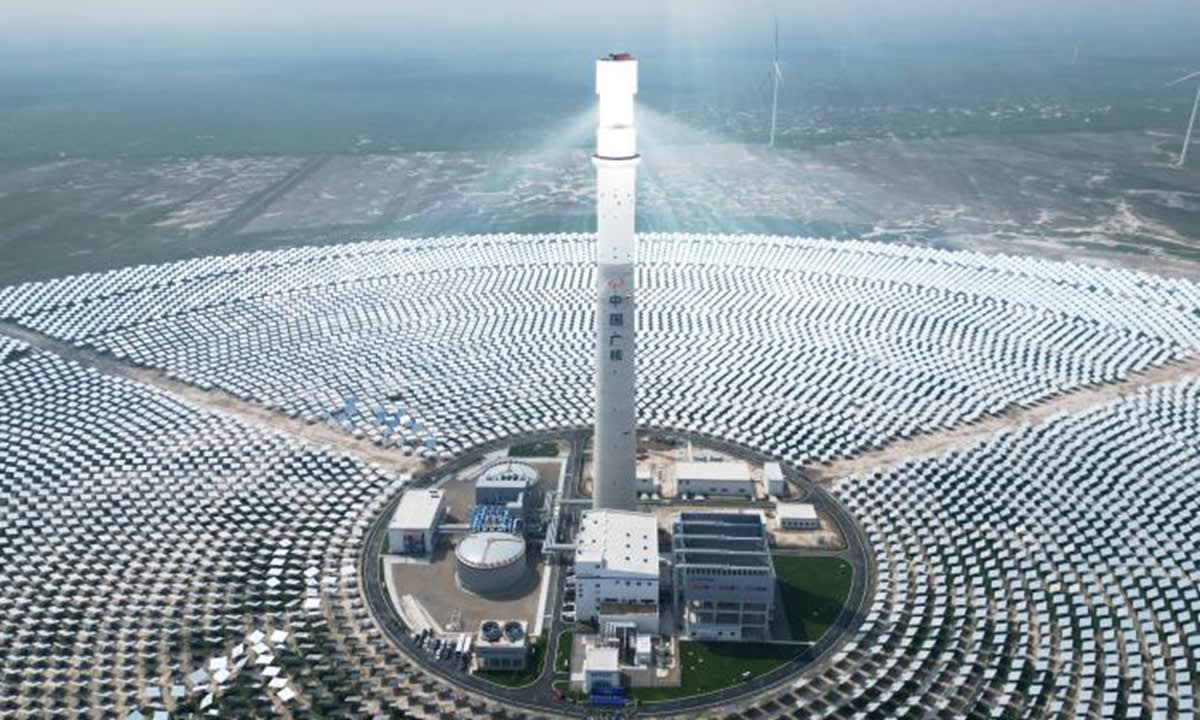
Unlike traditional solar panels that only work when the sun shines, this plant captures sunlight using nearly 20,000 mirrors spanning an area larger than 80 football fields. The mirrors track the sun and reflect its rays onto a 210-meter tower that heats molten salt to scorching temperatures of 565 degrees Celsius.
Here's where it gets clever: the superheated salt acts like a massive thermal battery. The stored heat can generate electricity for up to eight hours after sunset, enabling the plant to produce power 24 hours a day regardless of clouds or darkness.
The facility also solves a major renewable energy headache. When neighboring wind turbines and solar panels produce more electricity than the grid needs, that excess power typically goes to waste. Now it can be converted to heat and stored in the molten salt system, eliminating waste and improving overall efficiency.
The plant will generate 180 million kilowatt hours annually once fully operational. That's enough to power tens of thousands of homes while saving 54,000 tons of coal and cutting carbon emissions by 139,000 tons each year.
The Ripple Effect
This success in China's frigid northeast demolishes the assumption that solar thermal plants only work in scorching desert regions. Professor Sun Chuanwang from Xiamen University calls it a milestone that confirms these facilities can provide stable, continuous power in cold, high-latitude areas previously considered unsuitable.
China plans to build enough solar thermal capacity by 2030 to power millions of homes, with new plants planned for northern, northwestern, and southwestern provinces. The technology offers something wind and solar alone cannot: predictable, round-the-clock clean energy that stabilizes electrical grids.
The breakthrough comes as countries worldwide struggle to balance renewable energy growth with grid reliability. Solar thermal plants with storage could act as "grid stabilizers" that smooth out the ups and downs of wind and solar power, making it easier for regions to transition away from fossil fuels.
For communities in cold climates from Canada to Scandinavia to northern Asia, this plant proves that geography doesn't have to dictate energy destiny.
Based on reporting by Google: solar power breakthrough
This story was written by BrightWire based on verified news reports.
Spread the positivity!
Share this good news with someone who needs it