China's Floating Wind Turbine Sends Power to Grid
A helium-filled wind turbine flying 2,000 meters high just delivered electricity into China's power grid for the first time. The breakthrough proves that harvesting stronger winds at high altitude isn't just science fiction anymore.
📺 Watch the full story above
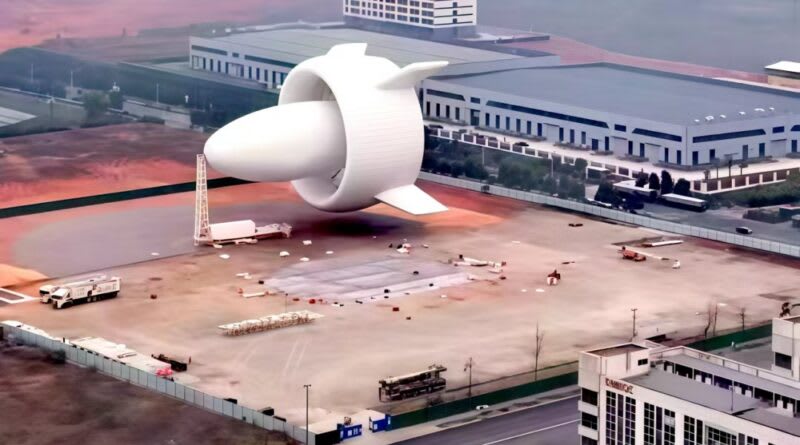
China just proved that wind turbines don't need to stay on the ground. A massive floating system successfully generated electricity at 6,500 feet and fed it directly into the local power grid.
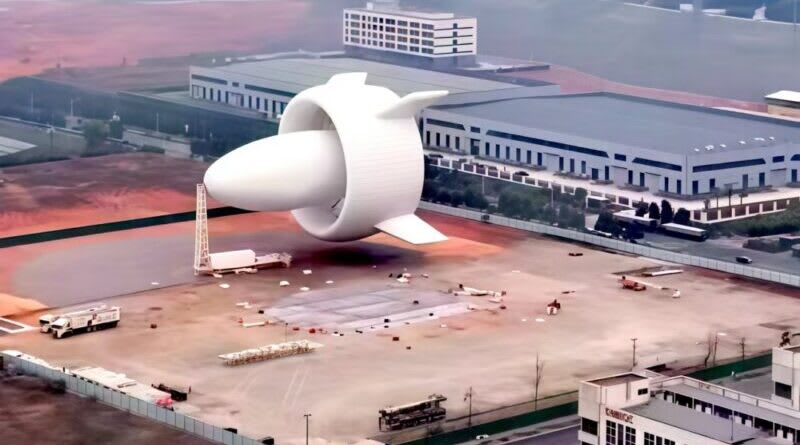
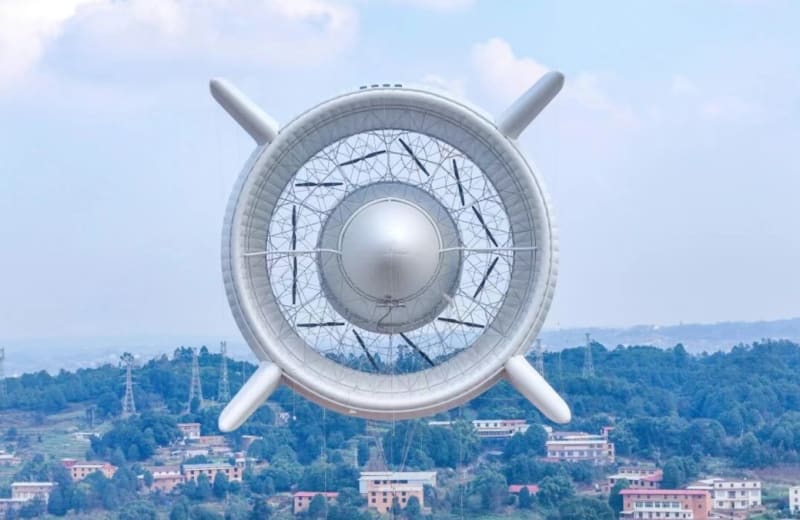
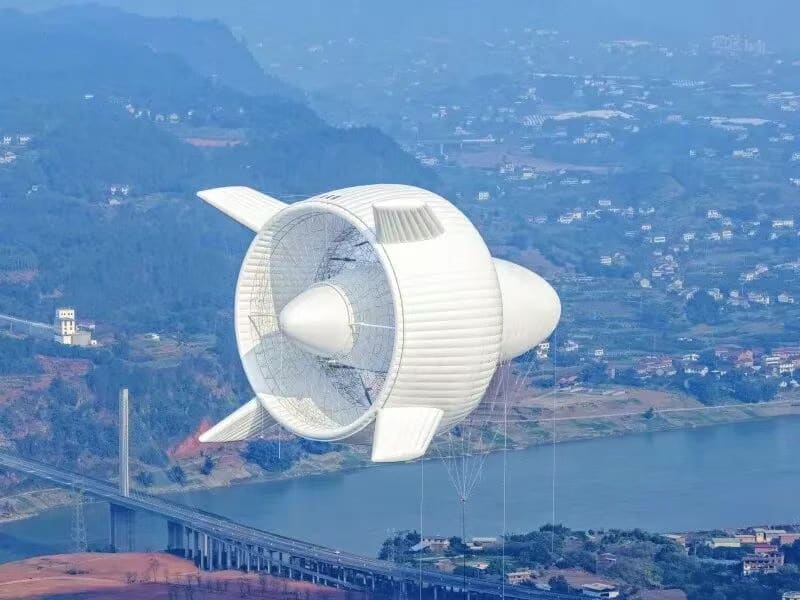
The S2000 Stratosphere Airborne Wind Energy System completed its landmark test flight in January 2026 in Yibin, Sichuan Province. Built by Beijing Lanyi Yunchuan Energy Technology Co., the system uses a helium-filled balloon to lift multiple turbines to altitudes where winds blow stronger and steadier than anything a traditional tower can reach.
During the test, the floating platform produced 385 kilowatt-hours of electricity. A conductive tether carried that power down to earth while also anchoring the system and providing communication links for flight control.
The real achievement wasn't the amount of power but proving the technology works. The system successfully matched grid frequency and voltage requirements, confirming that airborne wind energy can integrate with existing power infrastructure.
The S2000 is designed to generate up to 3 megawatts under ideal conditions. That's enough to power roughly 2,000 homes, though the company hasn't released long-term performance data yet.
Unlike kite-based airborne systems that rely on dynamic movement, the S2000 uses static buoyancy to stay aloft. This approach simplifies control systems but introduces challenges like maintaining helium levels and protecting the envelope from UV radiation and temperature swings at high altitude.
The Ripple Effect
This test represents more than one company's engineering win. It shows renewable energy can reach places conventional turbines can't, opening new possibilities for regions where ground-based wind farms aren't practical.
The technology still faces hurdles before commercial deployment. Operating at 2,000 meters means coordinating with aviation authorities, and questions remain about long-term durability, maintenance costs, and whether the economics can compete with traditional wind farms.
China's earlier S1500 prototype operated at lower capacity, making the S2000's megawatt-class performance and grid connection a significant step forward. The country continues pushing boundaries in renewable energy innovation as it works toward carbon neutrality goals.
Engineers now need to prove the system can fly for extended periods and deliver consistent output. But crossing from concept to confirmed grid delivery marks a milestone that moves airborne wind energy from experimental curiosity to demonstrated reality.
The sky just became a new frontier for clean energy generation.
More Images

Based on reporting by CleanTechnica
This story was written by BrightWire based on verified news reports.
Spread the positivity!
Share this good news with someone who needs it