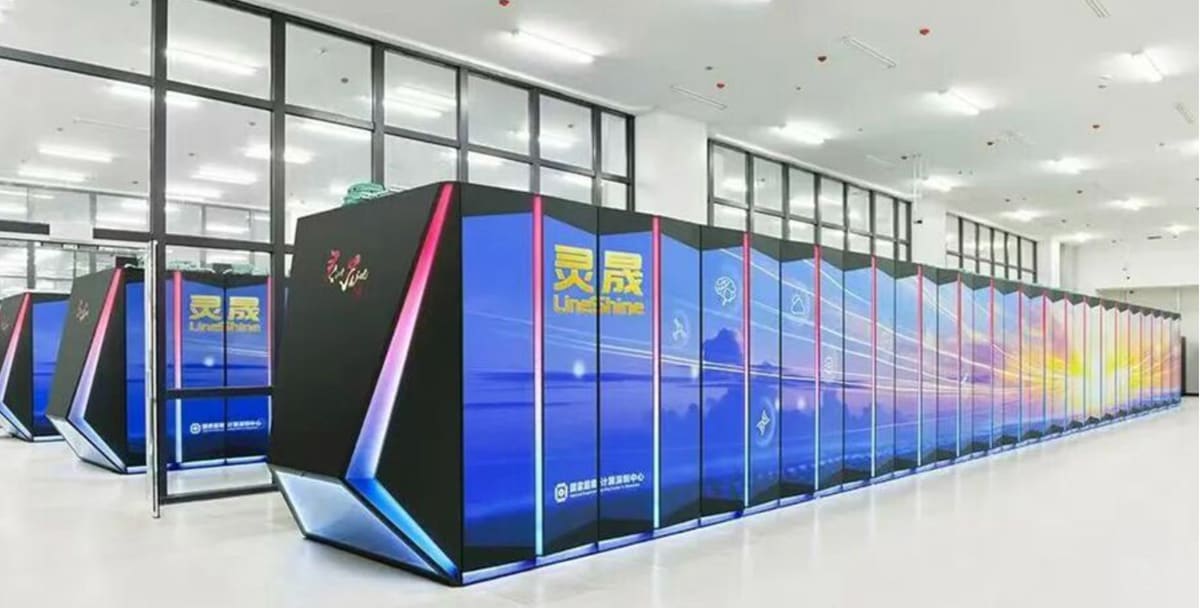
China's LineShine Hits 2.2 Exaflops, Tops Supercomputer List
A Chinese supercomputer just claimed the world's fastest title, conducting nearly 2 quadrillion calculations per second. LineShine's breakthrough marks a milestone in computing power that could accelerate everything from climate modeling to medical discoveries.
The world has a new speed champion, and it's processing numbers faster than ever imagined.
China's LineShine supercomputer just topped the TOP500 global rankings, clocking an incredible 2.198 exaflops per second. That's nearly 2.2 quintillion calculations every single second, pushing America's El Capitan supercomputer to second place for the first time in years.
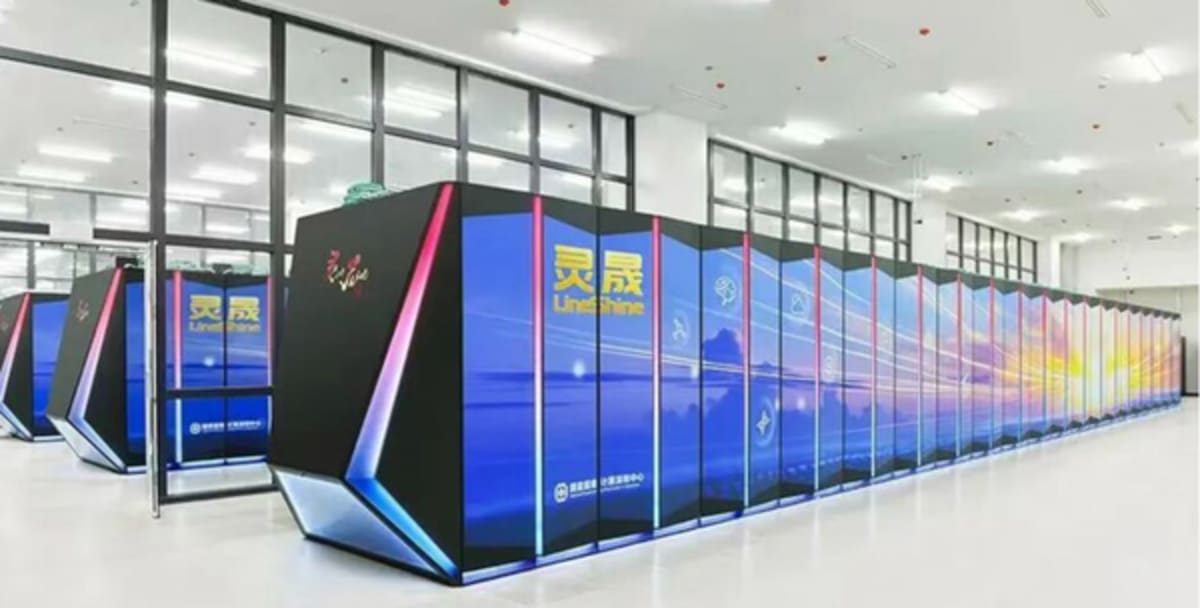
Built by the Shenzhen Cloud Computing Center, LineShine packs 13.79 million computing cores into its system at the National Supercomputing Centre. The machine consists of 304-core LX2 processors working in perfect harmony to crunch numbers at unprecedented speeds.
The TOP500 rankings have tracked the world's fastest supercomputers since 1993, measuring their power through complex mathematical algorithms. LineShine didn't just win; it outperformed its own expectations, with scientists believing it could theoretically reach 2.736 exaflops per second at peak performance.
Lawrence Livermore National Laboratory's El Capitan, previously the speed king, posted 1.809 exaflops per second in this round of testing. Oak Ridge National Laboratory's Frontier in Tennessee came in third at 1.353 exaflops, followed by Illinois-based Aurora and Germany's JUPITER Booster, which rounded out the top five.
The Ripple Effect
These supercomputing breakthroughs aren't just about bragging rights. Machines this powerful are already transforming how we tackle humanity's biggest challenges, from predicting weather patterns with pinpoint accuracy to simulating new medications that could save millions of lives.
Scientists use supercomputers to model climate change scenarios, decode the human genome, and design cleaner energy solutions. Every leap in processing speed means researchers can run more simulations, test more theories, and find answers faster than ever before.
The race isn't slowing down either. Quantum computers are emerging as the next frontier, operating on entirely different principles that could make even these exaflop machines look slow by comparison.
For now, LineShine's achievement shows how far computing has come since those first rankings in Germany over three decades ago, and the incredible potential still waiting to be unlocked.
More Images



Based on reporting by Scientific American
This story was written by BrightWire based on verified news reports.
Spread the positivity!
Share this good news with someone who needs it