Chinese Engineers Build Centaur Robot That Carries Heavy Loads
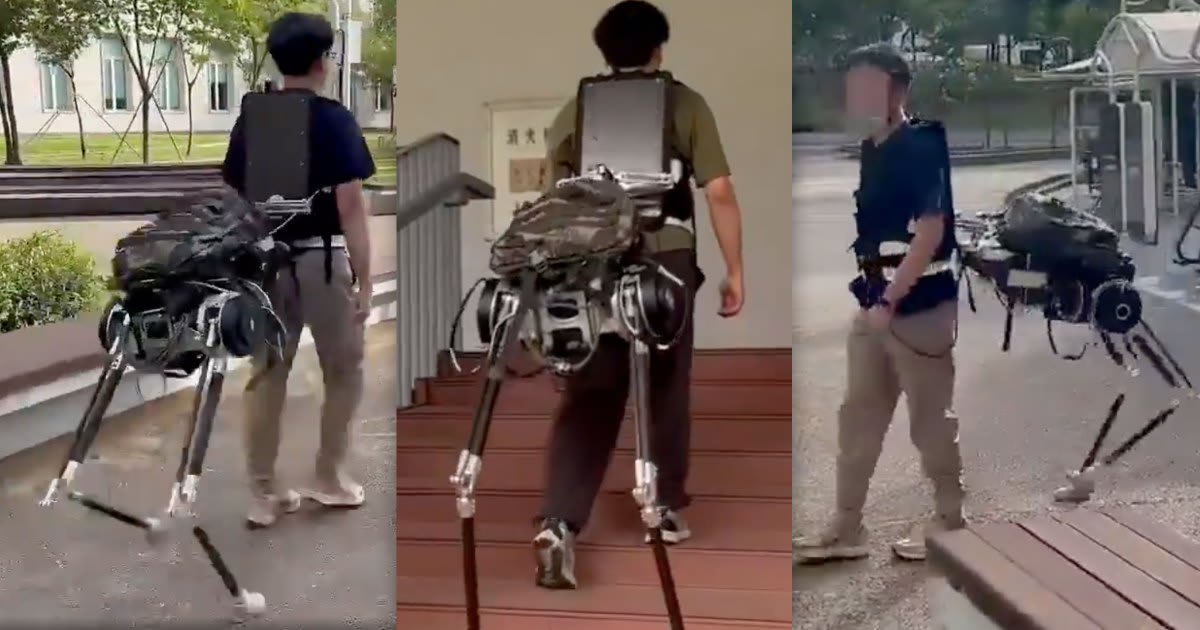
Engineers in China have created a wearable robot with two mechanical legs that walks behind you like a centaur, carrying heavy loads so you don't have to. The invention could help workers, hikers, and anyone who needs to transport heavy items across stairs and rough terrain.
Imagine having an extra set of robotic legs following you around, carrying your heavy backpack while you walk freely up stairs and across campus.
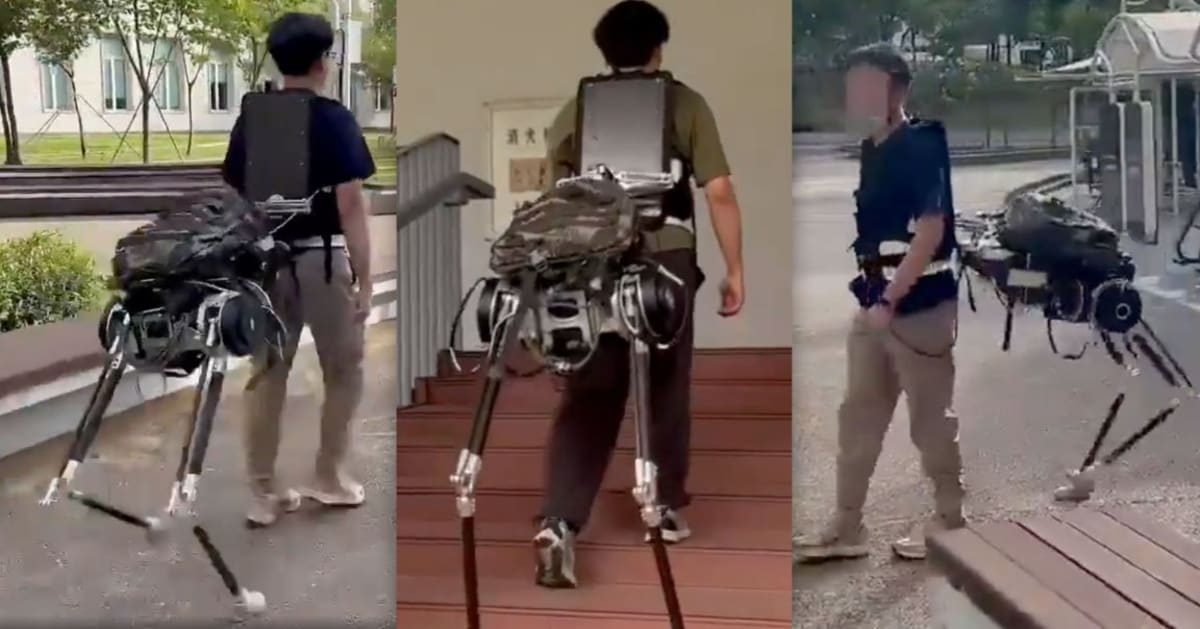
Engineers at Southern University of Science and Technology in Shenzhen, China have made this science fiction concept a reality. Their centaur inspired robot features two mechanical legs that stride behind a human wearer, taking the weight off their back while adapting to different walking speeds and terrains.
The robot gets its name from the mythical Greek creature that's half human, half horse. In video demonstrations, the device's spindly legs march along behind an engineer as he walks across campus and climbs stairs, something wheeled alternatives can't manage.
The team tested their design against a regular 44 pound backpack. They found the centaur robot significantly reduced the metabolic energy wearers needed to expend while carrying the same weight.
The researchers designed this system to solve problems with existing options. Autonomous robots like robodogs need detailed maps to navigate and have limited battery life when carrying heavy loads. Wheeled carts can't climb stairs or handle rough terrain.
Their centaur robot offers a middle ground. It follows the human's lead for navigation while sharing the burden of heavy cargo. The device can even push forward at the connection point, giving wearers an extra boost while walking.
Why This Inspires
This invention shows how engineers are rethinking everyday challenges with fresh eyes. Instead of making humans carry more or robots work alone, they created a partnership where both human and machine use their strengths together.
The technology could transform work for delivery personnel navigating apartment stairs, field researchers trekking through forests, or construction workers moving materials across uneven ground. Anyone who's struggled with a heavy backpack on a long hike knows the appeal.
The robot represents a shift in how we think about assistive technology. Rather than replacing human capability or demanding we adapt to rigid tools, it creates flexible support that moves with us through our complex, messy world.
Teams worldwide are racing to solve the same challenge of helping humans carry heavy loads with less strain. This Chinese team chose creativity over convention, building something that looks unusual but might just work better than the alternatives we've accepted for centuries.
More Images
Based on reporting by Futurism
This story was written by BrightWire based on verified news reports.
Spread the positivity!
Share this good news with someone who needs it