Solar Panels Work 10 Meters Underwater in Breakthrough Test
Scientists just proved solar panels can generate power 10 meters below the ocean's surface, opening the door to self-powered underwater robots and sensors. The breakthrough could transform how we explore and monitor the deep sea.
Imagine a world where underwater robots never need to surface for a battery charge because they're powered by sunlight streaming down from above.
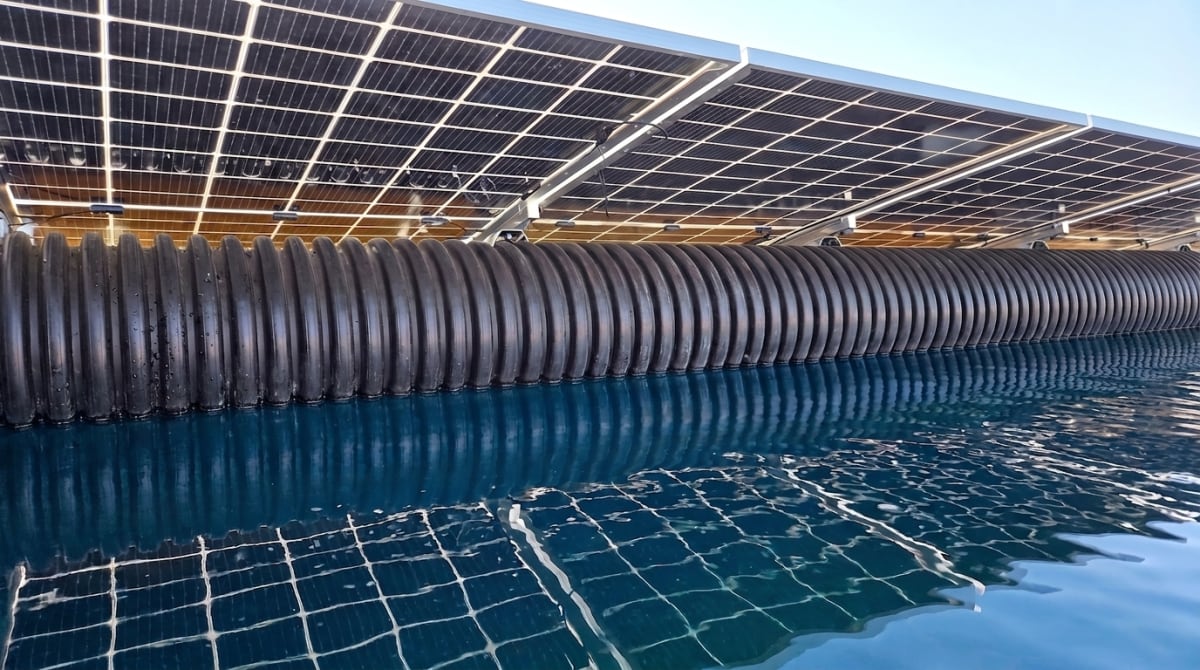
That future just got a lot closer. Researchers from Yunnan University successfully tested solar panels 10 meters underwater in the South China Sea, shattering previous depth records and proving clean energy works beneath the waves.
The team used special perovskite solar cells, a newer type of solar technology that's more flexible than traditional silicon panels. They deployed large solar modules attached to underwater robots near the Weizhou Islands to see if they'd actually work in real ocean conditions.
The results exceeded expectations. In just two hours underwater, the panels generated enough electricity to charge lithium-ion batteries and power LED lights. Under lab conditions simulating deep water, the cells maintained 34.71% efficiency and showed almost no wear after 1,160 hours of testing.
Lead researcher Wen-Hua Zhang said the amount of energy their large panels produced in real-world conditions was the biggest surprise. Previous underwater solar research had only reached depths of two meters or less, making this a genuine leap forward.
The solar cells remained stable enough that researchers predict they could last 5.5 years when submerged continuously at 10-meter depths. The team achieved this durability by adding a special compound that strengthens the material's structure and prevents degradation from saltwater.
The Ripple Effect
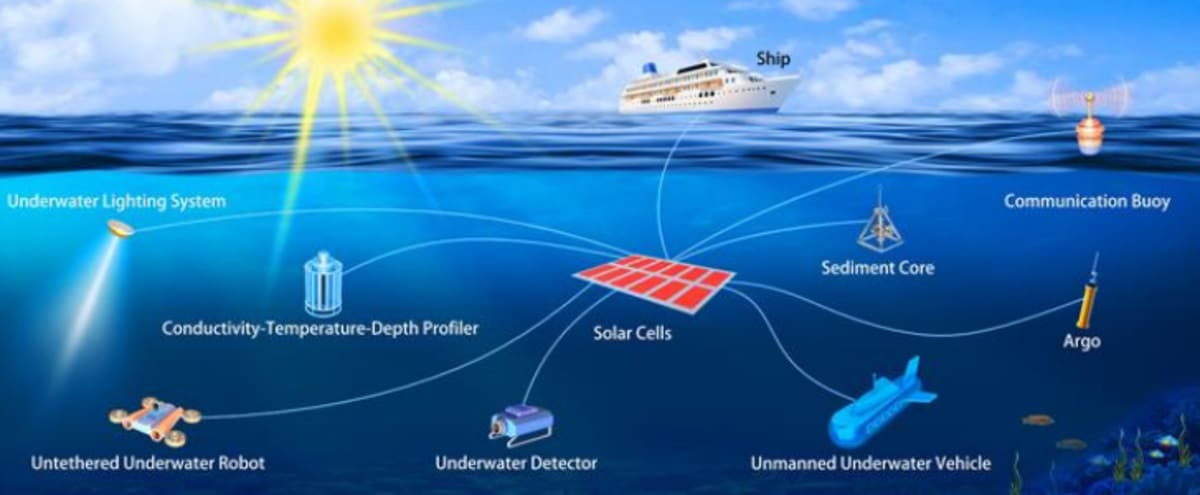
This isn't just about powering gadgets. Underwater solar panels could revolutionize ocean research and conservation by enabling sensors, cameras, and communication systems to operate autonomously far from shore.
Marine scientists currently struggle with limited battery life on underwater equipment. Divers must regularly retrieve devices for recharging, which is expensive, time-consuming, and sometimes dangerous. Self-powered systems could monitor coral reefs, track marine life, and detect environmental changes continuously without human intervention.
The technology could also support underwater infrastructure inspection, offshore renewable energy facilities, and coastal monitoring systems. As climate change increases the need for ocean data, these solar-powered tools offer a sustainable solution.
The team successfully scaled their technology from small laboratory cells to large working modules, proving the concept works beyond controlled settings. Their combination of lab testing and real-world ocean deployment provides solid evidence that underwater solar power is ready for practical use.
The path to self-sustaining marine energy systems and truly autonomous underwater exploration just got brighter.
More Images


Based on reporting by PV Magazine
This story was written by BrightWire based on verified news reports.
Spread the positivity!
Share this good news with someone who needs it